REVIEW · COLOMBO
Colombo by Tuk Tuk – Sightseeing Entry Fees included
Book on Viator →Operated by Black Caviar Tours & Travels · Bookable on Viator
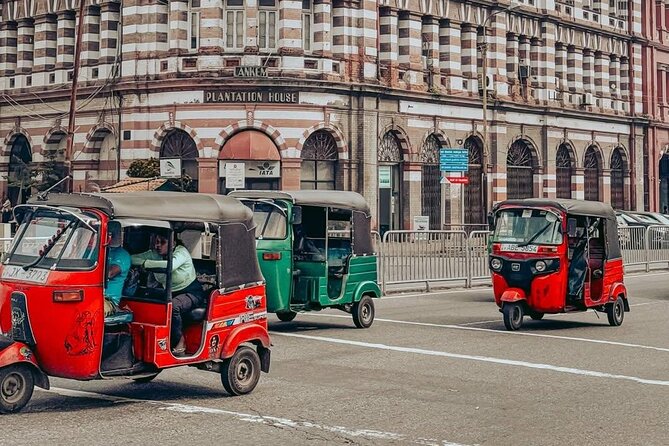
Colombo moves fast in a tuk-tuk. I love that this is a private sightseeing-first ride with a driver who handles traffic and turns busy planning into a simple route. I also like the hotel pickup and drop-off, which means you start and end with less fuss than doing it solo.
This half-day is efficient, but that efficiency has a catch: you’ll spend limited time at each spot, and a couple of religious sites have small extra charges (notably Gangaramaya and Old Town Hall).
In This Review
- Key highlights at a glance
- Colombo by Tuk Tuk: why this half-day tour feels like a shortcut
- Price and value: what $35 for two really buys
- Your route starts at Colombo Lighthouse (and ends there)
- Stop 1: Sri Kailawasanathan Swami Devasthanam Kovil and the Dravidian-style introduction
- Lotus Tower: Colombo’s tall modern landmark for a quick skyline moment
- Colombo Fort by rail and colonial layers: Fort Railway Station to the Clock Tower
- Pettah Market area: seeing everyday Colombo without the map stress
- Old Town Hall: worth a stop, but you’ll pay a small extra fee
- Vegetable Market and Kayman’s Gate Belltower: local commerce and Dutch-era traces
- Religious architecture in Pettah: Grand Mosque and Wolvendaal Church
- Floating Market over Beira Lake: a photo-friendly, practical mix
- From Old Parliament to Port City and the Maritime Museum: Colombo’s modern edge
- Old Parliament Building: neo-baroque colonial grandeur near Galle Face
- Port City Colombo: reclaimed-land development with global attention
- Colombo Lighthouse and the Colombo Port Maritime Museum
- Zylen Tea tasting, Gangaramaya, and independence monuments: culture plus civic memory
- Zylen Tea: a Ceylon tea tasting moment
- Gangaramaya Temple: a key stop, but pay the on-site temple charge
- Independence Memorial Hall and the Cenotaph: Sri Lanka’s 20th-century story
- Colombo Municipal Council and Viharamahadevi Park: governance and green space
- How to make the most of a fast, private half-day in Colombo
- Should you book Colombo by Tuk Tuk?
- FAQ
- How long is the Colombo by Tuk Tuk tour?
- What is the price for the tour?
- Is hotel pickup and drop-off included?
- Are sightseeing entry fees included?
- What kind of ticket do I receive?
- Is this tour private?
- Where does the tour start and end?
- Does the tour include transportation?
- Are there any extra charges I should plan for?
- What’s the cancellation policy?
- Is the tour suitable for most travelers?
Key highlights at a glance
- Private tuk-tuk with driver navigation so you can focus on photos and people-watching
- Entry fees included for many major sights, cutting down ticket hassle
- Fort + Pettah mix: colonial architecture, rail history, and classic market streets
- Beira Lake area stops like the Floating Market and key religious buildings
- A modern Colombo hit with Port City, maritime museums, and the tea tasting stop
Colombo by Tuk Tuk: why this half-day tour feels like a shortcut
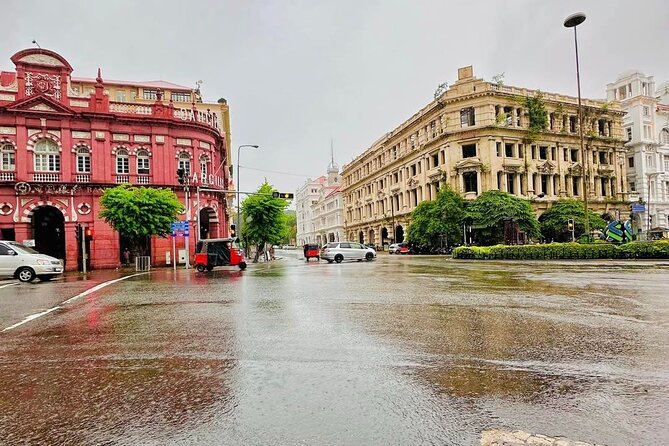
Colombo can be a handful if you try to do it “on your own plan.” Traffic, crossings, and simple route decisions can swallow time fast. This tour is built for the opposite: you get a tuk-tuk plus a driver, and your job is mostly to show up, look, and ask questions.
I also like that the pacing stays user-friendly. It’s private for up to 2 people, and you can linger when something catches your eye. The whole thing takes about 4 hours, so it works well as a first taste of the city (or a reset day between bigger excursions).
The real win is that it’s sightseeing-focused. You’re not spending half your day trying to figure out what’s next—you’re moving from one landmark cluster to another with less stress.
You can also read our reviews of more tours and experiences in Colombo.

Price and value: what $35 for two really buys
The price is $35 per group (up to 2 people) for about 4 hours, and you also get private transportation plus bottled water. What makes this feel like value is the way it pairs transport with time-saving “get-ins” at multiple stops—many entries are listed as included.
There are two small extras you should budget for. Gangaramaya has a $2 per person charge, and Old Town Hall has a $1 per person charge. Those are the only extra fees explicitly listed as not included, so you can keep expectations simple.
If you’ve ever paid for a tuk-tuk ride and then still had to line up for tickets one by one, you’ll see the difference here. Even if you only care about a few of the stops, the included entry fees plus the driver’s planning effort help the price make sense.
Your route starts at Colombo Lighthouse (and ends there)
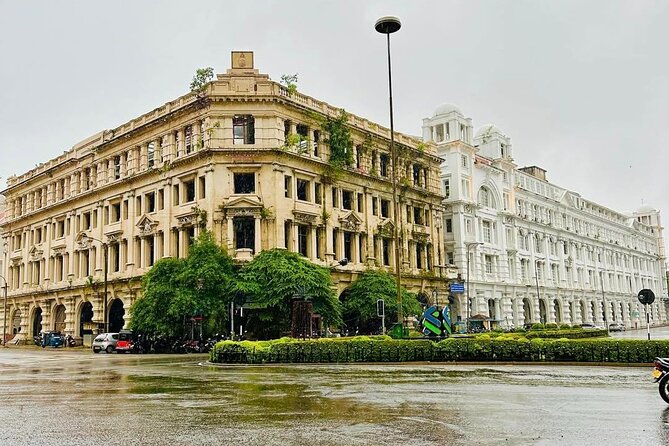
The meeting point is Colombo Lighthouse (Chaithya Rd). The tour ends back at the meeting point, which is handy when you’re trying to keep the rest of your day flexible.
Expect a pattern of short, purposeful visits—some stops are 5 minutes, others around 10–20. That doesn’t sound long, but it can be perfect in a city like Colombo when your goal is to see the full range in one go: Hindu temple, colonial Fort, Pettah markets, Beira Lake area, and Port-side culture and museums.
Stop 1: Sri Kailawasanathan Swami Devasthanam Kovil and the Dravidian-style introduction
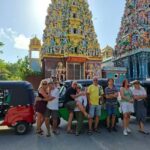
You begin with Sri Kailawasanathan Swami Devasthanam Kovil, a major Hindu temple in Colombo. It’s dedicated to Lord Shiva and is described as one of the oldest and most significant Hindu temples in the city. The big visual hook here is the Dravidian-style architecture, which tends to grab attention quickly even if you only have a short visit.
This is also a useful “orientation” stop. Before the colonial buildings and busy market streets, you get a calmer, more ceremonial entry point into Colombo’s cultural identity. With the admission ticket listed as included and the time set at about 15 minutes, you can appreciate the architecture without rushing through everything.
Practical note: keep your expectations realistic. This isn’t a long temple session; it’s a strong first look.
Lotus Tower: Colombo’s tall modern landmark for a quick skyline moment
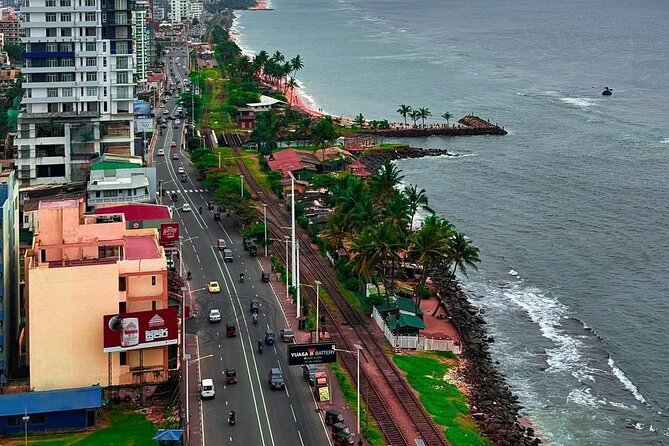
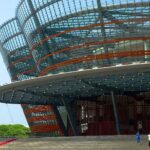
After the temple, the route brings you to Lotus Tower. It’s a 350 m tall tower and is noted as a symbolic landmark, plus it’s described as the tallest self-supported structure in South Asia.
Even if you mostly enjoy it from the outside, it’s still worth the stop. Lotus Tower gives you a modern skyline reference point you can carry with you as the tour moves from historic Fort areas toward the Port and newer development zones.

Colombo Fort by rail and colonial layers: Fort Railway Station to the Clock Tower
The tour spends time in the historic core around Colombo Fort. It starts with Colombo Fort Railway Station, a major rail hub served by Sri Lanka Railways, with inter-city and commuter trains arriving daily. You get about 10 minutes, and admission is listed as included—so this is more than a quick glance.
Then you’re in the Fort zone, which is described as Colombo’s historic and commercial heart. The fort area has Portuguese, Dutch, and British layers: Portuguese construction in the 16th century, Dutch expansion afterward, then British influence later. Even without going deep into every building’s story, you feel the time periods in the architecture and street layout.
Here’s what makes this Fort segment especially useful:
- Colombo Economic History Museum (Currency Museum) inside the Central Bank premises: it frames the island’s economic development through the collection theme.
- Colombo Fort Clock Tower: originally built in 1857, it’s one of the city’s iconic colonial-era landmarks.
- Colombo President’s Museum in the historic President’s House: it focuses on political history, including the building’s past role tied to British governors and Sri Lankan leadership eras.
- Colombo Old Post Office: a late-19th-century British colonial-era structure.
- Cargills Building: a late-19th-century mercantile landmark associated with Cargills & Co.
- Grand Oriental Hotel: opened in 1837, it’s one of the oldest and most iconic hotels in Sri Lanka.
This is where the tour earns its keep. Many first-time visitors see Fort as a “walk around” area. This gives you structure—plus you don’t waste time figuring out which building is worth stepping into.
Pettah Market area: seeing everyday Colombo without the map stress
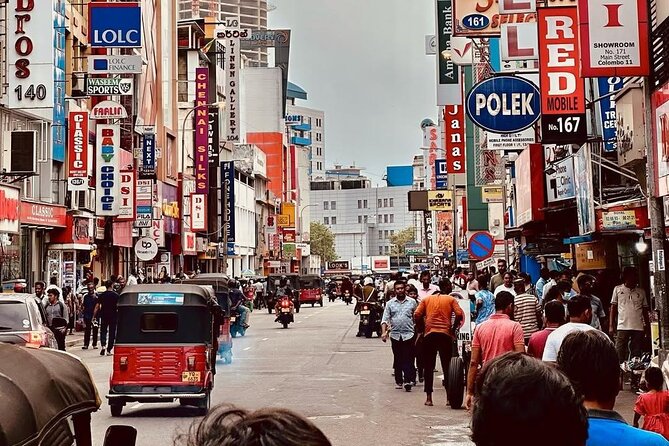
Next comes Pettah, east of the city centre Fort. Pettah is known for the Pettah Market—a network of open-air bazaars and markets. You get about 15 minutes, and the admission there is listed as free, which makes it a good use of time during a short tour.
Pettah is also where you’ll notice Colombo’s living rhythm: crowds, commerce, and the practical side of local life. If you’re into atmosphere, you’ll understand why this neighborhood is often a highlight on city trips.
Old Town Hall: worth a stop, but you’ll pay a small extra fee
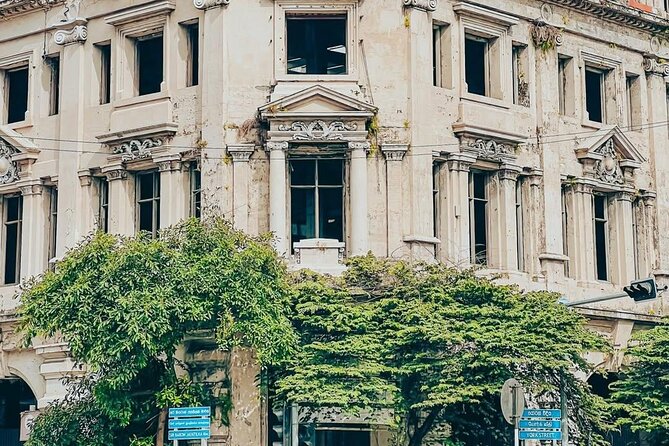
In the middle of the Pettah shop-and-stall maze sits the Old Town Hall. It’s described as a colonial-era building with arches, needle point columns, crumbly yellow walls, and creaky staircases. The time is about 15 minutes, and admission is explicitly not included.
You can expect a $1 per person charge for this stop. If you like atmospheric architecture, it’s a solid inclusion—just don’t be surprised when the extra fee shows up.
Vegetable Market and Kayman’s Gate Belltower: local commerce and Dutch-era traces
You’ll also see the Vegetable Market, with the tour listing it as free admission and about 15 minutes. This is a great contrast to the museums and monuments earlier. It’s not about big narratives; it’s about how people shop and move through the day.
Then there’s Kayman’s Gate Belltower, tied to the Dutch Fort entrance in the 17th century. It’s a short stop (about 5 minutes) and is listed as free. Even with limited time, it’s a nice “historical pin” that helps you connect what you’re seeing in the market streets back to the city’s older walls and entrances.
Religious architecture in Pettah: Grand Mosque and Wolvendaal Church
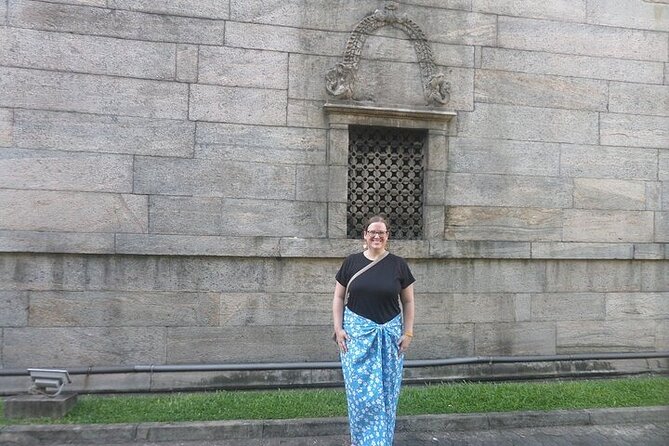
The tour includes stops around two major religious buildings in the area.
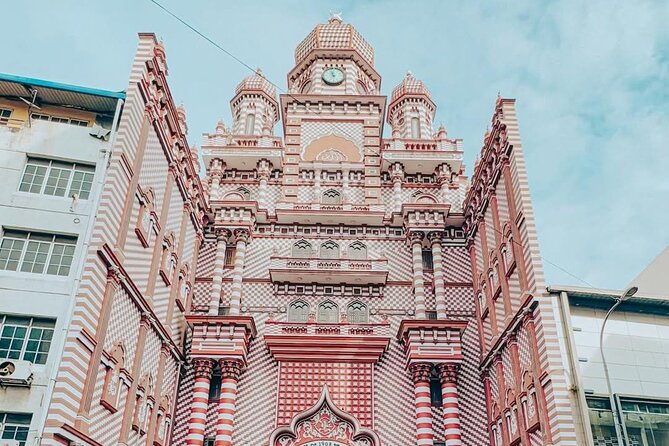
First is the Grand Mosque of Colombo (Jami Ul-Alfar Mosque), highlighted as one of Sri Lanka’s most iconic and beautifully architected mosques. It’s a standout visual stop because mosque architecture is so recognizable, even if you’re only there briefly.
Next is the Christian Reformed Church of Sri Lanka, also known as the Wolvendaal Church. It’s described as one of the oldest and most significant Dutch colonial churches in Sri Lanka, built in 1749. Its time is about 15 minutes, and admission is listed as free.
If you like seeing multiple belief systems and architectural styles in one morning, this pair works well. It also prevents Pettah from feeling like only shopping streets—you get landmark context.
Floating Market over Beira Lake: a photo-friendly, practical mix
One of the most specific “today Colombo” stops is the Floating Market, built over Beira Lake and opened in 2014. The description focuses on mixing commerce with scenery, and the tour sets it at about 10 minutes with admission listed as included.
What I like about this stop is that it’s both functional and scenic. You’re not just seeing something old; you’re seeing something adapted to a modern city.
From Old Parliament to Port City and the Maritime Museum: Colombo’s modern edge
After Pettah, the tour turns toward landmarks that show Colombo’s present and near-future identity.
Old Parliament Building: neo-baroque colonial grandeur near Galle Face
The Old Parliament Building is described as a grand colonial-era structure near Galle Face Green with a neo-baroque style. Even if you spend only a short time here, it helps you connect Colombo’s government story to its colonial-era architecture.
Port City Colombo: reclaimed-land development with global attention
Then you’re headed to Port City Colombo, described as a large urban development project built on 269 hectares of reclaimed land. It launched in 2014 and is backed by China Harbour Engineering Company (CHEC).
The stop is short (about 5 minutes) but admission is listed as included. This is less about going inside and more about witnessing the scale. If you want a sense of how Colombo is changing, this is one of the clearest “modern footprint” stops on the route.
Colombo Lighthouse and the Colombo Port Maritime Museum
You also have time at Colombo Lighthouse, described as the Galbokka Lighthouse near Colombo Harbour in the Galle Buck Green area. It was built in 1952, replacing an older lighthouse.
The tour then includes the Colombo Port Maritime Museum (Sri Lanka Ports Authority Maritime Museum) at 19 Chaithya Road, adjacent to the port, with about 15 minutes and admission listed as included.
This museum stop is a good balance after the modern Port City sight. It gives you the maritime context—Colombo as a port city isn’t a new idea. The museum helps connect the past shipping identity to the present development.
Zylen Tea tasting, Gangaramaya, and independence monuments: culture plus civic memory
After the port-side segment, you shift back toward cultural and civic landmarks.
Zylen Tea: a Ceylon tea tasting moment
The tour includes a tea tasting stop at Zylen Tea. This is described as a Ceylon tea experience, positioned as exploring Sri Lanka’s world-famous tea culture and noting that Ceylon tea has its birthplace in Sri Lanka.
It’s about 15 minutes and admission is listed as included. If you’ve been hoping Colombo will give you more than just architecture and markets, this is an easy win. Tea is one of Sri Lanka’s signature exports, and this tasting format fits neatly into a half-day schedule.
Gangaramaya Temple: a key stop, but pay the on-site temple charge
Next is Gangaramaya Temple, described as one of Colombo’s important temples, featuring a mix of modern architecture and cultural essence, completed in the late 19th century. It’s set at about 20 minutes.
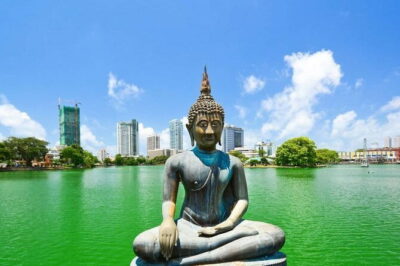
This one is explicitly not included for entry, and the tour lists a $2 per person temple charge. I think that’s still worth planning for, because it’s a highly recognizable religious stop that adds depth to the earlier Hindu and Dutch-Christian architecture you’ve seen.
Independence Memorial Hall and the Cenotaph: Sri Lanka’s 20th-century story
The final stretches include major monuments tied to national memory.
- Independence Memorial Hall commemorates Sri Lanka’s independence from British rule on February 4, 1948. Admission is listed as included, and the stop is about 10 minutes.
- Cenotaph War Memorial honors those who lost their lives in military conflicts, particularly World War I and World War II. Admission is listed as included with about 10 minutes.
These stops aren’t “just photos.” They add a solemn civic layer to the trip, so the day doesn’t feel only like buildings and markets.
Colombo Municipal Council and Viharamahadevi Park: governance and green space
The tour also notes:
- Colombo Municipal Council (CMC): described as the oldest and largest local government authority in Sri Lanka, established in 1865, in a grand white domed building opposite Viharamahadevi Park.
- Viharamahadevi Park: described as the oldest and largest public park in the city, formerly called Victoria Park during British colonial times and renamed for Queen Vihara Mahadevi.
Even if you don’t spend long inside the buildings, these stops help you “read” the city layout—government buildings opposite large public spaces is a pattern you can actually notice in Colombo.
How to make the most of a fast, private half-day in Colombo
Because many stops are set to short windows, I recommend you treat the tour like a guided highlights reel. Choose what matters most to you, and use the driver’s knowledge to ask questions while you’re at each place.
Here’s what helps:
- Keep your camera ready, but don’t forget to look with your eyes first. Colombo is visual, and many stops have details worth noticing.
- Plan for quick entry and quick exits. If you want a deep dive into one museum, this tour might not be the place—think of it as a smart sampling session.
- Bring a small amount for the two stated add-on fees: $1 for Old Town Hall and $2 for Gangaramaya.
- Use the tuk-tuk time for orientation. The driver’s role is navigation, but the best value is how the route links neighborhoods and eras.
In the best cases—like the friendly driver Mr. Mugilan, who’s highlighted as very informative and courteous—you’ll get more than directions. You’ll get context that makes the city click.
Should you book Colombo by Tuk Tuk?
Book it if you want a low-planning way to see major Colombo highlights in about 4 hours—especially if you’re pairing museums and monuments with Pettah markets and Port-side sights.
Skip it (or supplement it with your own time) if you need long, slow museum visits or you’re hoping for extended temple time. This tour is built for coverage and convenience, not for lingering in one place for hours.
If you’re coming to Colombo for the first time—or you simply don’t want to wrestle with routes and timing—this is a strong value choice at $35 per group. Just remember the two small on-site charges and you’ll go in with clear expectations.
FAQ
How long is the Colombo by Tuk Tuk tour?
It lasts about 4 hours.
What is the price for the tour?
It costs $35.00 per group, up to 2 people.
Is hotel pickup and drop-off included?
Yes, pickup is offered, and hotel pickup and drop-off are described as making the start and end easier. The meeting point is Colombo Lighthouse, and the tour ends back at that point.
Are sightseeing entry fees included?
Many of the listed admissions are included, and you also get bottled water. Two items are specifically not included: Gangaramaya ($2 per person) and Old Town Hall ($1 per person).
What kind of ticket do I receive?
You receive a mobile ticket.
Is this tour private?
Yes. It’s a private tour/activity, and only your group participates.
Where does the tour start and end?
It starts at Colombo Lighthouse (WRPR+G86, Chaithya Rd, Colombo 00100, Sri Lanka) and ends back at the same meeting point.
Does the tour include transportation?
Yes. Private transportation is included.
Are there any extra charges I should plan for?
Gangaramaya has a $2 per person charge, and Old Town Hall has a $1 per person charge.
What’s the cancellation policy?
You can cancel for a full refund up to 24 hours in advance.
Is the tour suitable for most travelers?
Most travelers can participate.