REVIEW · COLOMBO
Day Tour Anuradhapura from Kandy by Lux Tours Lanka
Book on Viator →Operated by Lux Tours Lanka · Bookable on Viator
Dagobas hit differently at sunrise hours. Anuradhapura is one of South Asia’s most haunting ruin zones, with huge dagobas, temple fragments, and holy sites still active today. It’s the kind of place where your photos come out better because the setting feels real, not staged.
Two things I really like about this day tour: first, you get a private group setup, so the pace is practical instead of rushed. Second, the stop plan focuses on signature Anuradhapura icons, from the lotus-pond carvings at Isurumuniya to the elephant-lined stupa walls at Ruwanweli Maha Seya.
One possible drawback: the price experience can be tricky. One booking account described a post-payment increase and a request for a cash top-up. I’d confirm the final all-in price clearly before you pay any cash, so there are no surprises mid-journey.
In This Review
- Key highlights worth centering your day on
- Anuradhapura in one long day: what makes it special
- Pickup from Colombo: time window and how to plan the drive
- Isurumuniya Temple: lotus pond carvings and early Sri Lankan rock art
- Ruwanweli Maha Seya: the white dagoba and its 344-elephant wall
- Abayagiriya Stupa: Jetavanarama scale and the sense of lost height
- Muragala (Guard Stone) and Ratnaprasada: small features with big meaning
- Mihinthale: the Mahinda meeting story and a mountain viewpoint
- Price and what $125 buys in real terms
- The real quality: caring staff, smart guiding, and comfort
- How to make the day work: timing, heat, and photo strategy
- Should you book Lux Tours Lanka’s Anuradhapura day tour?
- FAQ
- How long is the Anuradhapura day tour?
- Does the tour include pickup?
- Is it a private tour?
- Are entrance tickets included?
- What are the main stops during the day?
- What is the cancellation policy?
Key highlights worth centering your day on
- Isurumuniya Temple’s rock-carved details by the lotus pond, including playful elephant imagery
- Ruwanweli Maha Seya’s elephant frieze with 344 standing elephants across the guarding wall
- Scale shock at Abayagiriya, where a once-huge dome is still visible from miles around
- A full stop at Mihinthale, tied to the story of Mahinda and the start of Buddhism in Sri Lanka
- Private tour comfort with pickup offered and a mobile ticket for smoother day-of logistics
Anuradhapura in one long day: what makes it special

Anuradhapura was the power center of Sri Lanka for roughly a thousand years, and the ruins still show that weight. You’ll see enormous brick stupas (dagobas), ancient pools and temple areas, plus carvings and structures that feel human-scale up close, even when the monuments loom overhead.
What makes this day tour especially worthwhile is that it doesn’t treat Anuradhapura like a museum loop. Several parts of the complex remain holy spaces, so you’re not just looking at stones—you’re moving through a working religious landscape. That changes the mood. It also helps you understand why people keep returning here for ceremonies.
The tour’s stop sequence is built for variety. You alternate between rock temple charms, big dagoba symbolism, and a climb-tied viewpoint at Mihinthale. If your goal is to get an honest sense of what Anuradhapura means—without sacrificing your whole vacation day—this format hits the target.
You can also read our reviews of more tours and experiences in Colombo.

Pickup from Colombo: time window and how to plan the drive
The experience lists pickup offered, and the official start point is Bandaranayake Intl Airport in Colombo. The operating window is broad: daily from 7:00 AM to 9:00 PM. That wide range usually means the operator can arrange timing based on your schedule and traffic.
Duration is listed as about 5 to 15 hours, which is a big spread. The reality is you’re dealing with road time plus how long you want to linger at each monument, and how the day feels with heat and crowds. If you prefer a calmer pace, you’ll likely drift toward the longer end.
Practical advice: if you’re sensitive to long drives, ask for a realistic time estimate when you book. If you’re flexible and want maximum seeing, build in water time and a slow pace at the most important stops—your legs will thank you later, especially when you reach Mihinthale.
Also, this is a private tour/activity. Only your group participates. That matters because it tends to reduce waiting and makes it easier to adjust if you need a bathroom stop or a slower break.
Isurumuniya Temple: lotus pond carvings and early Sri Lankan rock art

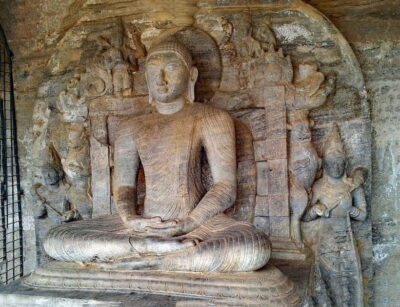
Your day starts at Isurumuniya Temple, a rock temple connected to the reign of Devanampiya Tissa (around 307–267 BC). The setting is part of the magic. The temple sits around a lotus pond, and the best carved details are right there where you’ll naturally pause—especially the corner images of elephants playfully splashing water.
The stop is around 30 minutes, so you’re not meant to speed through. This is a good place to slow down because the attraction isn’t just the structure—it’s the small scene work in stone. If you like religious art, look for the way the carving focuses on motion and expression, not just decoration.
Admission isn’t included for this stop. Plan a little budget for the entry fee at Isurumuniya Maha Viharaya. For the rest of the day, many sites are free entry, so this one paid moment becomes easy to swallow.
Downside? Because the pond setting can be cooler than exposed ruins, some people underestimate how quickly the sun hits the next site. Bring water and plan for quick shade breaks. Isurumuniya rewards calm viewing, but the day moves on.
Ruwanweli Maha Seya: the white dagoba and its 344-elephant wall
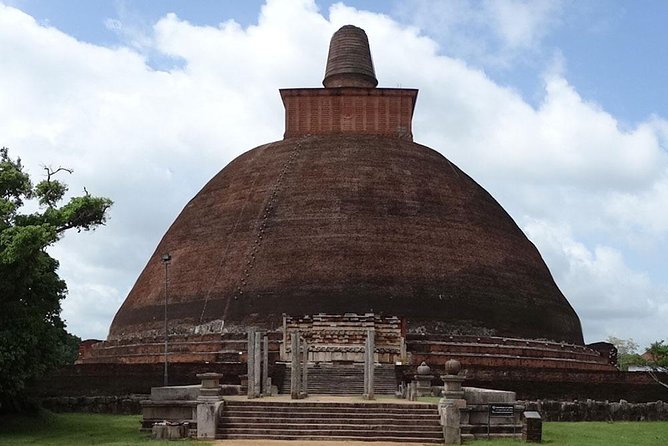
Then you hit one of Anuradhapura’s most recognizable symbols: Ruwanweli Maha Seya, a magnificent white dagoba. The standout feature here is the guarding wall with a frieze of 344 elephants, standing shoulder to shoulder.
Even if you don’t read every sign on site, the elephant wall tells you what to look for. It creates rhythm along the perimeter, and the sheer number makes the stupa feel like a living boundary—more like a protective system than a single monument.
A useful detail: many elephants you see today are modern replacements of earlier originals from around 140 BC. That fact is actually helpful when you visit. It reminds you that Anuradhapura isn’t frozen in time; it’s maintained, rebuilt, and still used. You’re looking at both continuity and care.
This stop is about 15 minutes, and admission is free. That combination makes it a great value moment—short time, big visual payoff.
If you’re photographing, arrive with your plan: do wide shots first to capture the stupa and wall together, then step in for the repeating elephant figures. The site rewards both views.
Abayagiriya Stupa: Jetavanarama scale and the sense of lost height
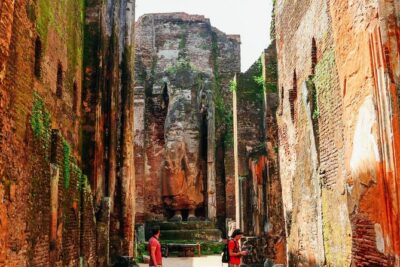
Next is Abayagiriya Stupa, part of the broader Anuradhapura complex story. You’ll notice the scale right away. The massive dome rises above the eastern area, and it’s tied to King Mahasena’s building effort in the 3rd century.
Here’s the fascinating perspective that makes this stop feel bigger than the time slot. The dome may have originally topped something like 120 meters, but today it’s around 70 meters. Even at the reduced height, it’s still imposing. That difference between then and now is exactly what makes Anuradhapura so compelling: you can sense the original ambition even when the structure has shrunk.
This stop is about 15 minutes, and admission is free. That gives you enough time to circle and get your bearings without turning it into a half-day commitment.
Practical note: because the dome is visible from multiple angles, you’ll want to watch the light and move a little. If the sun is high, take one set of photos quickly and save a final shot for later when shadows add texture to the brickwork.



Muragala (Guard Stone) and Ratnaprasada: small features with big meaning

Not every stop is about the biggest monument. You’ll also have time at Muragala (Guard Stone) and Ratnaprasada, each listed as about 15 minutes and free.
This is the kind of segment that can be easy to rush—because it’s not as visually dramatic as the major dagobas. But guard stones and related structures are part of the way these sacred spaces were designed. They mark boundaries and help define the ceremonial geography.
If you’re the type who enjoys how places were planned, this is your chance to pay attention to layout and stone placement rather than chasing a single skyline photo. Even short stops can teach you how Anuradhapura functioned as a whole, not just as a collection of monuments.
My advice: don’t treat this as filler. Use it to rest your legs and reset your eyes. Then you’ll enjoy Mihinthale more, since that climb-based stop asks for energy and patience.
Mihinthale: the Mahinda meeting story and a mountain viewpoint
Finally, you’ll head to Mihinthale, a mountain peak near Anuradhapura. This stop is about 30 minutes and free entry.
The story tied to Mihinthale matters, because it’s not just a scenic pause. Sri Lankans believe this is the site where the Buddhist monk Mahinda met King Devanampiyatissa, which is described as launching Buddhism in Sri Lanka. Standing in that setting, it’s easier to understand why people treat the place like a spiritual destination, not just a viewpoint.
Expect steps and a sense of elevation—plan for slower movement than at ground-level ruins. If you go at the wrong hour, the sun can feel sharp. If you go at a better hour, you can get comfortable views and a calmer atmosphere.
This stop pairs well with the rest of the day because it gives your brain a narrative anchor: you started with stone culture, moved through sacred monument scale, and end with the place-name that ties belief to place.
Price and what $125 buys in real terms

The listed price is $125 for this day tour. Value is more than cost, so here’s how I’d judge this one fairly.
First, you’re getting pickup offered and a mobile ticket, which helps reduce day-of friction. Second, it’s private—only your group participates—so you’re paying for comfort and pacing, not just transport.
Third, the admission structure is mixed:
- Isurumuniya Temple admission is not included
- Ruwanweli Maha Seya, Abayagiriya Stupa, Muragala (Guard Stone), Ratnaprasada, and Mihinthale are listed as free
So you should expect you’ll pay at least at Isurumuniya, and the rest should be easier. That matters for budgeting. Many tours oversell total inclusions; this one looks more transparent because it spells out which stops are free.
One pricing consideration: one booking experience described a post-payment price increase and a request for extra cash. I can’t predict if that happens to everyone, but I can tell you what I’d do: confirm the final payment amount before you hand over any cash, and keep a copy of what you agreed to. It protects you and keeps your day focused on seeing, not sorting math.
The real quality: caring staff, smart guiding, and comfort
The best part of this kind of private cultural day isn’t the monument list—it’s how smoothly the day runs. In the feedback connected to Lux Tours Lanka, the theme is care: friendly, helpful, and comfortable to be with.
Names that show up in positive experiences include guides like Laxman and drivers such as Kesara and Chana. You might or might not get the same people, but the pattern is clear: you’re not just hiring a car. You’re hiring someone to make sense of what you’re seeing, and to keep you supported if anything goes sideways.
I especially like the idea of a guide who can explain what you’re looking at in plain language. With ruins, context is everything. A quick explanation of what a stupa represents or how a story like Mahinda and Devanampiyatissa shaped the place can turn 15 minutes into something memorable.
There’s also a practical comfort angle. The feedback points to professionalism and availability for extra support if needed. That can matter in Sri Lanka where timing, heat, and small detours happen. You want someone who stays calm and helps you adapt without making you feel stressed.
How to make the day work: timing, heat, and photo strategy
This tour is short on paper at some stops and longer in total across the day. That means you need a strategy, not just a checklist.
Here’s what I’d do:
- Bring water and plan small sips between stops. Ruins days feel easy until you’re half dry.
- Use the free-stop time for wandering. For the free entrances (like Ruwanweli and Abayagiriya), take a few extra minutes if the site isn’t crowded.
- Photo in layers. At Ruwanweli Maha Seya, get a wide shot first, then move along the elephant wall for repeating patterns.
- At Mihinthale, move slower than you think. That viewpoint is worth it, but you don’t want to arrive puffed and cranky.
Dress matters here. You’re visiting active holy areas, and you’ll also be in outdoors heat. Light layers help. A hat can save your mood. If you’re carrying a bag, keep it easy to access for water and a light layer.
If you care about pace, ask for a day plan that fits your energy. Because the duration can be up to 15 hours, it’s smart to align expectations upfront.
Should you book Lux Tours Lanka’s Anuradhapura day tour?
I’d book this tour if you want a focused Anuradhapura day with private comfort, a plan that hits major monuments, and guides who are praised for being friendly and informative. The route is well balanced: rock temple charm, elephant wall spectacle, stupa scale, and a viewpoint tied to the Mahinda story.
I’d think twice if you’re the type who needs absolute certainty on every payment detail, because there’s been at least one snag reported about a price increase after payment. If you choose to go, fix that risk by confirming the final total before paying anything extra.
For most people—especially first-timers who want maximum impact without planning a route themselves—this is a strong value way to see Anuradhapura.
FAQ
How long is the Anuradhapura day tour?
The tour duration is listed as approximately 5 to 15 hours, depending on your schedule and how the day runs.
Does the tour include pickup?
Yes, pickup is offered. The listed meeting point is Bandaranayake Intl Airport in Colombo.
Is it a private tour?
Yes. This is a private tour/activity, and only your group will participate.
Are entrance tickets included?
Not all stops are included. Isurumuniya Temple lists admission ticket not included, while several other sites in the itinerary are marked as free entry.
What are the main stops during the day?
The itinerary includes Isurumuniya Temple, Ruwanweli Maha Seya, Abayagiriya Stupa, Muragala (Guard Stone) with Ratnaprasada, and Mihinthale.
What is the cancellation policy?
Free cancellation is available if you cancel at least 24 hours in advance for a full refund. If you cancel less than 24 hours before the start time, the amount paid is not refunded.