REVIEW · COLOMBO
Colombo Social and Political Walk
Book on Viator →Operated by Planetwonk · Bookable on Viator
A good political story starts with where people stand. This Colombo walk uses real city stops to explain how Sri Lanka’s modern state formed, then connects it to the pressures hitting daily life right now. It’s built like an interactive documentary: information-forward, with a balanced, non-partisan tone so you can form your own take. Colombo Port City to BMICH is the basic arc.
I love two things most: the way the route links politics and economics in plain language, and the fact that it’s not only history on a timeline. You also get a human, current-day angle on shortages of food, fuel, and electricity, and how that ripple shows up in businesses and healthcare. One possible drawback: it’s heavy on content, so if you want a casual sightseeing stroll with minimal talking, this may feel a bit intense.
In This Review
- Key points before you go
- Politics in walking shoes: what this 2.5-hour loop actually does
- Price, timing, and the value of a documentary-style walk
- Where you meet: Kingsbury Colombo to Colombo Port City
- Pettah market and Good market: where everyday economics becomes visible
- Tea Avenue and the Dilmah building: business, trade, and national identity
- World Trade Center to Old Parliament: money meets governance
- Independence Square and BMICH: from state-building to today’s pressure
- What to pay attention to during the walk
- The guide and the tone: balanced, but not vague
- Who this Colombo walk is best for
- Should you book this tour?
- FAQ
- What time does the Colombo Social and Political Walk start, and where do I meet?
- Where does the tour end?
- How long is the experience?
- How many people are in a group?
- What topics will the guide cover during the walk?
- Which stops are included on the route?
- Do I get a mobile ticket?
- What happens if the weather is poor or I need to cancel?
Key points before you go
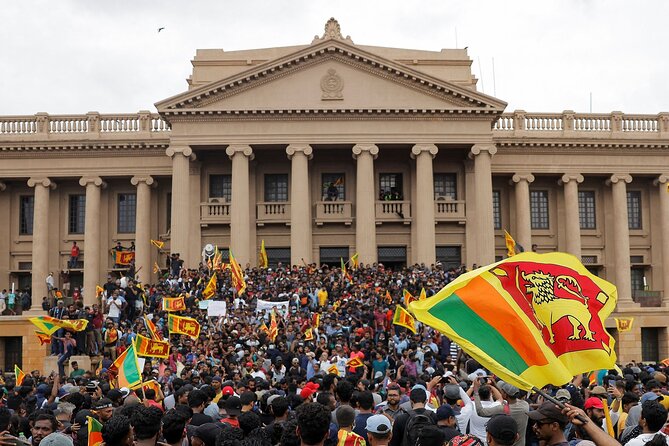
- A documentary-style walk: interactive storytelling with lots of context, not just photo stops
- Clear social-and-political focus: from the creation of the modern state to today’s situation
- A route that connects systems to streets: markets and major institutions side by side
- Max group size of 25: small enough for questions while still moving along
- Starts at 5:00 pm: evening light and a more relaxed pace than a midday tour
Politics in walking shoes: what this 2.5-hour loop actually does
This isn’t a “look at that building” tour. It’s a cause-and-effect walk through Colombo, where each stop is used like a chapter. The aim is to help you understand Sri Lanka’s social and political layers from formation of the modern state to current events, with a balanced approach that does not push a single viewpoint.
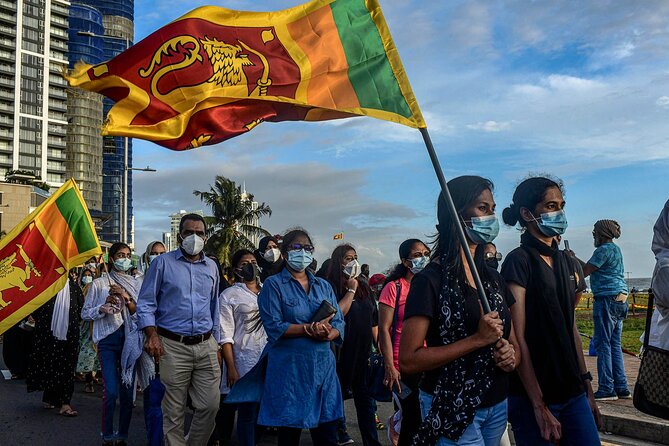
Right now, Sri Lanka is dealing with shortages of essential supplies—food, fuel, and electricity—and those shortages disrupt everyday life and even healthcare services. The walk takes that reality seriously, using the city as a living case study. That’s why it works so well in a walking format: you see how big political and economic decisions land on street-level life.
Also, it’s designed for people who actually want to know what’s going on. If you’re curious about politics, and you like learning through first-hand observation, you’ll probably enjoy the way the guide frames questions and prompts you to look closer.
You can also read our reviews of more walking tours in Colombo
Price, timing, and the value of a documentary-style walk
The price is $35.99 per person for about 2 hours 30 minutes. For this kind of information-heavy route, I think that’s reasonable value because you’re paying for guided explanation that ties multiple Colombo landmarks into one storyline.
The tour starts at 5:00 pm and ends at BMICH, so you’re out during a time when the city feels less harsh than peak midday heat. You’ll still want to be ready for walking time and evening temperatures. Since the experience is weather-dependent, I also recommend checking the forecast on the day—good weather matters for the flow of an outdoor route.
One extra detail that tells me the tour likely has real demand: it’s commonly booked about 19 days in advance on average. That’s a good sign if you like planning ahead and prefer to lock in a specific time.
Where you meet: Kingsbury Colombo to Colombo Port City
Your start point is Kingsbury Colombo, at 48 Janadhipathi Mawatha. From there, the walk heads toward Colombo Port City. Even before you reach any landmark, the location of Kingsbury Colombo sets the tone: you’re starting near a major urban node, not a tucked-away side street.
Then Port City becomes your first anchor for how Colombo connects to bigger forces. You use a modern, globally connected space to set up the story of economic and political direction—how the city’s position in trade and international attention can shape priorities. It’s a smart opening stop because it tells you what kind of narrative the guide will maintain: systems first, then consequences.
If you’re someone who likes to understand how the “big picture” becomes normal life, Port City is a strong early chapter. If you prefer quieter neighborhoods, you might find this first segment more institutional than cozy. Either way, it helps you get oriented fast.
Pettah market and Good market: where everyday economics becomes visible
Next up: Pettah market and Good market. Markets are one of the best places to learn social economics because you see people responding to the world in real time. When Sri Lanka faces shortages—food, fuel, and electricity—those pressures don’t stay abstract. They show up in what people buy, how businesses operate, and what everyday routines look like.
On this part of the walk, you can expect the guide to connect the politics of supply, stability, and governance to ordinary decision-making. Markets also work well for interactive storytelling because you can point, ask questions, and see the human side of policies without needing a lecture hall.
Pettah in particular is a high-energy setting, so it’s a good moment to keep your eyes open and your questions ready. The guide’s job is to translate what you’re seeing into context—why those market dynamics matter when the country’s systems are under strain.
A practical note: bring your patience. Market areas can be crowded and active. The tour is only about 2.5 hours, so the goal is to keep moving while still giving the story time to land.
Tea Avenue and the Dilmah building: business, trade, and national identity
Then the route shifts to Tea Avenue – Dilmah Building. This stop adds an economic layer that complements the markets. Tea isn’t just a product; it’s part of Sri Lanka’s trade identity, and it’s often tied to both domestic livelihoods and export narratives.
What makes this chapter useful is that it widens the lens. Instead of only focusing on politics and crisis, you also get a way to talk about sectors, brands, and how commerce intersects with state priorities. A good guide will connect corporate and commercial presence to broader economic goals, and then tie it back to what’s happening now.
If you’ve ever wondered how a country’s political direction shows up through business realities—employment, investment, international demand—this stop is where that conversation becomes concrete without getting overly technical.

World Trade Center to Old Parliament: money meets governance
From there you head to the World Trade Center and then Old Parliament. This is the backbone of the political story: trade and institutions on one side, governance and historic decision-making on the other.
The strength of this segment is the contrast. Trade districts help you think about economic power and global linkages. Parliament-related spaces help you think about how authority is built, maintained, argued over, and changed. Put them together on foot and the narrative becomes clearer: economic pressures help shape political outcomes, and political choices reshape economic conditions.
In a tour like this, Old Parliament is especially valuable because it naturally invites questions about how the state formed and how those early structures still echo today. Independence moments and constitutional choices rarely stay in the past; they show up later through policy directions and public expectations.
If you enjoy big-picture reasoning, this is likely the part you remember most. If you’re not a politics person, it can still work because the guide keeps it grounded in the realities of current life and the crisis context mentioned for the tour.
Independence Square and BMICH: from state-building to today’s pressure
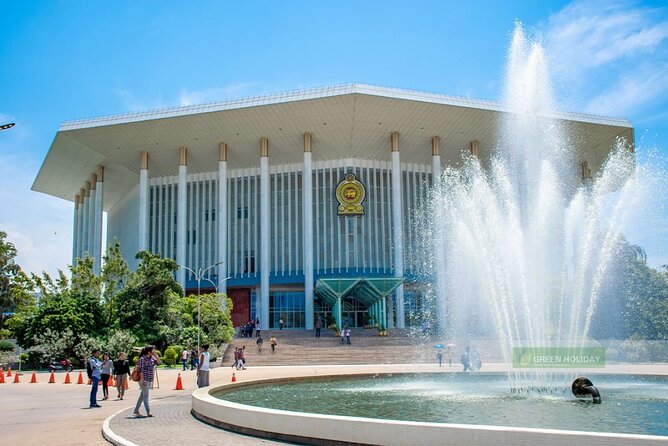
The final major stops are Independence Square and then BMICH (Bandaranaike Memorial International Conference Hall), where the walk ends at Bauddhaloka Mawatha.
Independence Square is the kind of place that forces you to think about symbolism—how nations tell their stories about identity and legitimacy. When you pair that with earlier stops about economics and governance, it becomes more than a photo spot. It becomes a checkpoint in the narrative: how Sri Lanka defines itself, and what that definition has meant as conditions change.
BMICH adds a different kind of meaning. As a conference hall, it signals national and international convening—where issues get discussed, where decisions take shape, and where public life gathers. Ending here helps the story land with a sense of forward motion, even while the tour acknowledges the current reality of shortages and disruption.
If your goal is to leave Colombo feeling like you understand the “why” behind what you see, this ending works well. You’re finishing at a recognizable landmark tied to public life, not at some random street corner.
What to pay attention to during the walk
I’d treat this tour like fieldwork. The guide is giving you the structure, but you’ll get more out of it if you also collect your own impressions. A few things to focus on:
- Watch for how everyday services and commerce feel when the country faces shortages like food, fuel, and electricity.
- Listen for the guide’s connections between past state-building and current events. The value here is the linking, not the facts alone.
- Ask yourself what you think the current crisis is doing to public life and healthcare, since that’s part of the tour’s framing.
- Keep your questions short. With a group size capped at 25, you’ll still have time to interact, but you don’t want to hijack the flow.
One more tip: comfortable shoes matter. You’ll be moving between major sites—some of which are more open and institutional, others more active and market-focused. A light layer for the evening can also help if you’re sensitive to temperature shifts.
The guide and the tone: balanced, but not vague
The experience is described as balanced and non-biased, with the flow and information-heavy style of a documentary. That matters because politics trips people up when they feel preached at. Here, the approach is meant to help you form your own views.
The most praised aspect I took from the experience: the guide named Chami is highlighted as very well informed. That’s exactly what I want in a tour like this—someone who can explain context clearly without turning the walk into a debate.
If you’re the type who gets frustrated by oversimplified history, you’ll likely appreciate how the tour handles both historical and current events in one sequence. It’s not only about what happened; it’s about how it affects what’s happening now.
Who this Colombo walk is best for
This works best for you if:
- You’re genuinely interested in politics and how decisions affect daily life.
- You want first-hand research—meaning you like learning by looking around, not only by reading.
- You prefer a guide who explains the background so you can interpret what you see.
It’s less ideal if:
- You want a purely scenic outing with minimal conversation.
- You’re easily overwhelmed by a lot of context in a short time.
If you fit the first group, you’ll probably feel like you got a crash course in Sri Lanka’s social and political wiring without needing to become a policy expert before you arrive.
Should you book this tour?
I’d book this Colombo Social and Political Walk if you want more than sightseeing and you’re curious about how history, economics, and governance connect to the crisis shaping current life. At $35.99 for about 2.5 hours, it’s priced in a way that feels fair for an information-forward, documentary-style experience—especially with a small group size that supports questions.
Two quick checks before you commit:
- If you like walking while learning, you’ll likely enjoy the structure and stop-by-stop narrative.
- If you’re sensitive to weather or you hate being outside for long stretches, plan around good conditions, since the tour requires good weather.
If you’re in Colombo for a short stay and want one activity that gives you real context fast, this is a strong choice.
FAQ
What time does the Colombo Social and Political Walk start, and where do I meet?
The tour starts at 5:00 pm. You meet at Kingsbury Colombo, 48 Janadhipathi Mawatha, Colombo, Sri Lanka.
Where does the tour end?
The tour ends at BMICH (Bandaranaike Memorial International Conference Hall), Bauddhaloka Mawatha, Colombo 00700, Sri Lanka.
How long is the experience?
The duration is approximately 2 hours 30 minutes.
How many people are in a group?
The tour has a maximum of 25 travelers.
What topics will the guide cover during the walk?
The walk covers social and political elements of Sri Lanka, including the creation of the modern state and events up to current times, from a balanced and non-biased perspective.
Which stops are included on the route?
The route includes Colombo Port City, Pettah market, Good market, Tea avenue – Dilmah Building, World Trade Center, Old Parliament, Independence Square, and BMICH.
Do I get a mobile ticket?
Yes, the experience includes a mobile ticket.
What happens if the weather is poor or I need to cancel?
The tour requires good weather. If it’s canceled due to poor weather, you’ll be offered a different date or a full refund. You can cancel for free up to 24 hours in advance for a full refund.