REVIEW · COLOMBO
Colombo Walking Tour with Ajeet De Soyza
Book on Viator →Operated by Ceymondu Escapes · Bookable on Viator
Colombo on foot feels like a reveal. This Colombo walking tour with Ajeet De Soyza trades bus windows for real street sights, with commentary that connects colonial buildings, religious life, and modern city change. I like the small group size (max 8) and the practical add-ons like snacks and bottled water. One caution: the pace can feel slow if you prefer shorter stops and less explanation, especially on a hot day.
You start and end right where many first-timers want to be: Galle Face Hotel and Galle Face Green. For about 3 to 4 hours and around $30, you also get private transportation between areas, so you’re not stuck walking every single meter. And yes, there’s one extra cost to plan for at a Buddhist temple donation.
In This Review
- Key things I’d plan around
- Start at Galle Face Hotel so Colombo clicks fast
- Small-group walking with Ajeet De Soyza (and lots of room to ask)
- Fort district on foot: from a royal prison to colonial showpieces
- King Sri Wickrama Rajasinghe Prison Cell (a dramatic opening)
- Dutch Hospital Shopping Precinct (how old gets reused)
- Colombo Fort Clock Tower (the small landmark that signals the era)
- The Central Bank Currency Museum and the colonial money story
- Cargills department store and the Grand Oriental Hotel: commerce meets status
- Cargills Department Store buildings (old retail bones)
- Grand Oriental Hotel (an imposing hotel with a long timeline)
- Religious landmarks: Red Mosque and Gangaramaya’s donation ticket
- Jami Ul-Alfar Mosque, aka the Red Mosque
- Gangaramaya Buddhist Temple (the one extra cost to plan)
- Pettah energy: Old Town Hall and the Pettah Bazaar walk
- Old Town Hall (the “how is this here?” stop)
- Pettah Bazaar (busy market time)
- Fort Railway Station to Galle Face Green: finish with the sea view
- Price and value: what $30 really buys (and what to budget)
- How long is it, and what should you wear?
- Who should book this Colombo walking tour
- Should you book Colombo Walking Tour with Ajeet De Soyza?
- FAQ
- How much does the Colombo walking tour cost?
- How long is the tour?
- Where does the tour start and end?
- Is there an entry fee for temples or other stops?
- What’s included in the tour price?
- How big is the group?
- Do I need good weather for this experience?
- What’s the cancellation policy?
Key things I’d plan around
- Max 8 people means easier questions and a calmer walk through busy areas
- Snacks and bottled water keep the day practical, not just sightseeing
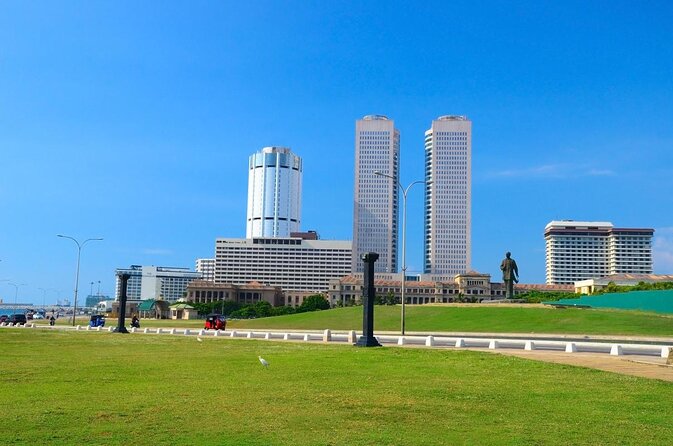
- Fort district focus mixes colonial architecture with modern institutions like the Central Bank Currency Museum
- Pettah Bazaar time adds local street energy beyond the big-name sights
- Gangaramaya Temple donation is the only clear extra payment to budget
- End at Galle Face Green gives you a natural finish with seafront atmosphere
Start at Galle Face Hotel so Colombo clicks fast
I like the choice of meeting at Galle Face Hotel because it helps you get oriented right away. From there, you’re positioned between the sea breeze vibe of Galle Face Green and the older commercial core that sits close by. You also avoid that awkward first-day problem where you’re miles from your bearings and every taxi ride feels like guesswork.
The tour wraps back at the same spot, in front of Galle Face Green. That matters. When you finish near a landmark, it’s easier to grab a meal, plan the next move, or just unwind without a complicated return plan.
This setup is also helpful if you’re doing Colombo as a short stop. Even with a few hours, you get a sense of how the city balances old colonial bones with everyday life today.
You can also read our reviews of more walking tours in Colombo

Small-group walking with Ajeet De Soyza (and lots of room to ask)
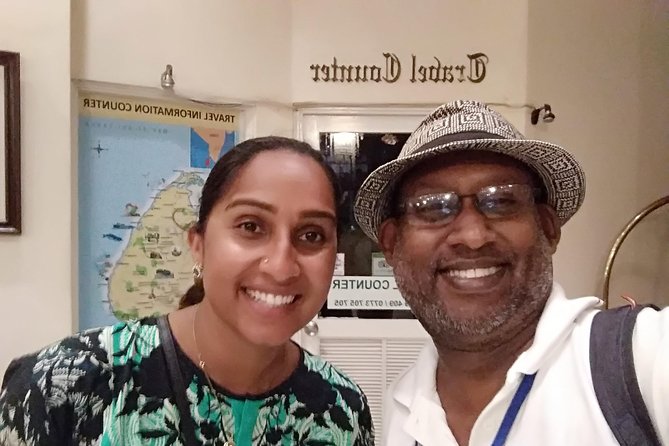
This isn’t a giant-group “look but don’t ask” tour. The group stays small enough that you can actually talk. The guide’s style comes through in the pattern of feedback: people highlight that Ajeet De Soyza is patient, engaging, and willing to answer questions about Colombo and Sri Lanka.
That question time is where walking tours can become more than a photo walk. When you move on foot, you notice details you’d miss from a car window: building shapes, how spaces get used, what looks old but still functions. A guide who pauses for questions helps you turn those details into understanding.
Just keep one thing in mind: some people find the commentary very detailed. If you’re the type who likes quick hits and fewer facts per stop, you may want to tell the guide early that you’d like a lighter pace. The tour structure gives room for that.
Fort district on foot: from a royal prison to colonial showpieces
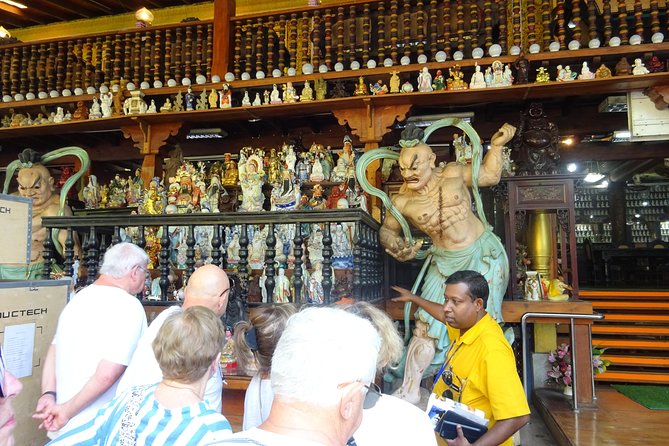
The heart of the day is the Colombo Fort zone, where colonial-era architecture stacks up like a living history lesson. The walking here is part sightline, part storytelling. You’ll see how power and commerce used to be organized, then how the city repurposed those spaces.
King Sri Wickrama Rajasinghe Prison Cell (a dramatic opening)
You kick things off at the King Sri Wickrama Rajasinghe Prison Cell. This spot connects to Sri Lanka’s last king of the old order. He was captured on 18 February 1815 in Madamahanuwara, and transferred to Colombo without entering Kandy. The history thread continues with the king and escort entering Colombo on 6 March 1815.
Why it’s a good first stop: it sets an emotional baseline. Before you reach the more decorative colonial buildings, you’re reminded that these places weren’t always sightseeing stops. Some were tools of control.
Dutch Hospital Shopping Precinct (how old gets reused)
Next you move to the Dutch Hospital Shopping Precinct. The Dutch Hospital is considered the oldest building in the Colombo Fort area from the Dutch colonial era. Today it functions as a heritage shopping and dining precinct.
This is where I like the tour’s mix. You get the architectural context, but you also see how the city keeps using old structures. It’s not just frozen in time behind fences.

Colombo Fort Clock Tower (the small landmark that signals the era)
Then comes the Colombo Fort Clock Tower in the Fort central business district. It’s described as a unique structure in the city. Even if you’re not a clock-tower fanatic, this kind of landmark helps you understand the grid of colonial urban planning and civic presence.
The Central Bank Currency Museum and the colonial money story
A big chunk of the Fort experience is about institutions—who ran the place and how they displayed authority. The Central Bank Currency Museum fits that theme in a very literal way.
You’ll stop at the Central Bank Currency Museum building, where construction began in 1911, starting with the foundation stone. At its opening, it was the tallest building in Colombo. The design is Greco-Roman in style, with a colonnade of Corinthian columns.
What I like about this stop is that it’s not only about big architecture. Currency museums help you think about the practical side of empire: trade, taxation, exchange, and how control can be built into everyday life. Even if you don’t spend ages inside, the exterior and setting make the point.
Cargills department store and the Grand Oriental Hotel: commerce meets status
The tour continues through a sequence of commercial and hospitality landmarks that show how Colombo positioned itself regionally.
Cargills Department Store buildings (old retail bones)
At Cargills Department Store, you see the old Cargills & Millers buildings, described as among the oldest department stores in Sri Lanka. The site originally held a Dutch building.
This stop works best if you enjoy how markets and shops shape neighborhoods. Department stores are more than retail. In colonial and post-colonial cities, they often signal who had purchasing power and what goods were considered important.
Grand Oriental Hotel (an imposing hotel with a long timeline)
Then you reach the Grand Oriental Hotel. It opened officially on 5 November 1875 and had 154 luxury and semi-luxury rooms. It’s described as the first of the modern type of imposing hotels erected in the East.
Even if hotels don’t sound like a priority, this matters because it shows Colombo’s outward-facing role. A grand hotel signals international connections, business travel, and the kind of city that wanted to look established.
Religious landmarks: Red Mosque and Gangaramaya’s donation ticket
Colombo isn’t only colonial stone. It also runs on faith, daily worship, and shared public space. This tour reflects that with two major stops.
Jami Ul-Alfar Mosque, aka the Red Mosque
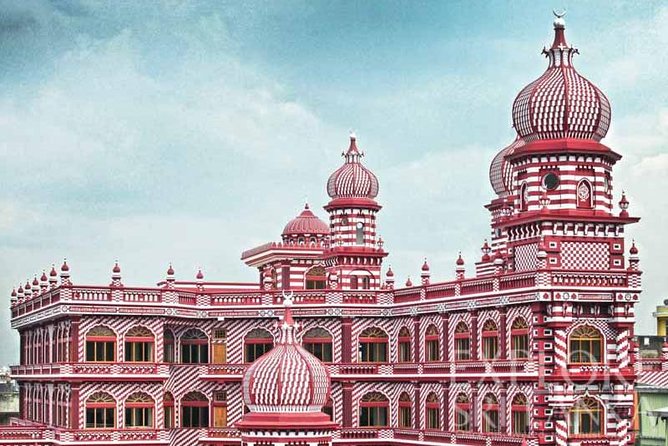
You’ll visit Jami Ul-Alfar Mosque, popularly known as the Red Mosque. It’s described as a unique masterpiece. The name alone gives you a quick visual hook, but the point here is cultural continuity: how religious architecture stays meaningful amid city change.
Gangaramaya Buddhist Temple (the one extra cost to plan)
Next is Gangaramaya (Vihara) Buddhist Temple, described as the main temple in Colombo with unique architecture influenced by many cultures. This stop’s admission is not included in the tour price. Instead, a donation is considered an admission fee, and you’ll be issued a ticket for about $2 per person.
Practical tip: treat this donation as part of your budget, not a surprise expense. Also, temples are often the most sensitive places for clothing and behavior. If you want the smoothest experience, dress respectfully and keep your phone use low while inside.
Pettah energy: Old Town Hall and the Pettah Bazaar walk
After the Fort’s bigger, official-looking buildings, you shift toward Pettah’s older business quarter feel. That change is one of the best reasons to do this tour rather than just staying in the polished colonial zone.
Old Town Hall (the “how is this here?” stop)
You’ll spend time at Old Town Hall, described as a little-known historic monument: a large gothic church-like mansion in Pettah. People often pass it without noticing what’s inside, and the description frames it as a treasure trove.
Why it’s worth your time: this is the kind of stop that gives you a Colombo “aha.” You realize the city has hidden corners that don’t always make it into postcards.
Pettah Bazaar (busy market time)
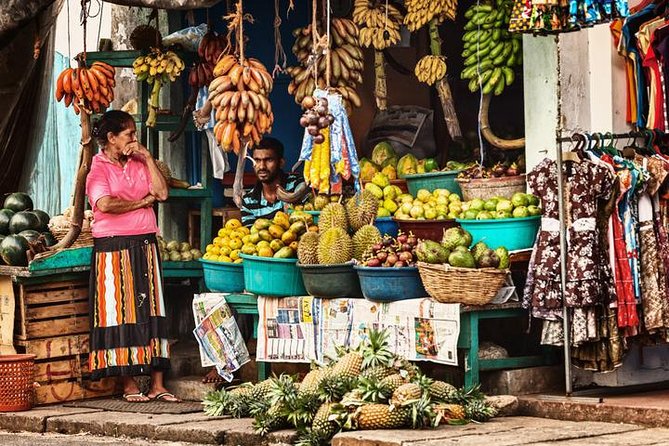
From there, the tour includes time to explore the busy markets of the Pettah Bazaar. This is the part where you get your hands on the real tempo of the city—street-level commerce, everyday movement, and a more local rhythm.
Even if you don’t shop, it helps you understand Colombo as something lived in, not just visited.
Fort Railway Station to Galle Face Green: finish with the sea view
You end the structured old-city circuit with the Colombo Fort Railway Station. Built by the British, it’s the major hub in the Colombo city. The admission ticket for this stop is included.
Railway stations can be travel by themselves. Here, it’s a reminder that Colombo’s history isn’t only about rulers and museums. It’s also about infrastructure: movement of people, goods, and ideas.
Then you finish back at the seafront. The tour includes a look toward the activities on the Green while you also get a glimpse into the past. You’ll see iconic buildings near the area, including the Old Parliament and the famous Galle Face Hotel. A British colonial-era neo-baroque-style building connected to the Legislative Council of Ceylon is also part of the viewing context, with Sir Henry McCallum linked to the idea that led to the proposal.
This final stretch is a good “reset.” You stop moving through tight streets and shift to open-air space by the water.
Price and value: what $30 really buys (and what to budget)
At $30, this tour sits in a solid midrange spot for Colombo. Here’s how you’re getting value:
Included essentials:
- Bottled water and snacks
- Government fees
- Private transportation
- Entry coverage at several key stops (many are listed as free; Old Town Hall and Fort Railway Station are listed as included)
Main extra you should expect:
- Gangaramaya Temple donation ticket around $2 per person
So you’re not just paying for walking. You’re paying for a guided path through the Fort, a protected time slot at Pettah, and the practical comfort bits that keep you from turning the day into a dehydration test.
If you’re trying to choose between this and a more general sightseeing loop, I’d pick this one if you like architecture plus context plus the chance to ask questions.
How long is it, and what should you wear?
The tour runs about 3 to 4 hours. That’s long enough to cover multiple neighborhoods, but short enough to fit into a first or second day in Colombo.
Because it’s a walking tour in a warm climate, bring comfort over style. One piece of repeated practical advice: wear comfortable shoes and plan for heat. Even with bottled water included, Colombo sun can make any schedule feel longer than it is.
Also, keep in mind that there are short moments of “transfer” thanks to private transportation. That helps you save energy for the stops that need attention.
Who should book this Colombo walking tour
This is a strong choice if:
- You want a Fort + Pettah mix in one outing
- You like historical context tied to real streets
- You prefer small group pacing and questions
- You’re trying Colombo fast and want a guided route that ends near Galle Face Green
You might skip it if:
- You dislike long explanations and want ultra-fast stop-and-go
- You’re heat-sensitive and want a mostly seated experience
- You’d rather pay extra for a more attraction-heavy plan with fewer cultural stops
It’s a great “get your bearings” tour. But it’s also a thinking tour, so go in ready to listen.
Should you book Colombo Walking Tour with Ajeet De Soyza?
Yes, if you want a guided walk that actually connects Colombo’s colonial landmarks to the city you’ll still see today. The combination of small group size, snacks and water, and the Fort-to-Pettah route is good value, especially if you’re visiting for the first time.
My call: book it early in your trip so the details land while the city is still unfamiliar. If you’re worried about pace, tell Ajeet at the start that you prefer shorter explanations. The structure gives you a chance to shape the experience.
FAQ
How much does the Colombo walking tour cost?
The price is $30 per person.
How long is the tour?
It runs about 3 to 4 hours.
Where does the tour start and end?
It starts at Galle Face Hotel, 2 Galle Rd, Colombo 00300, Sri Lanka, and it ends at the same place in front of Galle Face Green.
Is there an entry fee for temples or other stops?
Most stops are listed as free or included, but Gangaramaya Buddhist Temple has an admission donation. A ticket is issued by the temple, and it’s listed as about $2 per person.
What’s included in the tour price?
Bottled water, snacks, government fees, and private transportation are included.
How big is the group?
The group is capped at a maximum of 8 travelers.
Do I need good weather for this experience?
Yes. It requires good weather. If it’s canceled due to poor weather, you’ll be offered a different date or a full refund.
What’s the cancellation policy?
Free cancellation is available up to 24 hours in advance for a full refund.