REVIEW · COLOMBO
Colombo Tuk Tuk City Tour
Book on Viator →Operated by Private Tuk Tuk Tour – Discover Colombo Like a Local · Bookable on Viator
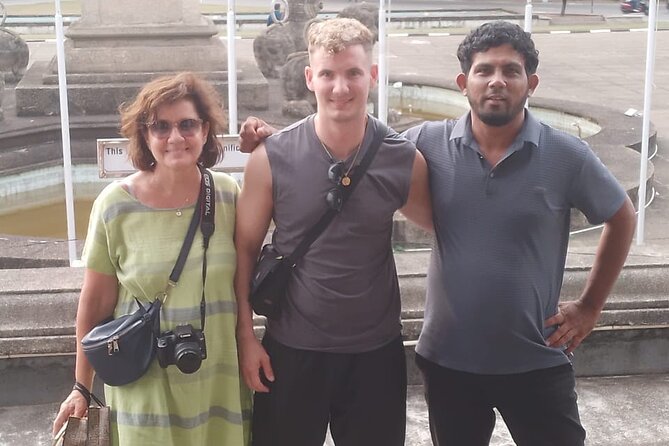
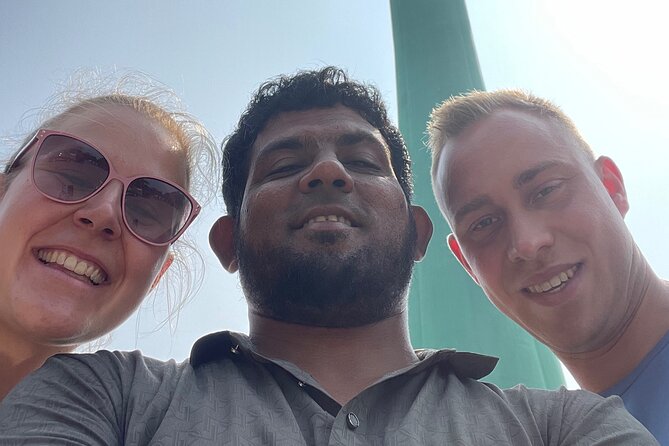
Four hours, and Colombo feels close. This private tuk-tuk route puts you in both old and newer Colombo fast, led by a friendly local driver with English skills. I love the hotel pickup and drop-off, which saves you the hassle of finding transport in traffic. I also love that the loop mixes major landmarks with market energy, so you get a sense of how the city actually lives.
You do need to plan for one snag: some stops can cost extra once you arrive. The tour price is $20 per person, but the details list additional entry fees for Gangaramaya Temple ( $2 per adult ) and Colombo Lotus Tower ( $20 per adult ), so I’d confirm which tickets are truly covered for your date. Also, with about 10–25 minutes per stop, you’ll be choosing what to linger over.
The upside is that you’re not doing this alone on a map. You’re rolling comfortably with bottled water, parking and fuel covered, and a driver who can help you prioritize in real time. It’s a practical way to get your bearings fast when Colombo is new to you.
In This Review
- Key points before you go
- Why a private tuk-tuk makes sense for Colombo
- Price and ticket math for a $20 tuk-tuk day
- Pettah and Jami Ul-Alfar Mosque: Colombo’s Red Mosque in 20 minutes
- Colombo Lotus Tower: South Asia’s tall self-supported landmark
- Ceylon Tea Supermarket: buy something you’ll actually use
- Galle Face Green: sea air and 500 meters of public space
- Viharamahadevi Park: Colombo’s biggest green spot near the National Museum
- Old Parliament Building and Independence Memorial Hall: government landmarks you’ll recognize
- Beira Lake cluster: Floating Market, Gangaramaya, and Seema Malakaya
- Pettah Floating Market
- Gangaramaya Temple
- Seema Malakaya Temple
- Hindu temple carvings and the Colombo Lighthouse area
- Colonial churches and practical souvenir stops: Wolvendaal, Laksala, and jewelry
- Laksala: state-owned gifts and souvenirs
- Salie’s Fine Jewelry & Gem Stones
- Included drive-by highlights you might otherwise miss
- How the 4 hours usually feels on the ground
- Should you book this Colombo Tuk Tuk City Tour?
- FAQ
- How long is the Colombo Tuk Tuk City Tour?
- Is this tour private or shared?
- Do you get hotel pickup and drop-off?
- What entrance fees are not included?
- What’s included during the tour?
- Can I cancel for free?
Key points before you go
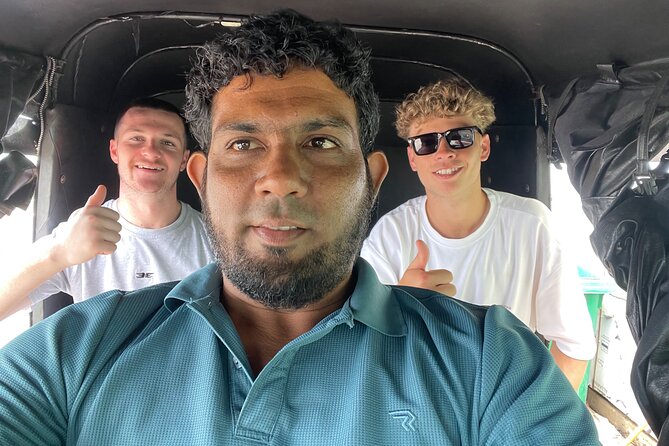
- Private tuk-tuk with hotel pickup and drop-off in Colombo city area
- English-speaking friendly driver and a route that blends old and newer sights
- Most major stops have timed visits, usually 10–25 minutes each
- Extra ticket costs can apply for Gangaramaya Temple and Lotus Tower
- Shopping stops are built in, including a tea/spices store and Laksala
- Beira Lake and sea-side parks help break up temple and market time
Why a private tuk-tuk makes sense for Colombo
Colombo traffic can be unpredictable, and public transport isn’t designed for hopping between specific sites quickly. A private tuk-tuk solves that. You get door-to-door hotel service within the Colombo city area, plus bottled water during the tour, which sounds small until you’re out walking in the sun.
Also, a private setup means your driver isn’t sharing time with strangers. That matters on a route like this, where you’re moving between neighborhoods like Pettah, Beira Lake, and the government-area landmarks. Even if you don’t spend long inside any one place, you’ll still come away with clear visual anchors for the city.
You can also read our reviews of more city tours in Colombo

Price and ticket math for a $20 tuk-tuk day
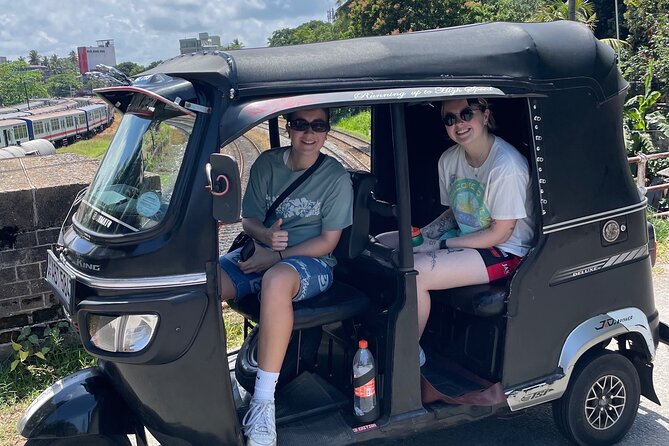
At $20 per person, this tour is priced like a short introduction to Colombo rather than a deep-dive itinerary. The value comes from what’s bundled:
- Private transport with hotel pickup and drop-off (Colombo city area)
- Bottled water
- Parking fees and fuel surcharge
- Time at a long list of major spots, with several admissions listed as included (like the tea/spices store and multiple parks/temples)
The one area you should double-check is entrance fees. The pricing details specifically list Gangaramaya Temple ($2 per adult) and Colombo Lotus Tower ($20 per adult) as not included, while parts of the itinerary state Lotus Tower admission is included. That kind of mismatch can happen with online descriptions.
If Lotus Tower ends up being extra on your booking, your effective per-person cost becomes $42 ( $20 tour + $20 Lotus Tower + $2 Gangaramaya ), assuming you’re paying both. If those tickets are covered, it stays a simple $20 entry-fee day.
Either way, you’re getting a structured route you can’t easily replicate on your own without time lost figuring out transport.
Pettah and Jami Ul-Alfar Mosque: Colombo’s Red Mosque in 20 minutes
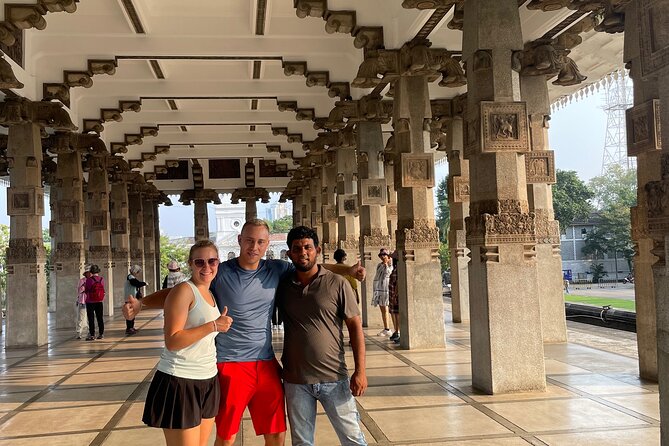
Your first stop is Jami Ul-Alfar Mosque, often called the Colombo Red Mosque. It’s in Pettah, and it’s known for its unusual color patterns and design. The mosque was built in 1908 by Indian Muslims, which gives it an early-20th-century story you can feel as you look at the architecture.
This is also one of those stops where 20 minutes is enough to:
- get the key photos
- read the setting around the building
- observe the neighborhood vibe in Pettah nearby
Admission is listed as not included, so keep a little cash or card-ready for the entry line. Dress code expectations at religious sites can vary, so plan to carry something light for shoulders/legs just in case.
Colombo Lotus Tower: South Asia’s tall self-supported landmark
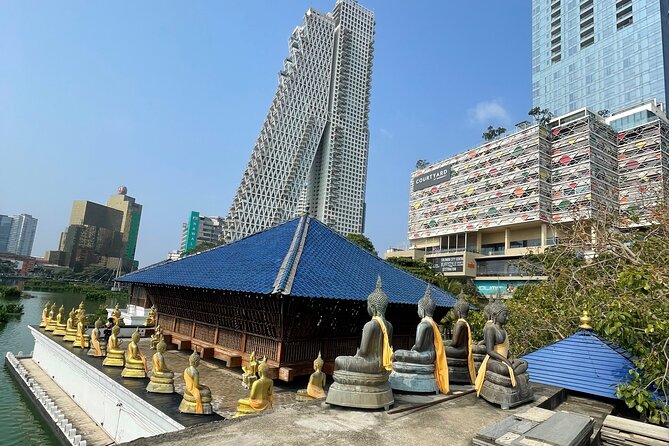
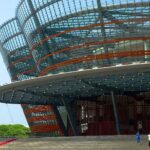
Next up is Colombo Lotus Tower, described as South Asia’s tallest self-supported structure and Sri Lanka’s tallest skyscraper. Construction began in 2012, and it opened to the public on 15 September 2022.
You’ll have about 20 minutes here, which is short. With limited time, I’d treat it like orientation and views rather than a long sit-down visit. If the tower entrance is covered on your ticket, great. If not, expect an extra $20 per adult based on the tour pricing details.
Because the info around admission coverage is not fully consistent, the smart move is to confirm at booking: for your date, is Lotus Tower paid by the tour, or on your own?
Ceylon Tea Supermarket: buy something you’ll actually use
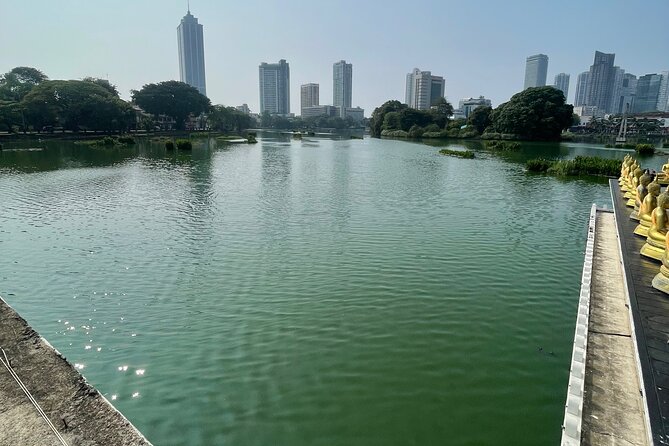
Then you’re dropped into the practical side of Colombo with Ceylon Tea Supermarket. You get around 15 minutes, with admission listed as included, and the focus is on taking home real Sri Lankan tea.
Why this stop works on a city tour: it’s not just a souvenir kiosk. It’s a dedicated place to browse teas and match what you like with what you’ll actually brew later. In a city where everything can feel like a sales pitch, having a named tea shop helps you stay grounded and buy with confidence.
If you want to avoid carrying too much, buy smaller packets. A tea haul is easy to pack compared with bulky items.
Galle Face Green: sea air and 500 meters of public space
Galle Face Green is one of Colombo’s best breaks between temples and markets. It’s an ocean-side urban park about 5 hectares in size and stretches roughly 500 meters along the coast.
The park has a history you can spot even if you never read a sign: it was originally laid out in 1859 for horse racing. Later, it became a sports area for things like cricket, golf, polo, and rugby. Today, it’s a favorite gathering spot, and even in a short 15-minute stop you can absorb the sea-view rhythm of the place.
If you time it right, it’s also a good photo pause. If you don’t, it’s still a calm moment that doesn’t require any ticket.
Viharamahadevi Park: Colombo’s biggest green spot near the National Museum
Next is Viharamahadevi Park, the oldest and largest park in Colombo. It sits by the National Museum and is named after Queen Viharamahadevi. It used to be called Victoria Park, and the site was once occupied by the British.
You’ll get about 20 minutes. In that time, I’d use it to:
- step out of traffic noise
- take a few wide shots
- reset before the city’s more intense temple and market scenes
Parks can sound like filler on paper, but in Colombo, they matter. They give you breathing room between crowded areas like Pettah and the more formal spaces like memorial buildings and religious sites.
Old Parliament Building and Independence Memorial Hall: government landmarks you’ll recognize
Colombo has colonial-era bones, and this tour touches them quickly.
First is the Old Parliament Building, a colonial-era Neo-Baroque building that served as Parliament until 1983. Today it houses the Presidential Secretariat. You’ll only have about 10 minutes, so don’t plan on a full exterior-to-interior experience. Think photos, positioning, and context.
Then you move to Independence Memorial Hall. It was built to commemorate Sri Lanka’s independence from Britain, modeled after the Magul Maduwa (Royal Audience Hall) in Kandy. This location also marks where the first Parliament was opened in 1948. You’ll have around 10 minutes, which is enough to appreciate the purpose of the place, even if you don’t go deep into details on-site.
If you want a fast, accurate feel for modern Sri Lankan identity after colonial rule, these two stops do the job.
Beira Lake cluster: Floating Market, Gangaramaya, and Seema Malakaya
This is the part of the tour that feels most distinctly Colombo because it mixes shopping, temples, and lake views.
Pettah Floating Market
The Pettah Floating Market is a set of pavilions on Beira Lake, with around 90 stalls selling fruits, vegetables, flowers, and handicrafts. There are also restaurants and cafes along the walkways, which helps the area feel less like a quick photo stop and more like a place to browse for 10 minutes.
If you’re a person who likes color and snacks, this stop usually hits the sweet spot. If you’re not, focus on one thing: pick a small item from a stall and keep it simple.
Gangaramaya Temple
Then comes Gangaramaya Temple, a major Buddhist temple with eclectic architecture and a large collection of religious artifacts. You get about 20 minutes here, but there’s a key cost detail: Gangaramaya Temple entrance fee is listed as $2 per adult and not included.
Also, religious sites can have quiet rules about behavior and photography. When in doubt, keep your voice down and follow any signage.
Seema Malakaya Temple
Finally, Seema Malakaya Temple sits on Beira Lake and is used mainly for meditation. It’s part of the Gangaramaya Temple complex and was built in the late 19th century. It’s a short stop at about 10 minutes, but the purpose is clear: a calmer pause after more active sightseeing.
This trio works because the tour doesn’t just throw temples at you back-to-back. It alternates energy levels: market movement, temple formality, then meditation quiet.
Hindu temple carvings and the Colombo Lighthouse area
Colombo also has deep Hindu presence, and you’ll see it at Temple Of Sri Kailawasanathan Swami Devasthanam Kovil. This temple is dedicated to Shiva and Ganesh, and it features colorful Dravidian-style carvings.
You get around 25 minutes, which is unusually generous for a tour stop. Use that extra time. Look slowly at the carvings instead of rushing for photos. If you like architecture, this is one of the stops that rewards patience.
Then you head to Colombo Lighthouse, a functioning lighthouse from 1952 symbolizing the city’s maritime heritage. Public access is limited, so treat this as a heritage viewing stop rather than a climb-and-explore mission. About 10 minutes is enough to capture the idea of the lighthouse and move on.
Colonial churches and practical souvenir stops: Wolvendaal, Laksala, and jewelry
Colombo has a mix of religious styles, including Dutch colonial-era Christian architecture. The tour includes Wolvendaal Church, a Protestant church from Dutch colonial times and one of the oldest still in use in Sri Lanka. Expect about 10 minutes for photos and a quick orientation.
Then you move into shopping with two named stops that are easier to use than random market hunting.
Laksala: state-owned gifts and souvenirs
Laksala is described as Sri Lanka’s only state-owned gift and souvenir store. It sells crafts, batiks, teas, spices, gems, and jewelry. You’ll have about 10 minutes. This is useful if you want a predictable shopping environment where the product category is clear.
Salie’s Fine Jewelry & Gem Stones
Next is Salie’s Fine Jewelry & Gem Stones, a reputed jewelry manufacturer specializing in platinum, gold, and silver pieces set with Sri Lankan gemstones. The details note over three decades of expertise in gemstone cutting and fine jewelry craftsmanship.
This stop can be fascinating if you enjoy the design side of gemstones. It can also be a time sink if you don’t want to browse jewelry. In a tour with short stops, keep your expectations realistic: you’re seeing what’s available, not negotiating a life decision.
Included drive-by highlights you might otherwise miss
Beyond the major stops, the tour includes time or mention of several city landmarks that help stitch the route together. Included items list Maritime museum, Old light house, Clock tower, and Cargills building, along with traditional gem & jewelry shop and Ceylon tea and spices shop.
Even if you don’t get a long stay at every one of these, they matter because they help you connect what you see in photos to what’s actually around you in the neighborhoods.
How the 4 hours usually feels on the ground
With an approx 4-hour duration and many sites, the tour is best for getting oriented, not for deep study. You’ll be stepping in and out of vehicles often, and you’ll likely do small walks around each stop.
A few practical tips based on how this schedule is structured:
- Wear comfortable shoes. Even short stops can involve uneven pavement near markets.
- Bring a little extra cash for the Gangaramaya fee and possibly Lotus Tower if it’s not covered.
- If you plan to shop, set a spending limit early. You’ll hit both Laksala and a jewelry-focused store in the same tour block.
- Use the park stops as your reset time. Galle Face Green and Viharamahadevi Park keep the day from feeling all religious-and-market all the time.
If you’re the kind of visitor who likes structure and variety, this format is a win. If you prefer slow pacing and long museum time, you’ll probably want to pair this with one separate longer visit later.
Should you book this Colombo Tuk Tuk City Tour?
I think you should book if you want a fast, organized introduction to Colombo with a private tuk-tuk, hotel pickup, and a route that covers both major landmarks and local market texture. It’s also a good fit if you’re shopping for Ceylon tea or you want a straightforward way to buy souvenirs without wandering for hours.
I’d hesitate if you dislike extra entry fees or you’re the type who needs lots of time inside big-ticket places like the tower and major temples. Also, because the details around Lotus Tower admission coverage may vary, confirm what you’ll pay on arrival.
If you like your tours efficient and practical, this is a strong way to make your first day in Colombo feel organized instead of chaotic. Just confirm those two ticket costs, and you’ll be set.
FAQ
How long is the Colombo Tuk Tuk City Tour?
The tour lasts about 4 hours.
Is this tour private or shared?
This is a private tour. Only your group will participate.
Do you get hotel pickup and drop-off?
Yes. There is hotel pickup and drop-off for the Colombo city area.
What entrance fees are not included?
The Gangaramaya Buddhist temple entrance fee is listed as $2 per adult, and the Colombo Lotus Tower entrance fee is listed as $20 per adult.
What’s included during the tour?
Private transportation with hotel pickup and drop-off (Colombo city area), bottled water, parking fees, fuel surcharge, and several included stops such as Galleface park, Maritime museum, Old light house, Clock tower, and multiple market and temple areas. (Some specific entrance fees are noted as extra, see above.)
Can I cancel for free?
Yes. You can cancel up to 24 hours in advance for a full refund. If you cancel less than 24 hours before the start time, the amount paid is not refunded.