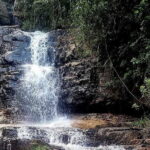
Ella’s waterfalls feel personal with a local guide. This private tour through Sri Lanka’s hill country is built around famous stops like Nine Arches Bridge, air-conditioned vehicle comfort, and real walking breaks at Upper Diyaluma, tea country, and a quiet waterfall. You’ll also get stories and context that are hard to spot when you’re just winging it.
What I really like: the custom itinerary lets you set your pace, and you avoid the tuk-tuk and cab shuffle by using door-to-door private car time. One thing to consider is that this can be a long day with a proper hike, so plan for early starts and bring footwear you trust on uneven ground.
In This Review
- Key things that make this Ella day tour work
- Why a private Ella full day feels easier than DIY
- Price and what you’re really paying for ($66.37 per person)
- Timing tips: how to pace a 5–12 hour day without burning out
- Stop 1: Upper Diyaluma Falls trek from Ella (38.5 km, about 1h 3m)
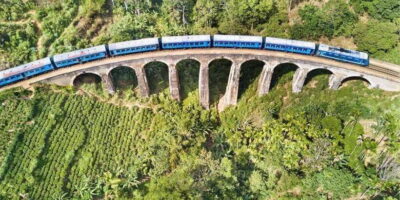
- Stop 2: Nine Arches Bridge in about 30 minutes (and it’s free)
- Stop 3: Lipton’s Seat at 1,970 meters (best at sunrise)
- Stop 4: Uva Halpewatte Tea Factory Tour (6 km from Ella)
- Stop 5: Pallewela Waterfall for a quieter swim break (100 rupees)
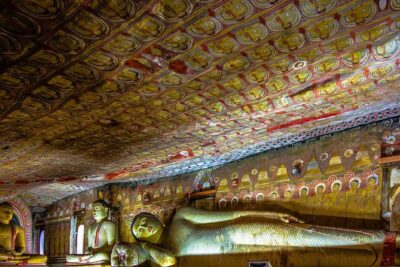
- Stop 6: Mahamevnawa Buddhist Monastery for a calm end to the day
- Guide quality: why Shashicka’s name keeps coming up
- Who this Ella full day tour suits best
- Should you book this Ella full day tour?
- FAQ
- Where does the tour start and end?
- How long is the Ella full day tour?
- Is pickup included?
- What’s included in the price?
- Are WiFi and mobile tickets included?
- Are entrance fees included for every stop?
- Which stops have free admission?
- What’s the best time to visit Lipton’s Seat?
- What happens if weather is poor?
- What is the cancellation policy?
Key things that make this Ella day tour work
- Private, flexible routing: you can tailor timing and pace instead of being stuck in one rigid loop
- Upper Diyaluma is the big physical moment: a trek that runs through a rubber estate on the way up
- Iconic engineering plus quick stops: Nine Arches Bridge is short, sweet, and free
- Tea country with specifics: Uva Halpewatte’s British-era factory story is part of the visit
- A calmer break than the usual hotspots: Pallewela Waterfall is described as less known and good for a safe swim
Why a private Ella full day feels easier than DIY
Ella is easy to romanticize: misty views, tea slopes, and waterfalls that look close enough to touch. But once you try to link everything together on your own, timing becomes the real enemy—drivers are hard to coordinate, you can’t easily chain stops, and you may miss the small details that give each place its meaning.
This tour is designed to remove that friction. You get a comfortable private vehicle, guided stop-to-stop pacing, and the freedom to choose departure time and adjust how hard you want the day to feel. The stops themselves are a smart mix too: big-name attractions (like Nine Arches Bridge and Lipton’s Seat) plus nature breaks (Upper Diyaluma and Pallewela) and a spiritual pause at Mahamevnawa Monastery.
If you’re the kind of traveler who likes to make one day count, this setup is ideal. And if you’re the kind who gets tired of rushing, the “customizable private” angle helps you soften the day rather than just survive it.
You can also read our reviews of more tours and experiences in Ella.
Price and what you’re really paying for ($66.37 per person)
At $66.37 per person, you’re paying for more than a ride. You’re effectively buying organization: private transport with air-conditioning, door-to-door convenience starting in Ella, and a guide to connect the dots between waterfalls, bridges, tea history, and viewpoints.
Here’s how that value shows up in practical terms:
- You avoid time lost to negotiating transport between scattered hill-country sights.
- You get the freedom to shape the day (departure times and pacing), which can prevent “sightseeing fatigue.”
- You’re not stuck with a one-size itinerary—this tour is built to be customized.
One caution: the tour price is not the same thing as “everything is included.” Entrance fees are listed as separate and vary by stop. You’ll definitely want some cash on hand.
From the information provided, you should expect at least these explicit paid items:
- Upper Diyaluma Falls entrance fee: 350 rupees per person
- Pallewela Waterfall entrance fee: 100 rupees (listed as included in the tour)
Other stops are marked as free or not included, so budget an extra small amount for viewpoints and the tea factory.
Timing tips: how to pace a 5–12 hour day without burning out
The tour duration is listed as 5 to 12 hours (approx.), which is a wide range for a reason: your selected departure time and your chosen pace affect everything.
The big timing driver is Lipton’s Seat. It’s described as best visited at sunrise, which can mean very early pickup and a longer overall day. If sunrise is your priority, plan for that early start and treat the rest of the day as the “reward” after the early climb.
Also, Upper Diyaluma includes trekking time. The itinerary lists about 2 hours for the Upper Diyaluma experience, and the trek goes through a rubber estate before reaching the top. That’s not just a stroll, so if you’re traveling with limited mobility, you’ll want to manage expectations and pace carefully.
For a smoother day, I’d use this simple rule:
- Pick one “main effort” stop (Upper Diyaluma or sunrise at Lipton’s Seat).
- Keep the rest flexible.
A private guide helps you do that in real time—adjusting when you move on, how long you stay, and when you take a breather.
Stop 1: Upper Diyaluma Falls trek from Ella (38.5 km, about 1h 3m)
Upper Diyaluma Falls is the adventure anchor of the day. From Ella it’s about 38.5 km, roughly 1 hour 3 minutes by road, then you’re into the trekking portion.
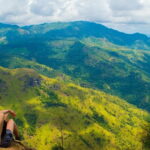
What makes this stop special is the climb itself. The trek passes by multiple waterfalls and natural pools as you work your way upward, and you reach the best view right at the top. The experience is described as challenging, and it’s also one of those “worth it” journeys when you get the weather to cooperate.
Another useful detail: the trek goes through a rubber estate. That means you’re not just hiking through scenery—you’re moving through a working landscape, and the process of rubber collection is part of what you’ll see along the way.
Practical considerations
- Wear shoes that can handle slippery rock and uneven ground.
- Bring water and something light for rain, because waterfalls and hiking often means damp air.
- Entrance is 350 rupees per person, and it’s not included.
The trade-off: you’ll earn those views with effort. If you’re okay with a real hike, this is the most memorable stop on the list.
Stop 2: Nine Arches Bridge in about 30 minutes (and it’s free)
Nine Arches Bridge is a viaduct bridge famous for its colonial-era railway construction style. It’s also called the Bridge in the Sky, which is a nice clue about what you’ll be photographing—elevation, arches, and that dramatic sense of the bridge stretching through the hills.
The visit window is listed as 30 minutes, and admission is free. That makes it a great second stop when you need something iconic without committing to a long block of time.
What I like about this kind of stop is the pacing. You get a headline attraction, but you don’t lose your whole day to one location. You also get a change of scenery from waterfalls and tea country into engineering and rail history.
If you’re a photographer, you’ll want to treat this as a “setup fast” moment:
- Pick a viewpoint quickly.
- Take your photos.
- Move on before you lose daylight to weather shifts.
Stop 3: Lipton’s Seat at 1,970 meters (best at sunrise)
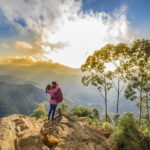
Lipton’s Seat sits at 1,970 meters, above the Dambetanne Tea Estate, with sweeping viewpoints over the surrounding hill country. It’s named after Sir Thomas Lipton, who used this kind of vantage point to inspect and understand his tea empire.
This stop is listed for about 2 hours, but it’s marked as not having admission included. The key practical detail is that it’s best at sunrise.
Why sunrise matters here
At sunrise you typically get better visibility and softer light, which matters when your “reward” is distance—names of places across provinces and lakes. The information provided notes that if you’re lucky, you can see:
- Uva, Sabargamuwa, Eastern, and Central provinces
- Handapanagala Lake, Chandrika Lake, and Udawalawe Lake
- Wedihiti Kanda Mountain
- Hambantota Port on the Southern coast
No guarantees, but that list tells you what kind of view Lipton’s Seat can deliver when conditions cooperate.
My advice: if sunrise is on the schedule, dress like you’ll be outside for a while. Hill-country mornings can feel colder than you expect, especially when you’re waiting for light.
Stop 4: Uva Halpewatte Tea Factory Tour (6 km from Ella)
Tea country is one thing to look at. It’s another thing to understand how it works. Uva Halpewatte Tea Factory gives you that behind-the-scenes context, and the details provided make it feel grounded, not just scenic.
Here’s what you’ll learn and why it’s worth your time:
- The factory was built in 1940 during British rule.
- It sits high at about 1,230 meters in the Uva region.
- It’s about 6 km from Ella, which keeps travel time reasonable.
- The factory was acquired by A.P.D Abeyrathne in 1970, and it started at a small scale producing 20,000 kg per month (as described in the provided info).
The tour time is listed as 2 hours, and admission isn’t included. The factory is also described as being near Halpé Temple and along the route to Badulla, which helps explain why it’s a natural stop when you’re already moving through the area.
What I like most is that you get a story that connects tea slopes to industry. If you’ve had tea before, you’ll recognize flavors—but you’ll also understand the bigger process behind the cup.
Stop 5: Pallewela Waterfall for a quieter swim break (100 rupees)
After bridges and viewpoints, you’ll want a reset. Pallewela Waterfall is positioned as a calmer alternative, described as hidden and not widely known. It’s in the Karadagolla area on the Wellawaya road, and the route involves going through a path inside a village.
That village-route detail matters. It’s often the difference between a place that feels like a photo stop and a place that feels like a real local spot.
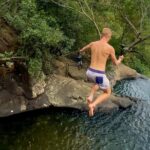
The tour lists this as 2 hours, and it includes admission of 100 rupees. It’s also specifically described as a place where you can swim safely.
My practical advice: treat it like any swim spot—watch for slippery edges, follow local cues, and don’t assume water safety is the same for every day and every season. But if you want a break from trekking and viewpoint stairs, this is a strong candidate.
Stop 6: Mahamevnawa Buddhist Monastery for a calm end to the day
Not every hill-country day needs more hills. Ending at Mahamevnawa Buddhist Monastery is a gentle shift in energy after the physical and scenic parts of the day.
This stop is listed for about 2 hours, and admission is free. The monastery is framed as a spiritual home focused on the Buddha’s teachings, with emphasis on inner peace and happiness.
It’s also described as a community space where people explore the joy of living with wisdom and serenity. In real life, that usually translates to a quiet environment—something you can use to lower your stress after a long outing.
If your day has included early sunrise and trekking, this is the kind of stop that helps you feel like the trip has an emotional rhythm, not just a checklist.
Guide quality: why Shashicka’s name keeps coming up
One of the most consistently praised parts of this experience is the guide. The name Shashicka (also shown as Shashi/Shahsicka in different spellings) appears in the provided feedback, and the themes are consistent: careful, professional handling, and helpful storytelling that makes the places easier to understand.
Even without pretending every guide will have the exact same style, you can still judge what matters:
- Safe driving and smooth logistics on curving hill roads
- Clear communication so you know what you’re seeing
- A flexible approach so the day doesn’t feel like a forced march
If you choose this tour, you’re not just buying access to destinations. You’re buying someone to manage the transitions—where the time usually gets wasted on DIY days.
Who this Ella full day tour suits best
I think this is a strong match if you want:
- A private day with comfort and no transport hassles
- A packed mix: bridge, viewpoint, tea factory, waterfall, and monastery
- To shape the day around your preferences, not a rigid group schedule
- A guide who can explain what you’re looking at while you travel
It may be less ideal if:
- You dislike hikes or prefer fully flat walking
- You get stressed by early starts, since sunrise at Lipton’s Seat can drive the timing
- You’re looking for only short, easy sightseeing
The good news is that it’s customizable, so you can often reduce how long you linger at each stop or adjust what you prioritize.
Should you book this Ella full day tour?
I’d book it if you want one complete Ella-and-surroundings day that combines famous sights with the kind of practical value that saves energy. The private A/C transport, the option to tailor timing, and the inclusion of both Upper Diyaluma trekking and Pallewela’s quieter feel make this more than just a highlight reel.
I’d think twice if you don’t want to trek, or if sunrise timing will make your day feel too intense. In that case, you might still love the tea factory and Nine Arches Bridge, but you’ll want to confirm how you’ll handle the hiking portion.
If you’re on the fence, decide based on this: do you want your day to include one real “effort” stop? If yes, this tour makes a compelling, organized way to get it done.
FAQ
Where does the tour start and end?
The tour starts in Ella, Sri Lanka, and it ends back at the meeting point.
How long is the Ella full day tour?
The duration is listed as approximately 5 to 12 hours.
Is pickup included?
Pickup is offered.
What’s included in the price?
Included items are private transportation and an air-conditioned vehicle.
Are WiFi and mobile tickets included?
WiFi on board is not included, but you’ll receive a mobile ticket.
Are entrance fees included for every stop?
No. The tour notes entrance fees are something you should pay, and some stops are marked as free while others are marked as not included. For example, Upper Diyaluma lists a 350 rupees entrance fee, and Pallewela lists a 100 rupees entrance fee.
Which stops have free admission?
Nine Arches Bridge is listed as free, and Mahamevnawa Monastery is listed as free.
What’s the best time to visit Lipton’s Seat?
Lipton’s Seat is best visited at sunrise.
What happens if weather is poor?
This experience requires good weather. If it’s canceled due to poor weather, you’ll be offered a different date or a full refund.
What is the cancellation policy?
Free cancellation is available up to 24 hours in advance for a full refund. If you cancel less than 24 hours before the start time, the amount paid is not refunded.