REVIEW · KANDY
Knuckles Spice Trail Trek from Kandy
Book on GetYourGuide →Operated by Nature Paradise Tours · Bookable on GetYourGuide
Morning treks in the Knuckles feel like a living lesson. This hike links tea plantation paths with spice gardens, plus birds, small animals, and even butterflies along the way. The walk also has a memorable payoff: a waterfall crossing and a chance to swim in a natural pool.
What I like most is the combination of scenery and real daily life. You get mountain air in a pine/eucalyptus and cloud-forest zone, then shift into terrace rice fields and a traditional village where you can see vegetable and spice gardens up close. One consideration: it’s a medium-grade trek, and when weather turns wet you may deal with slippery sections and—based on past conditions—leeches near the wetter trail.
In This Review
- Key highlights you’ll remember
- Kandy to the Knuckles: the morning timing and transport
- Tea plantation trails: why the first part feels so good
- Pine, eucalyptus, and a cloud-forest feel
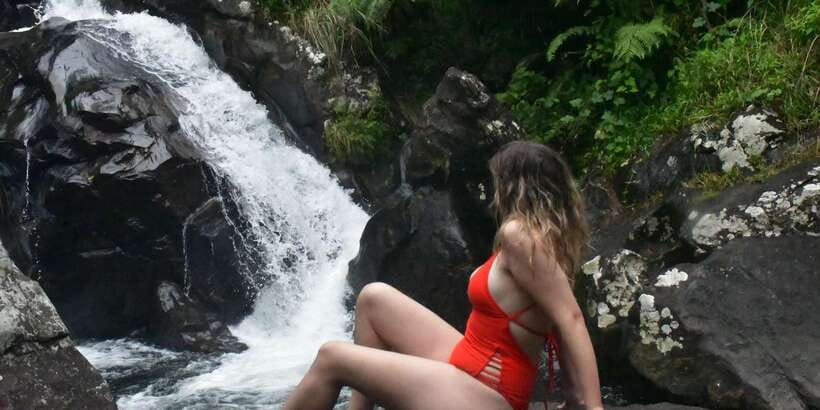
- Waterfall crossing and the natural swimming pool stop
- Terrace rice fields, spice forests, and the village shift
- Lunch with locals: what the village experience actually adds
- Guides like Lakmal and Ashoke: why the explanations matter
- Pace, distance, and who this trek suits
- Price and value: what $101 covers and why it feels fair
- What to bring (and what helps you enjoy the swim)
- Should you book the Knuckles Spice Trail Trek from Kandy?
- FAQ
- What time does pickup in Kandy happen?
- When does trekking start and end?
- How long is the trek, and what distance will I walk?
- What grade is the trek?
- Do I get a chance to swim?
- What’s included in the price?
- Is the tour guide available in English?
- What group format is this tour?
- Who might not be able to join?
Key highlights you’ll remember
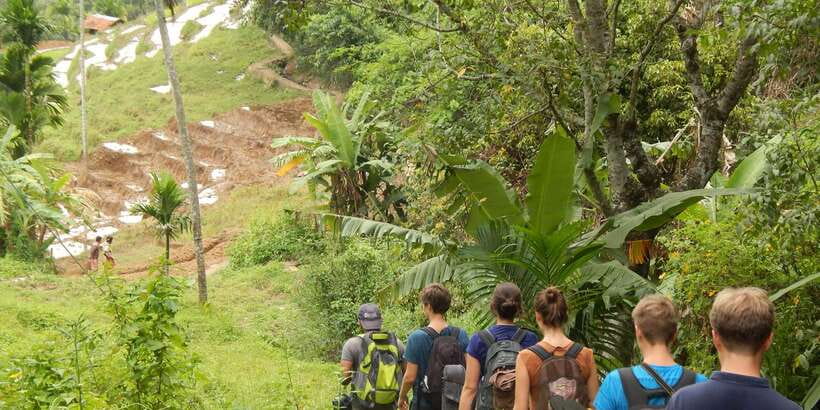
- Tea plantation trail time with views that make the walk worth it
- Pine & eucalyptus forest air at 1000 to 500 meters altitude
- A waterfall stop with a natural swimming pool (bring swimwear)
- Magical terrace rice fields on the way into village paths
- Spice and vegetable gardens you can actually point at and name
- Village authentic lunch with guides who explain what you’re seeing (English)
Kandy to the Knuckles: the morning timing and transport
The day starts easy, with pickup from your Kandy hotel between 7:00 and 7:30 am. The drive to the trail area takes about 1.30 hours, and you typically begin trekking later, around 9:30 to 10:00 am. That gap matters: it helps you get going once the day has warmed up a bit, which is handy when you’re heading into cooler forest shade.
This also sets the rhythm for the whole trek. You’ll cover the main hiking block in the middle of the day, then return by 2:30 to 3:00 pm. It’s an 8-hour overall experience, including transport, so you’re not out until evening in the dark.
You can also read our reviews of more hiking tours in Kandy

Tea plantation trails: why the first part feels so good

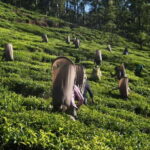
Most trips start with a walk through tea state trails and related plantation paths. Even if you’ve seen tea on a label, the plants look different when you’re walking through the rows—leaf size, growth height, and the way workers manage the slopes all come into focus.
You’ll also get movement through changing terrain. The route keeps things at a smooth medium grade and usually totals 10 to 15 km. That range is long enough to feel like a proper hike, but not so long that it turns into a slog—especially because the trek time is around 4 to 5 hours.
On top of the scenery, your guide helps you read the place: what grows here, how people work it, and what you can smell and notice along the path. English guidance makes this part especially satisfying because you’re not guessing what you’re looking at.
Pine, eucalyptus, and a cloud-forest feel
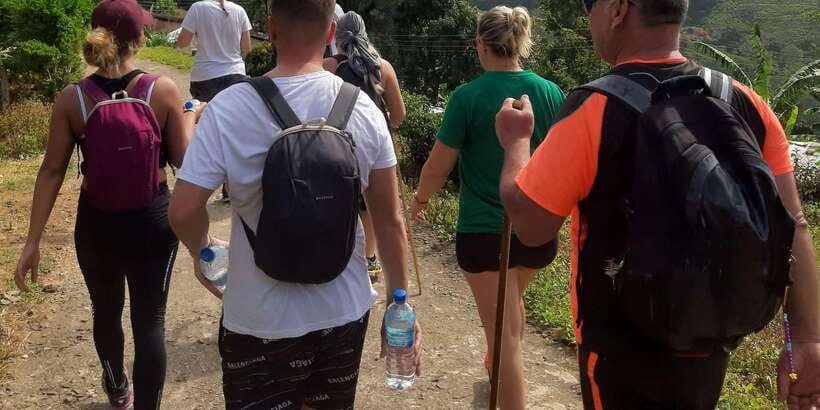
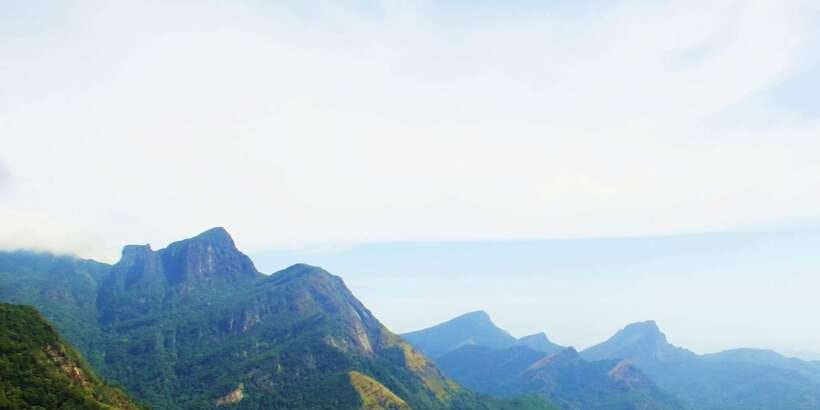
As you move deeper, the trail shifts into pine & eucalyptus forest. At this point the air can feel noticeably cooler and fresher, and the altitude range—about 1000 down to 500 meters—adds to that changing feel.
This is also where the natural world starts showing itself beyond the plants. You may spot birds, small animals, and butterflies, and the guide’s explanations make those sightings more than random glimpses. For me, this is the “learn while you walk” section of the day—when your attention narrows to leaf shape, bark texture, and small movements near the ground.
A practical note: forest paths can be damp even when the sky looks okay. Pack a rain jacket, even if you’re starting in sunshine.
Waterfall crossing and the natural swimming pool stop
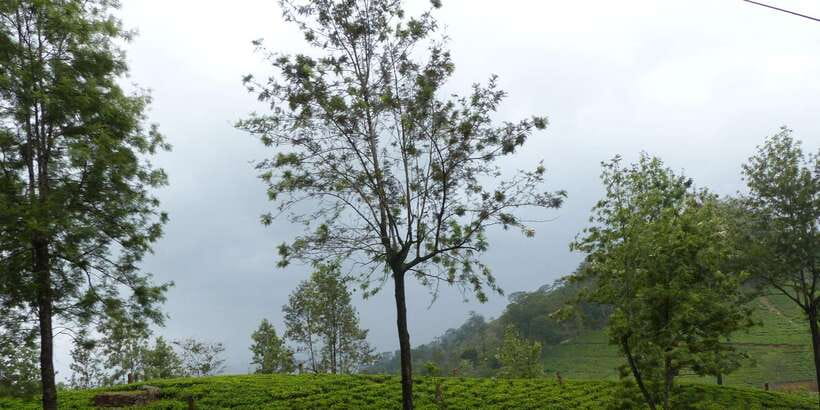
Here’s the moment people remember: the trek includes a waterfall crossing and a chance to swim in a natural pool. This is built into the route timing, so you’re not just passing by—it’s a real stop.
Bring swimwear if you want to go for it. In past experiences, the water has been described as pretty cool, so treat it as a refresh, not a warm spa. Still, it’s a strong reason to book this trek instead of doing a basic tea walk.
There’s also a playful detail at the pool. You can try letting fish nibble at your feet, which turns a normal stop into a memorable, lighthearted moment.
Safety-wise, you’ll be crossing slick areas around the waterfall. A good trekking shoe matters here, more than fancy gear.
Terrace rice fields, spice forests, and the village shift
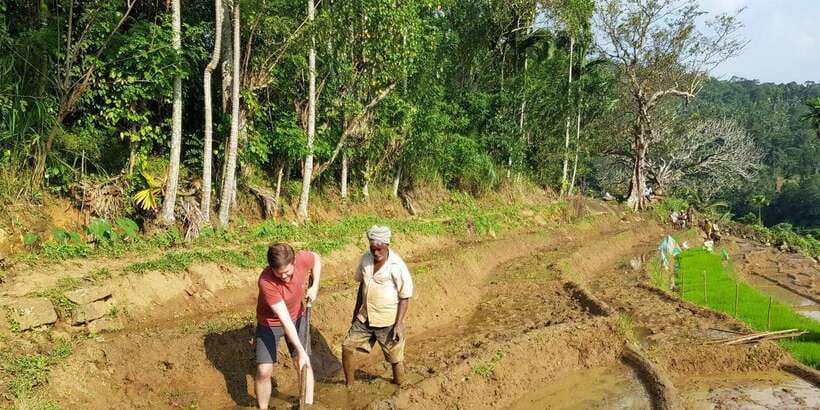
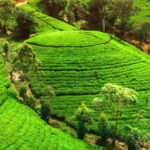
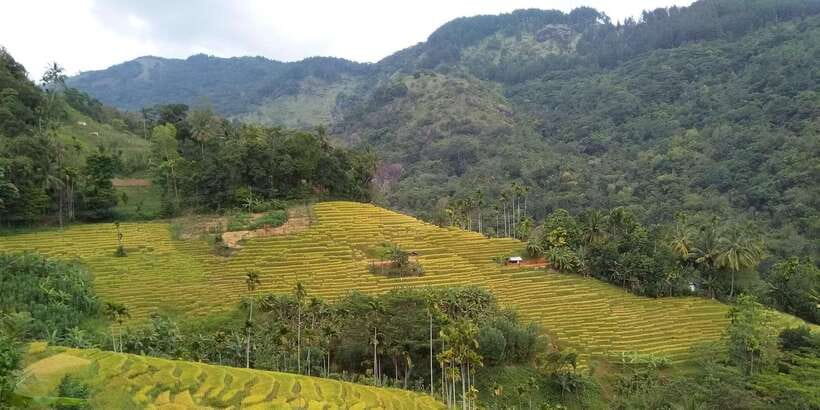
After the waterfall area, the scenery changes again. You’ll head through terrace rice fields—the kind that look simple from far away but show serious engineering up close. Watching how the terraces step down the slope helps you understand how this region farms mountain terrain.
From there, you transition into traditional village paths. On the way you may see vegetable gardens and spice gardens. This is where the trek becomes less about views from a distance and more about the textures of everyday life.
You’re also in the Knuckles area’s “cloud forest” zone, which can feel like a world of mist and quick weather changes. If it gets cloudy or misty, don’t treat it as bad luck. It often makes the mountains look softer and more atmospheric—just keep your footing steady.

Lunch with locals: what the village experience actually adds
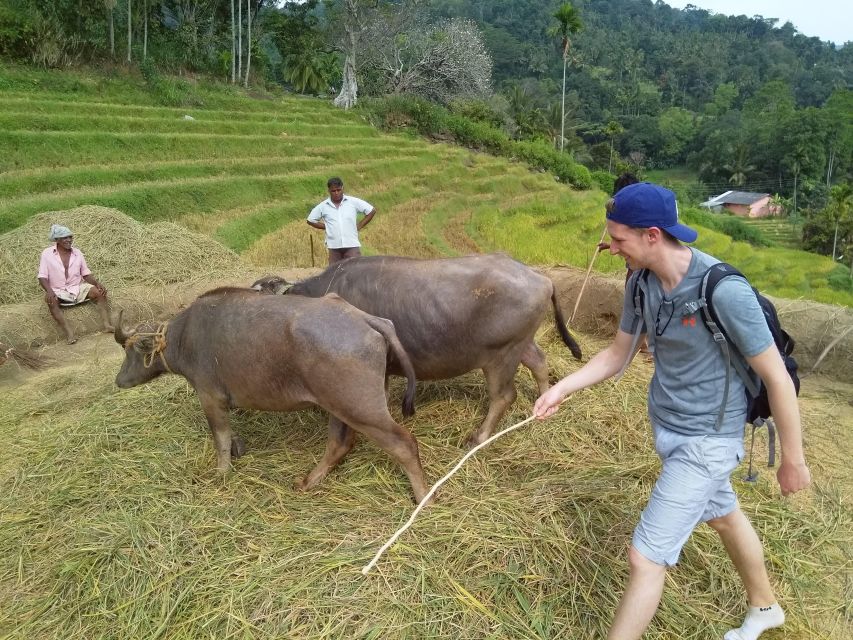
The tour includes picnic lunch or village authentic lunch (your day’s version depends on the tour flow). Either way, you’ll get water and snacks, and you’ll eat after you’ve built up real hunger on the trail.
The village lunch is often the highlight for people who like meeting real cooks and seeing how food ties to the gardens you walked through. If you’re paying attention, the meal also becomes part of the explanation—spices and herbs you smelled earlier show up on your plate later.
If you need dietary options, the data you provided includes an example of the lunch team keeping in mind a vegetarian preference. Still, don’t assume every plan is identical—tell your guide ahead of time so the right choices can happen.
Guides like Lakmal and Ashoke: why the explanations matter
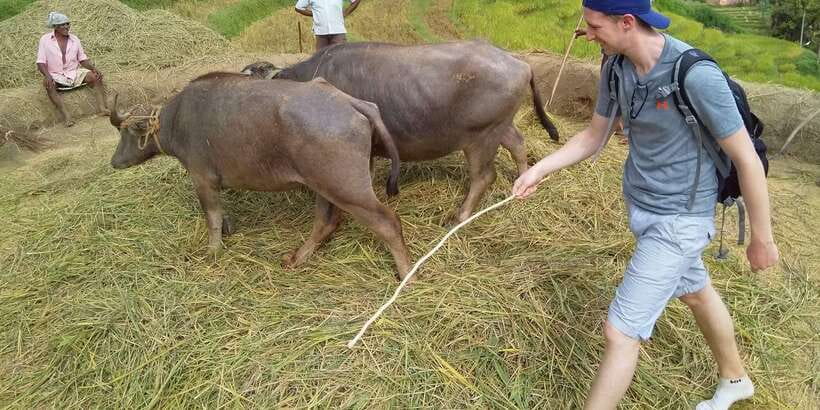
A big part of the value here is the specialized guide. This is not just a shepherding walk from point A to B. The guide points out plants, fruits, vegetables, spices, and tea-related work—and helps you understand what it takes before the ingredients reach kitchens far away.
In English, that explanation lands well, especially on the spice and plant sections. Two guide names show up in past experiences: Lakmal and Ashoke. Both are credited for being friendly and for explaining what you’re seeing in a way that makes the day feel like a guided field class.
Pace, distance, and who this trek suits
Let’s talk practicality. The trekking portion is typically 4 to 5 hours over 10 to 15 km with a smooth medium grade. That means you should expect some uneven ground and changes in footing, but not constant rock scrambling.
It’s ideal if you:
- want an active half-day hike without it becoming all-day suffering
- like nature and want context from your guide
- don’t mind rain risk and damp paths in the forest
It’s not for you if you need wheelchair access, and it also isn’t suitable for babies under 1 year or people over 95 years (per the tour’s conditions). If you’re in that range, look for a shorter or flatter alternative.
The tour ends back in Kandy the same afternoon, which is great if you want to keep your evening open for a relaxed meal or a stroll.
Price and value: what $101 covers and why it feels fair
At $101 per person, this isn’t an ultra-cheap hike. But the price lines up with what you actually get: transport from Kandy, a specialized guide, entrance ticket, lunch, plus water and snacks. There’s also passenger insurance, and the day includes built-in “precautions” from the operator.
So you’re not just paying for walking time. You’re paying for organization, access, and interpretation—especially the guide-led plant and spice explanations, and the lunch that supports the village component.
What you’ll likely pay extra for is limited and personal: personal expenses and anything beyond the included items. If you pack smart, your day stays simple.
What to bring (and what helps you enjoy the swim)
You’ll enjoy this trek more if you show up ready for both trail and pool. The essentials listed for the trek include:
- Trekking shoes with grip for wet patches
- Rain jacket (don’t rely on the forecast)
- Swimwear (because the pool stop is real)
- Sun cream (tea slopes can still get strong sun)
- Comfortable clothes for changing conditions
- Small back pack to carry your essentials
One more tip: keep your swim items separate from the dry stuff. When trails are wet, you’ll appreciate being able to change quickly without turning your bag into a wet sponge.
Should you book the Knuckles Spice Trail Trek from Kandy?
If you want a hike that combines tea, spices, and village life, this is an easy yes. The waterfall pool and the tea-to-rice transition make it feel like more than one attraction stitched together—you get a whole day of connected landscapes and daily work, explained in plain English.
Book it if you:
- like nature walks with actual guidance (plants, spices, fruit, tea)
- want a swimming break in a natural setting
- enjoy authentic lunch with locals rather than only hotel meals
Skip or choose another option if you:
- don’t handle wet, uneven paths well
- prefer a trek without any water crossings
- want something fully wheelchair-friendly or stroller-friendly
If your schedule allows, this is a strong use of a day in Central Province: active, scenic, and surprisingly practical for understanding how tea, spices, and mountain farming fit together.
FAQ
What time does pickup in Kandy happen?
Pickup is scheduled between 7:00 am and 7:30 am.
When does trekking start and end?
Trekking typically starts between 9:30 am and 10:00 am and ends between 2:30 pm and 3:00 pm.
How long is the trek, and what distance will I walk?
The trekking duration is about 4 to 5 hours, covering roughly 10 to 15 km.
What grade is the trek?
The trek is described as a smooth medium grade.
Do I get a chance to swim?
Yes. The route includes a waterfall crossing and a natural swimming pool where you can swim. You should bring swimwear.
What’s included in the price?
Included are a specialized guide, transport, entrance ticket, picnic lunch or village authentic lunch, water and snacks, precautions, and passenger insurance.
Is the tour guide available in English?
Yes. The live tour guide is listed as English.
What group format is this tour?
This is a private group experience.
Who might not be able to join?
The tour is not suitable for wheelchair users, babies under 1 year, or people over 95 years.