REVIEW · GALLE REGION
Sinharaja Rainforest: Tour with 5 Waterfalls Trek
Book on GetYourGuide →Operated by Galle Experience · Bookable on GetYourGuide
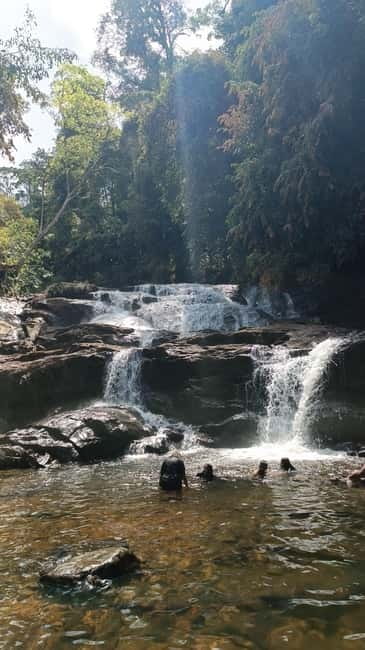
Five waterfalls, one rainforest trek. This Sinharaja outing turns a long drive into real payoff, with Duli Ella as the opener and five waterfall stops as the main event. I like that you get a rainforest tracker, then a guided route that keeps you moving while you spot birds and forest plants. The best part is you’re not just looking at waterfalls—you can swim in the cool water—though the hike can feel slippery and a bit rugged in places.
Two things I really like are the combination of rainforest + waterfalls in one day, and the fact that your lunch is a simple local meal in the area instead of a tourist-style stop. The one consideration: it’s not for everyone. This trek is marked as moderate, and the tour isn’t suitable for kids under 7, people with mobility impairments, people with heart problems, or anyone over 60.
In This Review
- Key points to know before you go
- From the coast to Duli Ella: why the drive matters
- Duli Ella: your first waterfall stop
- The rainforest walk with a tracker: spotting what you’d miss alone
- What makes the hike feel manageable (and what might not)
- Five waterfalls in one day: how the route feels in practice
- Swimming in cool waterfall water
- Village lunch after the trek: simple, local, and timed right
- Transportation and timing: what a 7-hour day really means
- What you pay (and why $95 can feel fair)
- What to pack: the small choices that make a big difference
- Who this tour suits best (and who should skip it)
- Practical tips to make your day smoother
- Should you book the Sinharaja Rainforest 5 Waterfalls trek?
Key points to know before you go
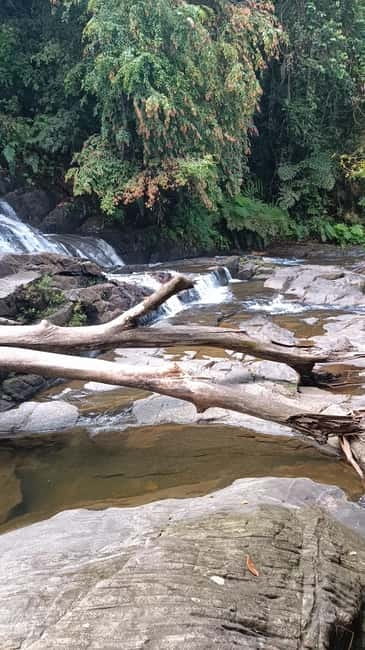
- Duli Ella starts the day with a dramatic first waterfall before you enter the UNESCO-listed Sinharaja area.
- A rainforest tracker is part of the experience, not an optional add-on, so your walk comes with context on what you’re seeing.
- Five waterfalls in one outing means multiple photo moments and multiple chances to cool off.
- Swimming is part of the plan, so bring swimwear and think about footwear for wet rocks.
- Village lunch is included, with Sri Lanka rice and curry served after the trek.
- Hotel pickup and drop-off are included from several coastal towns, making the logistics easy.
From the coast to Duli Ella: why the drive matters
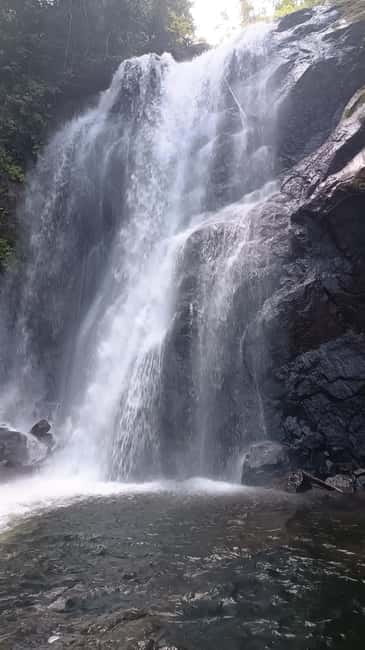
Most days feel like a tradeoff in Sri Lanka: you drive a long way, then get a short look at the highlight. This one flips that idea. You start with a hotel pickup from coastal areas like Unawatuna, Mirissa, Weligama, Kalutara, Koggala, Galle, Ahangama, Hikkaduwa, or Bentota, then settle in for a roughly two-hour drive toward the Sinharaja Rainforest base near Kotapola.
That drive isn’t just transportation time. You’re moving from the coast into a greener pocket of Sri Lanka, and you’ll likely notice the scenery changing as the day gets more humid and more shaded. The schedule also helps you warm up gradually—by the time you reach Duli Ella, you’re already in the right mode for walking and taking your time with the views.
The other practical win: transport is air-conditioned, so even if the coastal heat followed you out the door, you’re not arriving fried and exhausted.
Duli Ella: your first waterfall stop
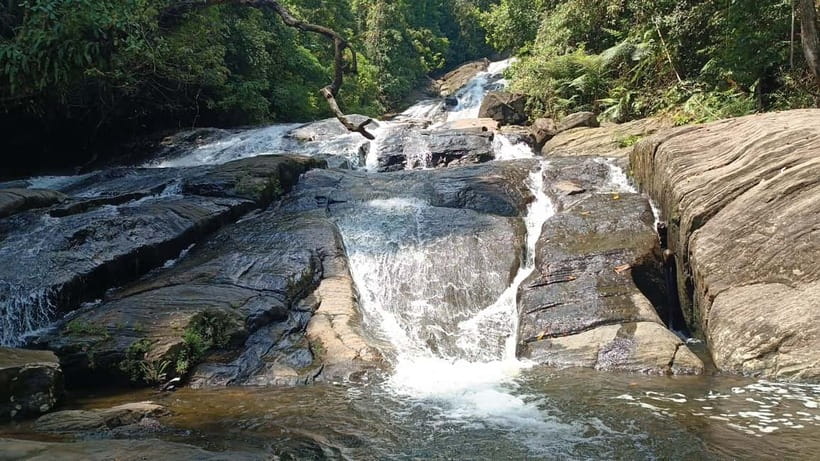
Before the deeper trek, the tour brings you to Duli Ella first. This matters because it sets expectations. You’ll see what kind of terrain the waterfalls create—wet rock, uneven ground, and the kind of cool, misty air that makes you want to slow down.
You’re then guided through the next step: after the initial waterfall time, you go about 30 minutes into the forest with your tracker. From there, the day becomes more about the route—how the canopy shapes sound and light, how the forest floor changes underfoot, and how you move from one waterfall moment to the next.
A small heads-up: the tour is not described as a flat stroll. You should expect a hike that can get slippery, especially if recent rain has softened the ground.
The rainforest walk with a tracker: spotting what you’d miss alone
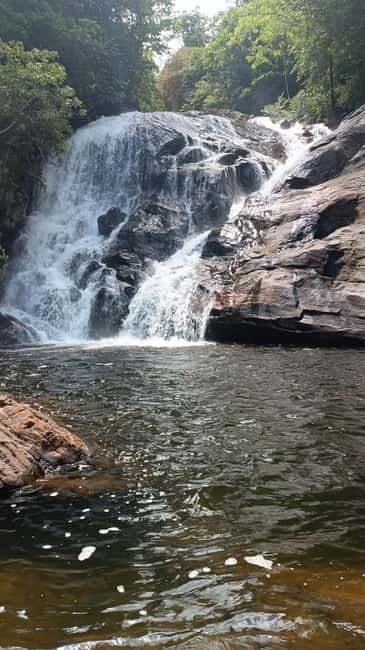
The heart of this outing is the guided time inside Sinharaja. You’ll walk with a local guide and a rainforest tracker, with the walk described as moderate (and with about 1 km of climbing). The goal isn’t just to reach waterfalls; it’s to learn what makes this forest special while you’re walking through it.
In simple terms, the tracker helps you notice the living details. Based on guide-focused feedback from past participants, this kind of guidance often includes explanations about plants and how locals use certain forest species, including links to traditional Ayurvedic uses. That’s the type of context that turns a walk from pretty to meaningful, because you’re not staring at greenery—you’re learning how people and nature interact here.
You’ll also have chances to see plenty of forest life along the way: trees, birds, and other flora are part of what you should keep an eye out for. Even if you don’t consider yourself a “nature person,” it’s hard not to perk up when someone points out something you’d otherwise never notice.
What makes the hike feel manageable (and what might not)
On paper, the guided tour is listed as about 3 hours. In real life, your pace will depend on footing and how long you want at each waterfall. The good news: there are built-in pauses for waterfall viewing and swimming opportunities.
The not-so-fun part is footing. If the ground is damp, wet stones can be slick. Pack accordingly and don’t rush.
Five waterfalls in one day: how the route feels in practice
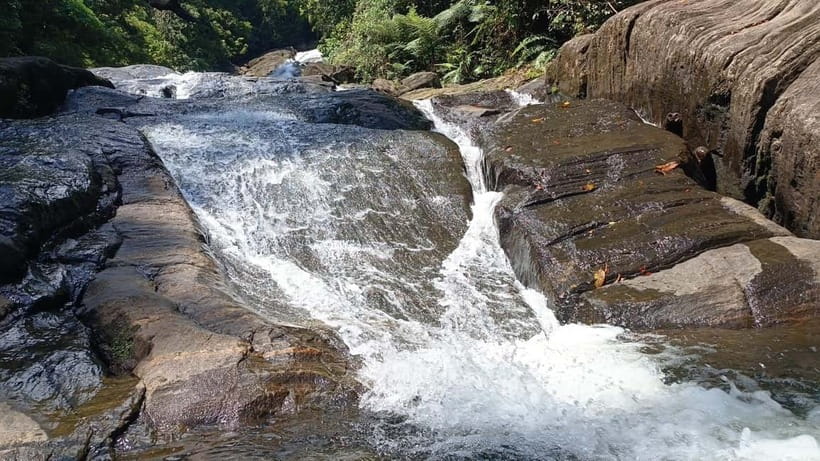
The selling point here is obvious: you see five waterfalls as part of one guided plan, not one. But what you should really think about is how that changes your day.
With five stops, you get:
- more than one “main moment” for photos and views
- more chances to cool off
- a better chance of catching at least one waterfall at a prime feel, even if another is slower because of conditions
Your main hike portion is described as leading you to those waterfalls after you go into the rainforest. You’ll then climb down to the village area at the end.
Swimming in cool waterfall water
This is one of the tour’s clearest draws: you’re able to swim in the waterfall (described as a refreshing dip in cool waters). That’s why the tour tells you to bring swimwear and mentions a waterproof bag for electronics.
Plan for this realistically:
- Wet rocks are common around waterfalls, so wear footwear you can trust.
- Bring something to dry off if you have it, because you’ll likely change back into dry clothes later for lunch and the ride home.
- If you’re unsure about getting in, you can still enjoy the waterfall views from safe areas, but the tour does build swimming into the experience.
Village lunch after the trek: simple, local, and timed right
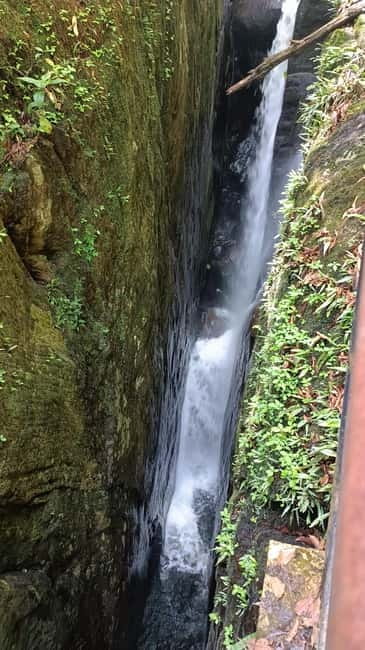
After your waterfall route, the tour brings you out again and down to a local village restaurant for lunch. This is the moment where the day shifts from “forest energy” to “fuel.”
The meal described is Sri Lanka rice and curry, served after you climb down from the trek (with a mention of the lich—walk down—ending at the restaurant). It’s the kind of lunch that feels like part of the region rather than a generic stop.
There’s also an advantage in timing: lunch is not shoved into the middle of the trek as a rushed break. You get the walk done, then you eat while you’re warm and hungry.
One more practical note: the tour does not list water bottles as included, so you may want to treat hydration as your job. Bring water as recommended, especially since the outing mixes heat from the coast with humidity in the rainforest.
Transportation and timing: what a 7-hour day really means
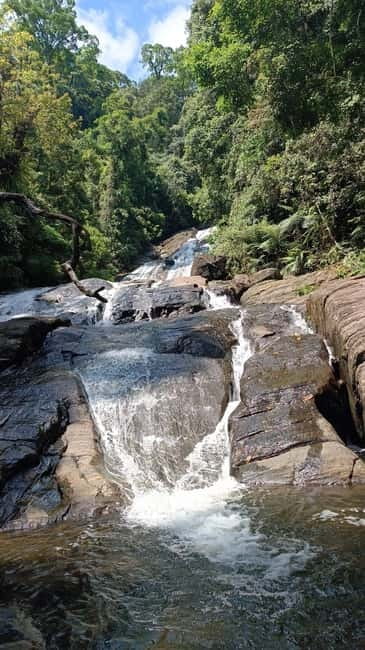
The total duration is listed as 7 hours, which is a sweet spot for many visitors who want a real nature experience without losing an entire day. Your schedule broadly includes:
- hotel pickup
- a 2-hour drive from the coast toward the rainforest base area
- a first waterfall stop at Duli Ella
- rainforest hiking with a guide and tracker, including time connected to the five waterfalls
- swimming opportunity
- village lunch
- return drive back to the coast and hotel drop-off
The key logistics detail I’d focus on is the pickup and drop-off map. This tour serves multiple coastal towns for both pickup and drop-off (including Galle, Unawatuna, Weligama, Mirissa, Ahangama, Kalutara, Koggala, Hikkaduwa, and Bentota). That reduces friction if you’re staying anywhere along the south coast strip.
Also: an air-conditioned car makes a big difference on longer drives, particularly in warm months.
What you pay (and why $95 can feel fair)
At $95 per person, this tour isn’t a bargain backpacker deal—but it also isn’t priced like a luxury nature retreat. For the money, you’re getting a bundle of stuff that would cost you separately:
- transportation to and from the rainforest area
- entrance tickets to the rainforest
- a local guide plus a rainforest tracker
- lunch (rice and curry)
- swimming as part of the itinerary
- hotel pickup and drop-off
When you add that up, the cost starts to look more like paying for convenience and local expertise than paying for just a walk. And the value jumps if you’re the kind of visitor who likes having someone help you notice things—trees, birds, and plants—rather than simply passing through and hoping you spot everything.
If you’re trying to keep the strictest budget, you could compare against self-guided options. But for many people, this price makes sense because it packages the logistics and the forest know-how in one go.
What to pack: the small choices that make a big difference
The tour’s suggested items are spot-on. I’d treat these as your baseline checklist:
- comfortable shoes for a moderate, potentially slippery hike
- swimwear if you want to swim
- camera
- snacks (helpful if you’re hungry before the included lunch)
- sunscreen
- water
- insect repellent
Also bring:
- a waterproof bag for your electronics, because waterfalls and wet weather don’t play nice
- flip-flops if you like easy dry-off footwear around the lunch stop and after swimming
And don’t forget the rules of the place: no littering and don’t touch plants. This is a living forest, and the tour specifically asks you to respect it.
Who this tour suits best (and who should skip it)
This experience is a strong match if you:
- want multiple waterfalls rather than only one
- like guided nature walks where someone points out plants and wildlife
- are comfortable with a moderate hike
- plan to take advantage of the swimming opportunity
It is explicitly not suitable for:
- children under 7
- people with mobility impairments
- people with heart problems
- people over 60
If you’re in one of those groups, don’t force it. A rainforest day can be beautiful, but it can also be physically demanding when footing changes.
Practical tips to make your day smoother
- Wear light clothing you don’t mind getting damp. The forest can be humid, and waterfall areas get wet fast.
- Bring a waterproof way to carry your phone or camera. A “just in case” waterproof pouch is worth it.
- Plan for slower moments. The best waterfall time is the time you don’t rush.
- Use repellent and follow tour rules for touching plants. You’re visiting a protected ecosystem.
Should you book the Sinharaja Rainforest 5 Waterfalls trek?
I’d book it if you want a single-day nature plan that feels real: a guided rainforest walk, a shot at five waterfalls, and a genuine local lunch afterward. The included parts—rainforest entrance tickets, guides, tracker, transport, and lunch—make it easy to commit without juggling extra tickets and directions.
I wouldn’t book it if you’re seeking an easy stroll, you have mobility or health concerns listed as not suitable, or you don’t want to deal with wet, slippery surfaces. This is a hike day with swimming optional but heavily encouraged.
If your schedule is flexible, check availability for your pickup window. And if plans shift, you may appreciate that there’s free cancellation up to 24 hours in advance.
If you’re deciding between one waterfall and this five-waterfall format, I’ll be blunt: the extra stops are the point.