REVIEW · CENTRAL SRI LANKA
Tea Fields & Factory Tour
Book on Viator →Operated by The Tea field’s · Bookable on Viator
Ceylon tea starts long before your cup. This Hatton tour is interesting because it strings together the full tea leaf to tea pot story, from walking the fields to seeing the factory stages. I especially like the factory walkthrough with the main processing steps (withering, rolling, drying, shifting, testing, packing) and the hands-on feel of meeting the people who pluck tea for a living.
The main consideration is simple: you need good weather. With only about 3 hours, it is a smart sampler, not a slow, daylong tea education.
If you want Hatton tea to make sense beyond the price tag on a packet, this tour is a very practical way to connect the dots fast.
In This Review
- Key points to know before you go
- Hatton’s tea trail starts in Norwood at 3:00 pm
- Walking the tea fields: what you’re really looking at
- Meet the pluckers and learn the technique in plain terms
- The pluckers village and temple: why this stop matters
- Weighing stations: the quality checkpoint you can actually understand
- Inside the tea factory: what each stage does to the leaf
- Withering
- Rolling
- Drying
- Shifting
- Testing
- Packing
- Tasting the result: fresh brewed tea you can connect to the steps
- Price and value: is $20 a good deal for a 3-hour tea experience?
- Who should book this Hatton Tea Fields & Factory Tour
- Should you book the Tea Fields & Factory Tour in Hatton?
- FAQ
- How long does the Tea Fields & Factory Tour take?
- Where does the tour start?
- What time does the tour begin?
- How much does it cost?
- What activities are included during the tour?
- How big is the group?
- What if the weather is bad?
- Can I cancel and get a full refund?
Key points to know before you go
- Tea fields walk where you get a real sense of how tea grows in Central Sri Lanka
- Meet the pluckers and learn the plucking technique from people doing it every day
- Try plucking yourself for a quick, memorable hands-on moment
- Village and temple stop linked to the tea pluckers community
- Weighing stations so you understand how leaf becomes quality
- Factory stages plus fresh tasting so you connect process to what’s in your cup
Hatton’s tea trail starts in Norwood at 3:00 pm
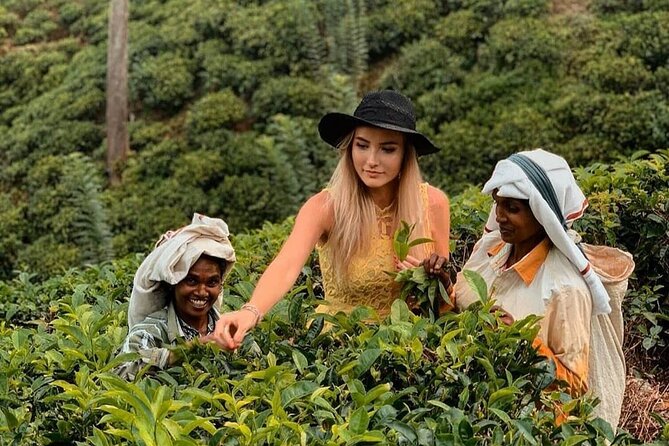
This tour begins at 3:00 pm in Norwood (meeting point: RJR9+WC Norwood, Sri Lanka). That late-afternoon start matters because you get a decent slice of daylight for the tea-field part, but you still finish within the same evening window.
The group stays small, with a maximum of 10 people, which helps you actually hear your guide and see what’s happening at each stop. It also tends to make the pacing feel natural: quick enough to keep it moving, not rushed like a factory-only visit.
You can also read our reviews of more tours and experiences in Central Sri Lanka.



Walking the tea fields: what you’re really looking at
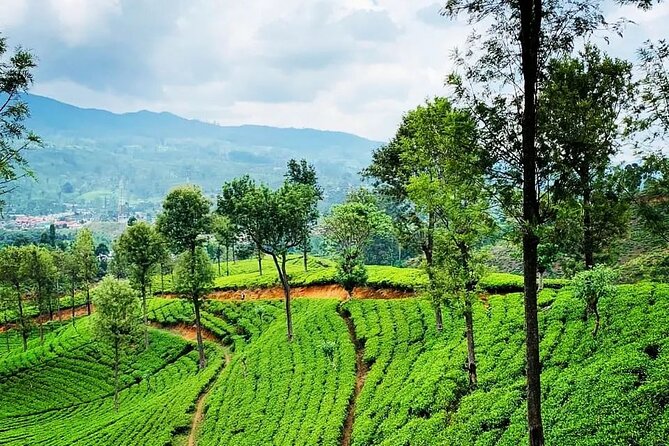
The heart of the experience is a walk among the tea plants. You are not just looking at scenery; you are learning how tea grows and how it gets harvested. This is where the tour earns its value. When you later see processing steps in the factory, you will understand what part of the leaf is being handled and why.
I like that the tour keeps you outdoors first, before turning it into a lecture. It sets you up to notice differences that you normally miss when you only see tea described on a label. Plus, with a small group, the guide can point out what to watch for during the walk.
One practical note: plan to wear comfortable shoes. Tea-field paths can be slippery and uneven in real life, and you do not want to fight your footing while trying to listen and learn.
Meet the pluckers and learn the technique in plain terms
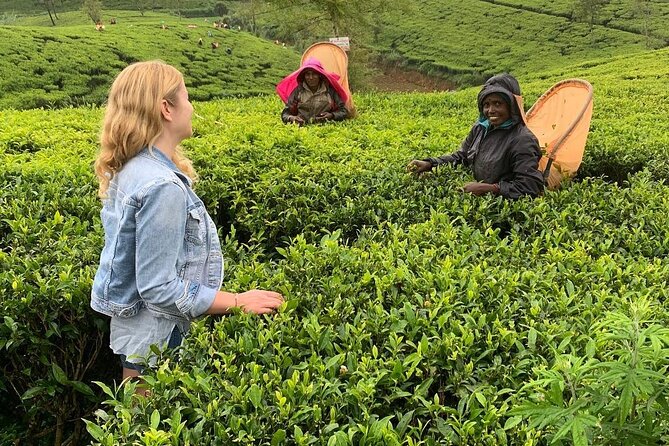
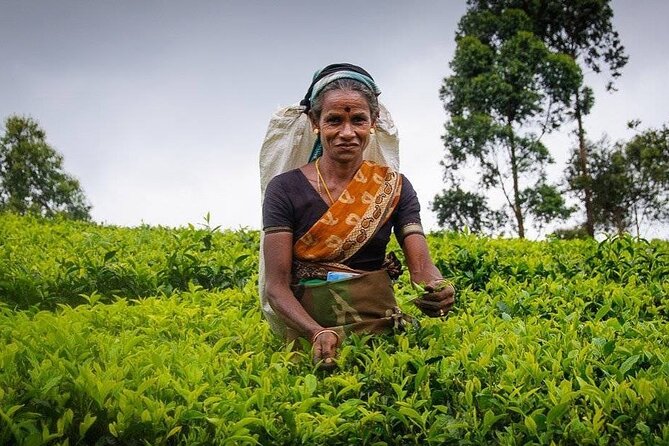
A big praised element here is the guide’s clear explanations. In this tea region, the pluckers are the experts, and the tour is built around meeting them and learning their technique. You get a chance to understand the logic behind plucking, not just the fact that tea leaves are collected.
Then comes the hands-on part: you can try plucking. Even if you are not aiming to master it, this is the best way to make the technique stick in your brain. You start to feel the difference between casual picking and the more careful method used in real tea work.
This is also where the tone of the tour matters. The experience is described as welcoming and guided with lots of explanation. That kind of pacing is exactly what you want when a subject can easily become confusing.
The pluckers village and temple: why this stop matters
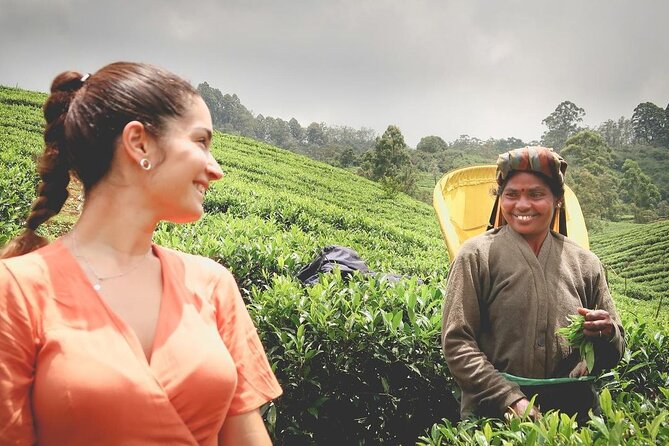
After the fields, the tour includes a visit to the tea pluckers village and temple. This is not just a photo stop. It gives context for the work you just saw and the community that supports it.
You get a clearer sense that tea is not only a production process; it is a way of life for people who spend their days in and around the plantation system. Even if you only spend a short time here, it helps the story feel human, not mechanical.
The only drawback is that this is still a relatively short tour. If you want a deep cultural immersion, you may feel the village and temple segment is brief. But for most people, it lands well because it keeps the entire afternoon connected: fields → people → community → factory.
Weighing stations: the quality checkpoint you can actually understand

Next up are the weighing stations. This is one of those parts that sounds small until you realize it is a key link between leaf harvest and final tea. In other words, it is where the process starts becoming measurable.
Seeing the weighing step helps you grasp why tea processing is so structured. You are not just collecting leaves and hoping for the best. The tour’s logic is that each stage matters, and weighing helps ensure consistency for what comes next in the factory.
If you care about value in food and drink—why some products cost more, why some lots behave differently—this stop gives you useful context without making it feel like a technical class.
Inside the tea factory: what each stage does to the leaf
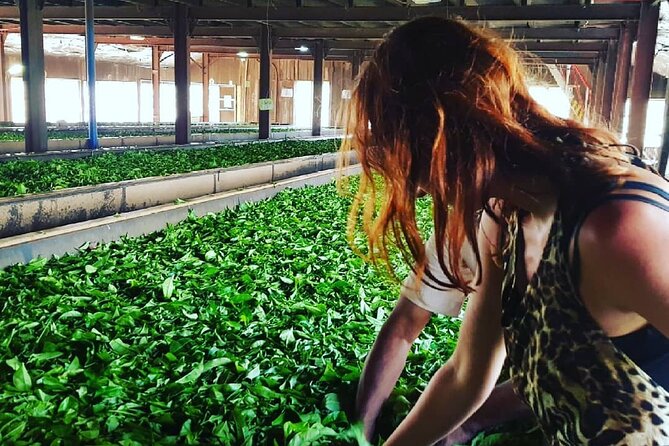
The factory portion is the tour’s most exciting payoff for many people. The experience is built around walking through the main processing steps in order, so you can follow the leaf from start to finish.
You’ll be guided through:
- Withering
- Rolling
- Drying
- Shifting
- Testing
- Packing
Here is why this sequence is so helpful. Each step changes the leaf in a different way, and once you see them in order, you start to understand how the final flavor is shaped. It stops being a mystery. It becomes a workflow.
Withering
Withering is the first transformation. The goal is to prepare leaves for what happens next. Even without getting overly scientific, you learn that the factory does not jump straight from fresh leaf to finished tea.
Rolling
Rolling is where you see tea begin to take on the form that most people associate with tea leaves and tea texture later. It is also a stage where careful technique matters, because it affects how the leaf will process during drying.
Drying
Drying is the step that helps stabilize what was developed during withering and rolling. In practical terms, it is about getting the leaf ready for storage and for the next handling steps.
Shifting
Shifting helps separate and sort the processed leaf. This matters because tea quality is not just about the plant—it is also about what ends up in each portion.
Testing
Testing is how the factory checks whether the processing worked as expected. This gives the tour credibility. It shows that production is not purely hands-on; it is also quality controlled.
Packing
Packing is where everything becomes what you can buy. It is the final conversion from factory process to the tea products you can take home and brew.
Many tours stop at one or two factory steps. This one keeps going through the full chain, which is why people rate it so highly. You leave with a working mental map of the whole process.
Tasting the result: fresh brewed tea you can connect to the steps
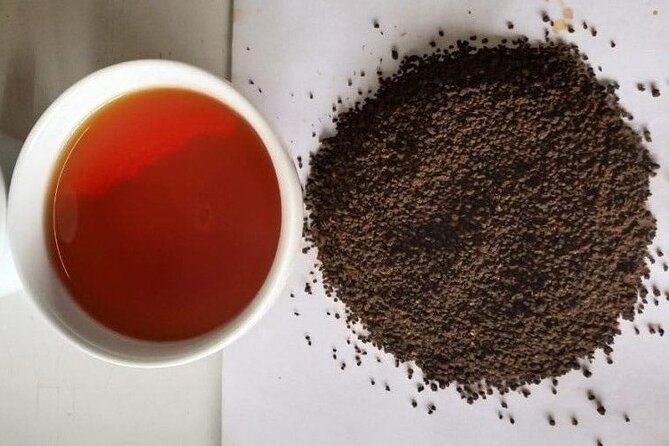
To close, the tour includes drinking freshly made and brewed tea. This is the moment that turns learning into memory. You can now connect what you saw—especially rolling, drying, and sorting—with what you taste.
You do not need to be a tea expert to enjoy this part. The value is in the feedback loop: you learn the process, then you taste the outcome. It helps you decide what kinds of tea you might want to buy later, because you will have a better sense of what the factory did to the leaf before it reached your cup.
Price and value: is $20 a good deal for a 3-hour tea experience?
At $20.00 per person for roughly 3 hours, the price feels fair for what you get. You are paying for more than entry into a viewpoint or a quick factory photo session. The tour includes:
- tea-field time with explanation,
- meeting and learning from pluckers,
- a try-plucking moment,
- a village and temple stop,
- weighing stations,
- a guided factory walk through multiple processing stages,
- and a tasting at the end.
In many parts of Sri Lanka, low-cost tours can feel like a checklist of stops with minimal teaching. Here, the experience is structured like a guided story. That is why the ratings are so strong (a 5-star score with 100% recommendation from the available feedback).
If you want a high-return introduction to Hatton tea without spending a full day, this is one of the better ways to spend your afternoon.
Who should book this Hatton Tea Fields & Factory Tour
This tour is a great fit if you:
- want a straightforward introduction to Ceylon tea production,
- like learning through walking and hands-on moments,
- enjoy food-and-drink tours that connect process to what you taste,
- prefer small groups rather than crowds.
It may be less ideal if you:
- want a long, slow workshop with lots of tasting variety beyond the one included tasting,
- prefer very quiet experiences with minimal group activity,
- are visiting during periods when weather is often unstable (because the tour requires good weather).
Should you book the Tea Fields & Factory Tour in Hatton?
I’d book it if your goal is to understand tea in a practical, memorable way. The structure is what makes it work: fields, people, community context, weighing, factory steps, then tea tasting. For $20 and about three hours, you get enough detail to feel like you learned something real, without turning your day into a school timetable.
If you can match it with good weather and you enjoy guided explanation (especially around how things are made), this is an easy yes.
FAQ
How long does the Tea Fields & Factory Tour take?
It runs for about 3 hours (approx.).
Where does the tour start?
It starts at RJR9+WC Norwood, Sri Lanka.
What time does the tour begin?
The start time listed is 3:00 pm.
How much does it cost?
The price is $20.00 per person.
What activities are included during the tour?
You walk among the tea fields, meet the pluckers, learn the plucking technique, try plucking, visit the pluckers village and temple, see weighing stations, tour the factory processing (withering, rolling, drying, shifting, testing, packing), and drink freshly made and brewed tea.
How big is the group?
The tour has a maximum of 10 travelers.
What if the weather is bad?
This experience requires good weather. If it gets canceled due to poor weather, you will be offered a different date or a full refund.
Can I cancel and get a full refund?
Yes. You can cancel up to 24 hours in advance for a full refund. If you cancel less than 24 hours before the start time, the amount paid will not be refunded.