REVIEW · ANURADHAPURA
Hurulu Eco Park: 3-Hour Morning or Evening Safari
Book on GetYourGuide →Operated by Lakpura® · Bookable on GetYourGuide
Elephants, without the chaos. A 3-hour Hurulu Eco Park safari is built for close wildlife encounters, guided by an onboard tracker and a steady, expert driver, often with an open-ceiling jeep for better sightlines. I like that this is not a long, exhausting day. One thing to keep in mind: sightings depend on where the animals are that month, and extra costs like the park entrance can apply.
Hurulu Eco Park covers about 10,000 hectares of dry-season habitat, and the action centers on dense shrublands, forests, and the Hurulu Wewa reservoir area. You’re not just hunting elephants; the goal is a real mix—leopard luck, rusty-spotted cats, star tortoise, jungle fowl, parrots, and hawks.
This safari runs morning or evening, and it’s a private-group jeep setup (max six adults in a jeep). You’ll want to plan around the fact that no food is included, so bring your own water/snacks mindset before you go.
In This Review
- Key Points You’ll Care About
- Hurulu Eco Park: The Elephant Migration Stop You Can Actually Do
- The 3-Hour Morning or Evening Safari Plan (and Why Timing Matters)
- Jeep Comfort and Photo Angles: The Small Details That Change Everything
- Hurulu Wewa Reservoir Country: What the Park Looks Like to Wildlife
- What You Can Realistically See: Elephants First, Then the Extras
- Leopard and Cat Chances: How the Tracker Likely Improves Your Odds
- Driver Quality Makes This Worth It (Name Drop Included)
- Price and Value: Is $24 a Good Deal Here?
- Entrance Tickets, Pickup, and Meeting Point: The Practical Bits
- What to Bring (So You Don’t Spend the Safari Miserable)
- When Is the Best Time to Go?
- Who Should Book This Safari?
- Should You Book Hurulu Eco Park?
- FAQ
- How long is the Hurulu Eco Park safari?
- Where does the safari start?
- What’s included in the price?
- Are entrance tickets included?
- What wildlife can I expect to see?
- Do I need to bring food or drinks?
- Will I definitely see elephants?
- Is the safari led in English?
- What should I bring for the safari?
- What is the cancellation and payment flexibility?
Key Points You’ll Care About
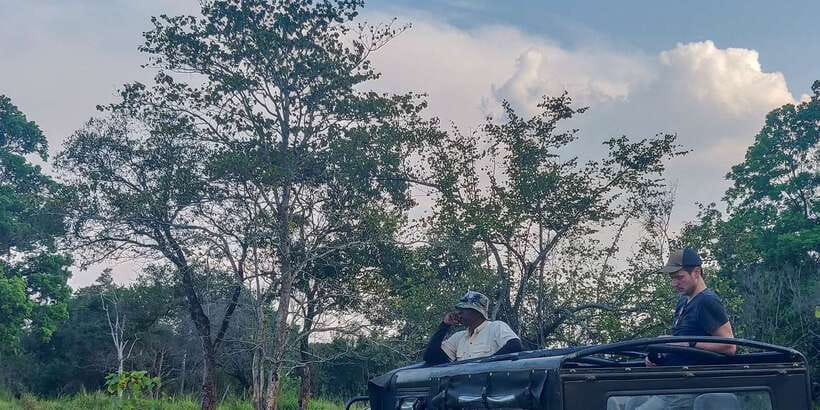
- Tracker-led searching: Your odds improve when someone local is actively reading signs on the ground.
- Seasonal elephant timing: The route shifts with the elephant migration between Minneriya, Kaudulla, and Hurulu.
- Photo-friendly jeep angle: The open-ceiling design helps you aim the camera without fighting the vehicle.
- Small group per jeep: Up to six adults keeps the experience calmer than crowded tours.
- Wildlife beyond elephants: If elephants are quiet, you’re still in the right habitat for cats, tortoises, and birds.
- Entrance tickets handled separately: You may be able to add the park fee or buy on site depending on your booking.
Hurulu Eco Park: The Elephant Migration Stop You Can Actually Do
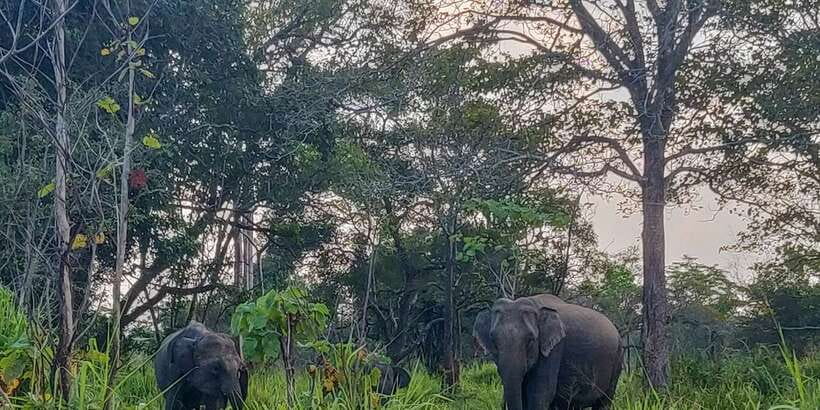
Hurulu Eco Park sits in Sri Lanka’s North Central Province and hits a key moment in the elephant story. Elephants move in a seasonal pattern between Minneriya and Kaudulla, then continue their migration toward Hurulu Eco Park when conditions line up.
Here’s the rhythm you should know: during July to September, you’ll often see big groups around Minneriya. From October to November, elephants tend to shift toward Kaudulla as rains and water levels change. Then in December and January, Hurulu Eco Park becomes the next stop for the final leg of the migration.
That matters because this safari is only 3 hours. You want to be in the right place at the right time, not spending half a day driving in hope.
You can also read our reviews of more evening experiences in Anuradhapura
The 3-Hour Morning or Evening Safari Plan (and Why Timing Matters)
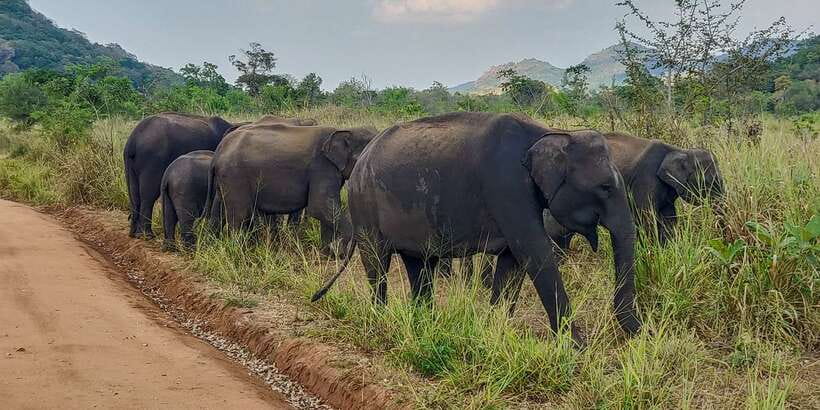
You’ll start at the Hurulu Eco Park entrance gate and head into the Hurulu Forest Reserve area for wildlife viewing. The whole game is done on footstep-close “narrow tracks” and safari roads where vehicles can reposition quickly when the action appears.
Morning and evening both work, but they feel different. In the early hours, animals may be more active as light softens and heat hasn’t peaked yet. In the evening, you often get cooler conditions and a new wave of movement, especially for birds and smaller wildlife.
Either way, plan for an intense 3 hours rather than a relaxed stroll. This is a search-and-scan safari, not a slow sightseeing drive. When the driver and tracker commit to a sighting, you’ll feel it—fast turn-offs, careful positioning, then time to look and shoot.
Jeep Comfort and Photo Angles: The Small Details That Change Everything
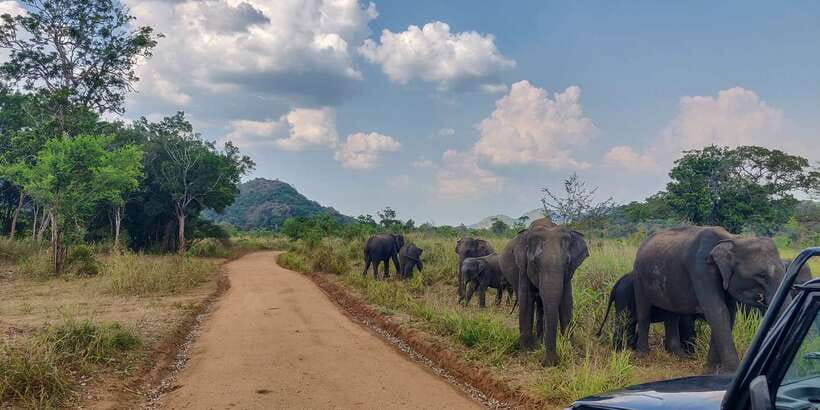
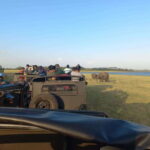
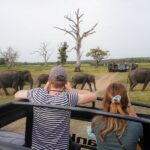
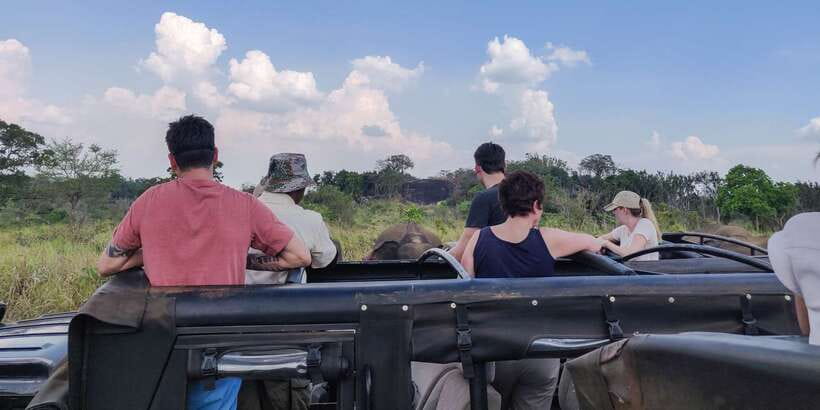
Jeep safari comfort is one of those things you don’t notice until you’ve sat in the wrong vehicle for too long. Here, each jeep carries a maximum of six adults, which helps with both comfort and control. You’re also with a driver and a tracker, so the vehicle isn’t just transporting you—it’s part of the hunting strategy.
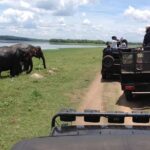
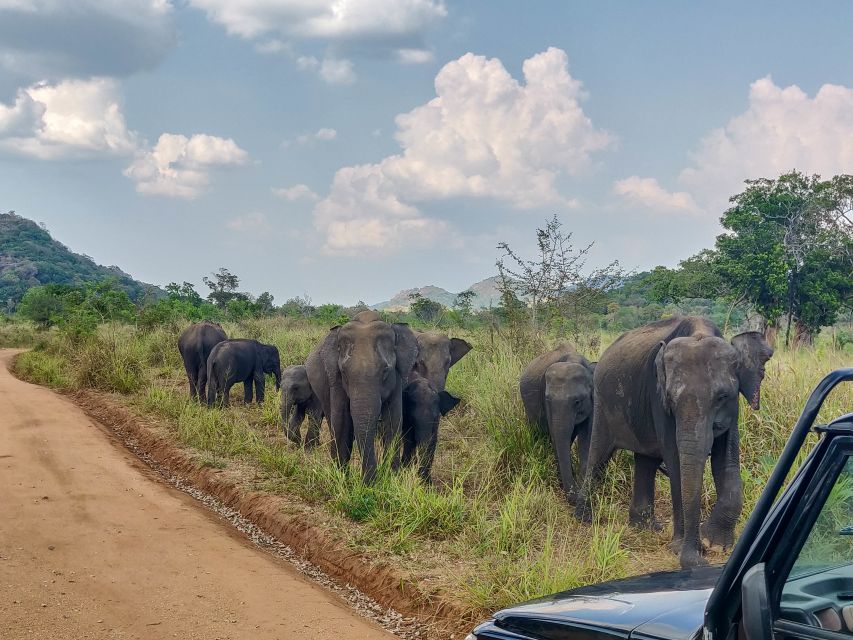
One detail I really like from real bookings: people have praised stable driving and the open ceiling on the jeep. That means less fighting with windows or headrests when you spot elephants at the edge of the track. It also makes it easier to lift a camera for shots without weird angles.
You should still wear the practical stuff: closed, comfortable shoes and sun protection. Even in a vehicle, the brightness outside can be brutal.
Hurulu Wewa Reservoir Country: What the Park Looks Like to Wildlife
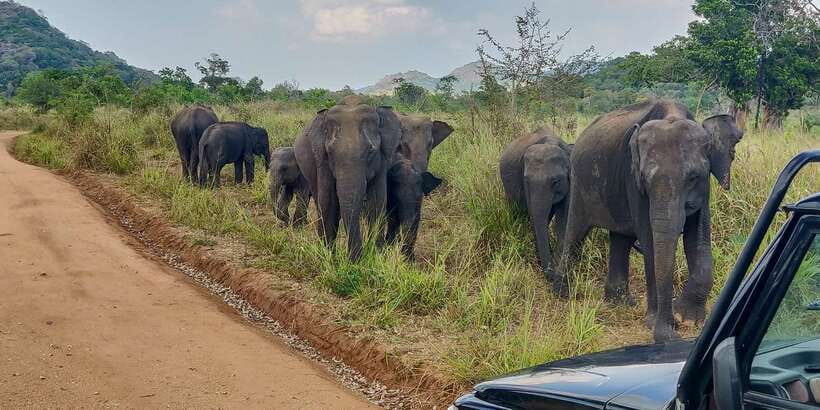
Hurulu Eco Park is known for shrublands and forest patches, and it plays an important role in Sri Lanka’s dry ecosystem—basically, it helps support wildlife like it’s supposed to be there year-round. A major landmark is the Hurulu Wewa reservoir, and it’s a logical place for animals to show up because water and greenery concentrate life.
When you’re in this habitat, you’ll understand why the safari is described as track-based and spot-based. Animals don’t advertise their location. They move, they hide, and they appear where food and cover line up.
That’s where the tracker changes the experience. The best days are the ones where the jeep doesn’t just wander. It follows signs—fresh tracks, feeding spots, and movement patterns. If you’re hoping for a higher chance at elephants and big cats, that’s what you’re buying: active searching, not passive driving.
What You Can Realistically See: Elephants First, Then the Extras
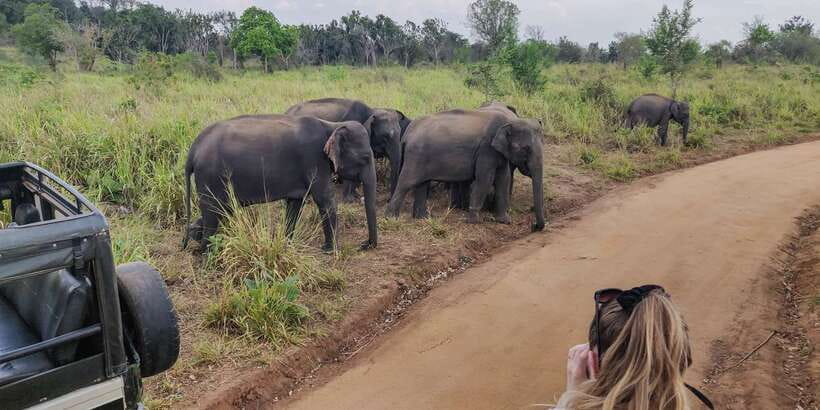
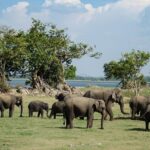
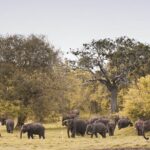
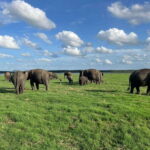
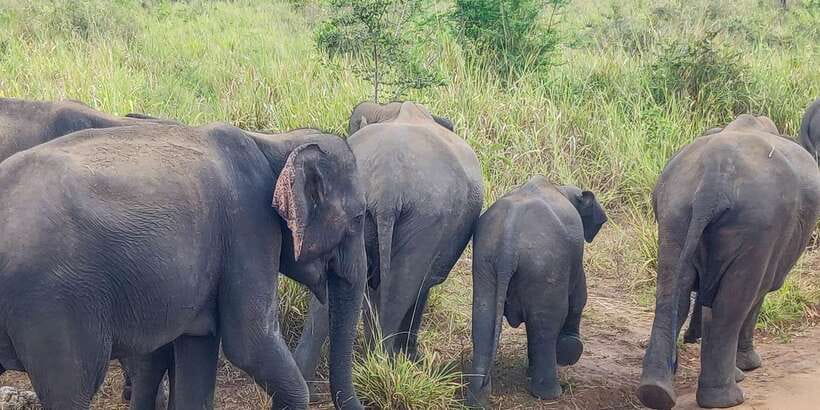
Yes, elephants are the headline. And in this park, they’re often the easiest to appreciate because of their scale and behavior. The safari is designed around the expectation that you’ll spot Sri Lankan elephants and likely get more than one viewing moment during the 3 hours.
You’re also in the right category of habitat for a mixed wildlife list. Based on what the safari is set up to search for, you might spot:
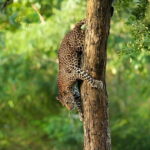
- leopards
- rusty-spotted cats
- star tortoise
- jungle fowl
- parrots and other birds
- hawks
Let’s be honest: the “extras” depend on luck and the day’s animal movement. But the value is that you’re not only scanning for one species. Even if elephants are the main show, your guide isn’t stopping at the obvious.
One review example that really sticks: someone reported seeing up to 90 elephants on a safari that day and praised the private tour setup. Another booking highlighted how close people got to wild elephants with careful handling—no rushing, no scary behavior aimed at the animals.
That’s the difference between a good wildlife day and a mediocre one. It’s not just seeing animals. It’s seeing animals in a way that keeps them comfortable and lets you watch real behavior.
You can also read our reviews of more tours and experiences in Anuradhapura
Leopard and Cat Chances: How the Tracker Likely Improves Your Odds
Leopards and rusty-spotted cats are not “guarantee species.” But your chance improves when you’re working with a tracker who can interpret what’s happening on the ground. The safari is explicitly structured with a tracker to help locate and position for sightings.
Also, there’s a key operational point in the safari design: elephants migrate between multiple parks due to seasonal changes and other factors. The activity includes a recommendation of the best wildlife park for elephant viewing during your stay, based on where elephants actually are.
That means if Hurulu is quiet for elephants when you visit, your operator is positioned to steer you toward the best elephant opportunity rather than leaving you stuck with a low-probability guess.
Driver Quality Makes This Worth It (Name Drop Included)
This type of safari lives or dies on the driver. You want someone who drives calmly, finds good angles, and doesn’t waste time. Real bookings have singled out an experienced driver named Asela, described as friendly and highly skilled at locating elephant groups quickly.
Another theme from multiple experiences: jeep positioning mattered for photos. People have mentioned getting the vehicle placed well for shots and benefiting from the open ceiling when aiming through the top.
Even if you’re not obsessed with photography, good positioning helps you watch longer. When you’re too far away or stuck behind trees, spotting turns into guesswork. When the driver puts the jeep right, your eyes do the rest.
Price and Value: Is $24 a Good Deal Here?
At about $24 per person for the 3-hour safari, this is positioned as good value for an experience that includes a jeep, a driver, and (when available) a tracker.
What makes it feel like value is the format:
- Private group setup
- Maximum of six adults per jeep
- A wildlife-focused route inside a large area (about 10,000 hectares)
- Time efficient: you get a full search window in just 3 hours
Now, the one cost detail you should budget for: entrance tickets are not included by default, though you can add them through your booking. One review mentioned buying entrance tickets on site and suggested it was affordable, so you have options depending on how your booking is set up.
And there’s another small-but-important point: food and drinks are not included. If you’re doing this in the morning or after a busy day, bring water. A safari is already a sensory workout. Don’t add dehydration to the mix.
Entrance Tickets, Pickup, and Meeting Point: The Practical Bits
You’ll meet at the entrance gate of Hurulu Eco Park on Trincomalee Road, Habarana (50150). Pickup/drop-off is included if you’re within a 5-kilometer radius from the park gate, so it’s designed for easy access from nearby stays.
Your jeep ride starts with the driver taking you into Hurulu Forest Reserve for wildlife viewing and then bringing you back to the park entrance.
If you’re staying a bit farther out, confirm pickup distances when you book. Small gaps in transport planning are what turn an otherwise great safari into a rushed one.
What to Bring (So You Don’t Spend the Safari Miserable)
This is outdoors wildlife watching, often under bright sun. Bring:
- comfortable shoes
- sunglasses
- sun hat
- sunscreen
Also, plan on bringing your own water and snacks since no meals are included. You’ll last longer in the heat, and you’ll enjoy the wildlife more when your body isn’t begging for a break.
And keep it simple with your rules of the road: pets aren’t allowed, and smoking, alcohol, and drugs aren’t permitted.
When Is the Best Time to Go?
If you’re aiming for elephants, match your dates to the migration cycle.
- July to September: Minneriya is a common hotspot for large groups.
- October to November: Kaudulla often becomes the elephant draw as rains shift water availability.
- December to January: Hurulu Eco Park is the next migration stop for many herds.
If you visit outside those windows, don’t assume it’s a wash. You can still see plenty of wildlife, especially birds and smaller species. But if elephants are your must-see, you’ll want to be realistic about the season.
One practical approach: ask the operator (or go by the provided recommendation) about which nearby park is best for elephants during your specific dates. The safari already accounts for migration reality rather than pretending animals follow calendar rules.
Who Should Book This Safari?
This safari fits best if you:
- want a short, high-focus wildlife outing
- prefer smaller group settings (up to six adults per jeep)
- care about elephants but also want a chance at cats and tortoises
- like the idea of a tracker working signs rather than just following a fixed route
- want a morning or evening activity that doesn’t swallow your whole day
It’s also a solid choice if you’re staying near Habarana. You’ll get a focused experience without turning the day into a logistics marathon.
Should You Book Hurulu Eco Park?
I’d book it if your trip timing fits the elephant migration window and you want a 3-hour safari that’s designed to actively find animals. The strongest reasons are the combination of tracker-led searching, small-group jeep comfort, and the fact that this park supports more than just elephants.
Skip it only if you’re expecting guaranteed leopard sightings or you’re traveling when elephant migration doesn’t line up with Hurulu. In that case, you might still enjoy the wildlife, but set expectations and ask about the best nearby option for your dates.
If you do book, go prepared for sun, bring your own water, and trust the driver/tracker’s judgment. When the action appears, that quick repositioning is when the safari becomes worth every second.
FAQ
How long is the Hurulu Eco Park safari?
It’s a 3-hour safari experience, offered in either the morning or evening.
Where does the safari start?
You’ll meet at the entrance gate of Hurulu Eco Park on Trincomalee Road, Habarana 50150, Sri Lanka.
What’s included in the price?
The price includes a jeep and driver (maximum six adults per jeep) and pickup/drop-off within 5 kilometers of the park gate. A tracker is included when available, and it’s a private group experience.
Are entrance tickets included?
No. Entrance tickets for Hurulu Eco Park are not included, but they can be added to your booking.
What wildlife can I expect to see?
The safari is set up to look for elephants, leopards, rusty-spotted cats, and star tortoise, along with jungle fowl, parrots, and hawks.
Do I need to bring food or drinks?
Yes. Food and drinks are not included, so you’ll want to bring water and any snacks you need.
Will I definitely see elephants?
Elephants are a common sighting, but your exact chance depends on where they are during the migration cycle. The operator may recommend the best park option for your stay.
Is the safari led in English?
Yes. The live tour guide language is listed as English.
What should I bring for the safari?
Bring comfortable shoes, sunglasses, a sun hat, and sunscreen.
What is the cancellation and payment flexibility?
You can cancel up to 24 hours in advance for a full refund. There’s also a reserve now & pay later option.
![Day trip to ELLA & LIPTON's SEAT with Train Ride [ALL INCLUSIVE] - Nine Arches Bridge: Best Photos Come from Good Timing](https://tour.ceylontravel.net/wp-content/uploads/day-trip-to-ella-liptons-seat-with-train-ride-all-inclusive-400x267.jpg)