REVIEW · COLOMBO
Mirissa Whale Watching, Tour A Once-in-a-Lifetime Experience
Book on GetYourGuide →Operated by TRAVRI.com · Bookable on GetYourGuide
Blue whales have a way of rewriting your day. On a Mirissa whale-watching trip, you’re out on the Indian Ocean looking for blue whales at sea level—plus dolphins and sperm whales when conditions line up.
I also like that the tour is short and focused: 3.5 hours keeps it from turning into a whole-day slog, and you’ll get a live guide in English (at least in the tour description). The main drawback to plan around is that sightings and the quality of onboard information can vary—some experiences feel rushed or light on details if communication isn’t great or if whales surface briefly.
In This Review
- Key moments that make this Mirissa whale watching trip special
- Where Mirissa fits in Sri Lanka’s whale-watching game
- 3.5 hours on the water: what the timing really means
- What you’re looking for: blue whales, sperm whales, and dolphins
- Blue whales: the big, calm moment
- Sperm whales: the drama of timing
- Dolphins: fun while you wait
- The guide and crew: when communication makes or breaks the trip
- Safety gear: what’s included and why it matters
- Price and value: is $64 fair for 3.5 hours?
- Ethics and conservation talk: what it adds to your day
- How to get the most out of your sightings
- Who this whale watching trip suits best
- Should you book Mirissa whale watching for your Sri Lanka days?
- FAQ
- How long is the Mirissa whale watching tour?
- Where is the tour located?
- What animals can you see?
- When is the best season to go?
- What language is the tour guide?
- Is this a private group tour?
- What’s included in the price?
- What is not included?
- How much does it cost?
- What’s the cancellation policy?
- Is there an option to pay later?
- Should you book this Mirissa whale watching tour?
Key moments that make this Mirissa whale watching trip special
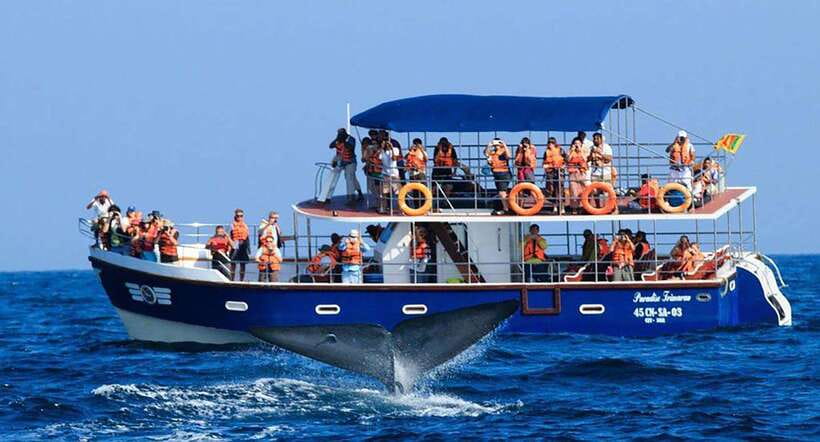
- Blue whales off Mirissa: the species that holds the top spot for size on Earth
- Sperm whales with long, deep descents: you may only see the surface part, but the timing can be dramatic
- Dolphin pods near the boat: playful moments that can happen while you’re scanning for whales
- Coastal views from the Indian Ocean: Mirissa’s shoreline scenery is part of the ride
- Private group on paper, check real group size: one trip can feel crowded depending on the departure
- Crew attitude matters: the boat staff can be genuinely friendly and helpful in practice
Where Mirissa fits in Sri Lanka’s whale-watching game
Mirissa, on Sri Lanka’s south coast, is one of the best places in the country to aim for whales. The key reason is simple: the waters off Mirissa overlap with whale activity in the Indian Ocean, especially from November to April. This is when you’re most likely to spot blue whales, sperm whales, and dolphins in the same general area across multiple departures.
You’re also doing this in a very “real” place. Mirissa is a working coastal town with beaches, seafood, and local life around the docks. That matters because whale watching can feel a little sterile when it’s all packaged tours and no sense of place. Here, you get the sense that you’re joining fishermen and tour boats in a real marine zone, not just visiting a viewing platform.
That said, remember the ocean runs the schedule, not the tour. If the sea state is rough or whales are further out, your sightings can be brief. That’s why this is the kind of activity where good expectations improve everything.
You can also read our reviews of more whale watching tours in Colombo
3.5 hours on the water: what the timing really means
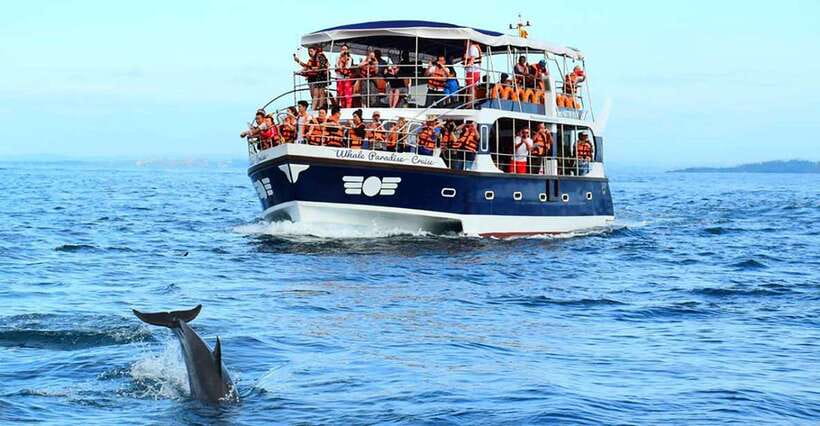
This tour runs about 3.5 hours, and that time window shapes your experience in two ways: you’ll feel the trip move fast, and you’ll need to stay mentally flexible.
Most whale-watching departures in Mirissa tend to go out early in the morning, when conditions are often calmer and sightings are more likely. Early starts also help you avoid the stronger winds that can make scanning the sea more tiring. If you’re the type who hates getting up early, that’s the one trade-off: whale watching rewards “morning patience.”
Onboard, the rhythm usually looks like this:
- You head out from the Mirissa coast into open water.
- The crew scans for signs: whale blows/surfacing patterns, movement in the water, and the kind of commotion that sometimes precedes a dolphin run.
- You cruise and pause where the action is, then return when the tour clock runs out.
What I like about a shorter tour like this is that it doesn’t force you into hours of waiting. What you should watch for is that not every whale sighting lasts long. Blue whales can be impressive even with short surface intervals, but if you end up with quick bursts of animals, you’ll want the guide to make sense of what you’re seeing fast.
What you’re looking for: blue whales, sperm whales, and dolphins
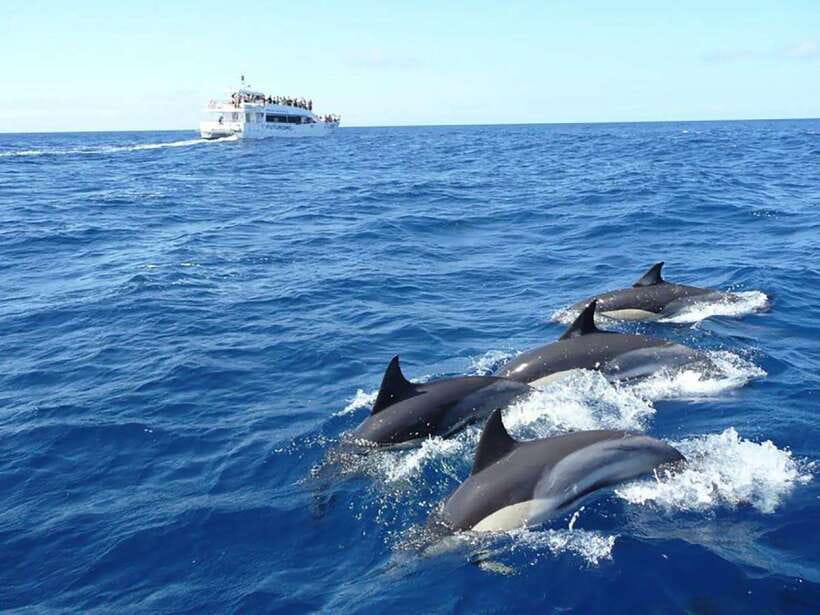
This is the “wow” part, so here’s how to understand what you might see.
Blue whales: the big, calm moment
The blue whale is the headline species in Mirissa during peak season. When they’re around, you’re looking for massive animals with a slow, deliberate presence. Even when they don’t stay up long, the scale is hard to miss once you see the size relative to the boat.
Your best move onboard is to keep your eyes on the horizon and give the crew full attention during scanning. When the crew points out a blow or a surfacing, react quickly—whales can appear and disappear in minutes.
Sperm whales: the drama of timing
Sperm whales are known for their ability to spend time underwater and then surface again, sometimes with a clear blow before moving off. You may catch only the surface part of their behavior, but the contrast between long absence and sudden reappearance is part of the thrill.
If you get even a glimpse, don’t treat it as the whole show. This is one of those experiences where the “big moment” may be the timing itself—seeing the animal return after a long interval.





Dolphins: fun while you wait
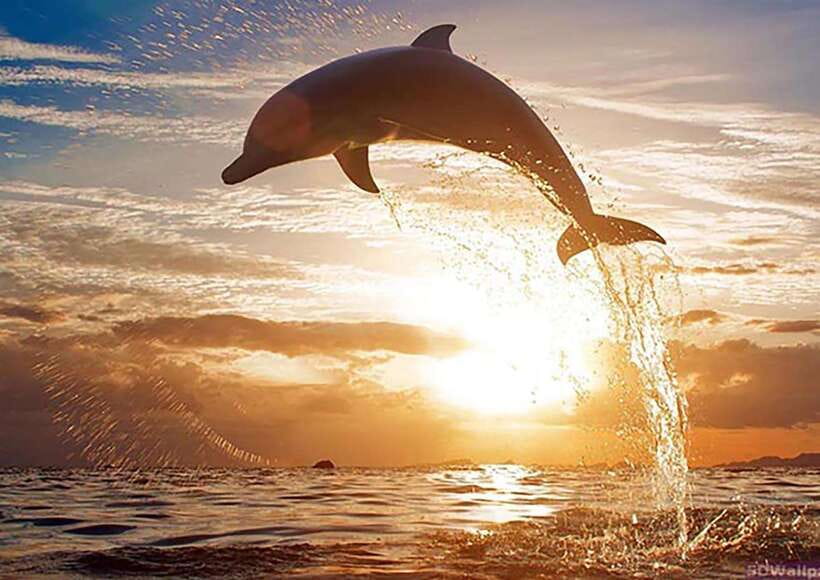
Dolphins often act like a bonus feature. Pods may appear closer to the boat and can show playful behavior during the trip. If your main hope is blue whales, dolphins are still worth it because they keep the energy up between whale sightings and make the time feel lively even when whales are farther out.
The practical tip here is simple: dolphins are motion. When a pod shows up, you’ll usually see it evolve fast. Watch where they’re moving, not just where they were 30 seconds ago.
The guide and crew: when communication makes or breaks the trip
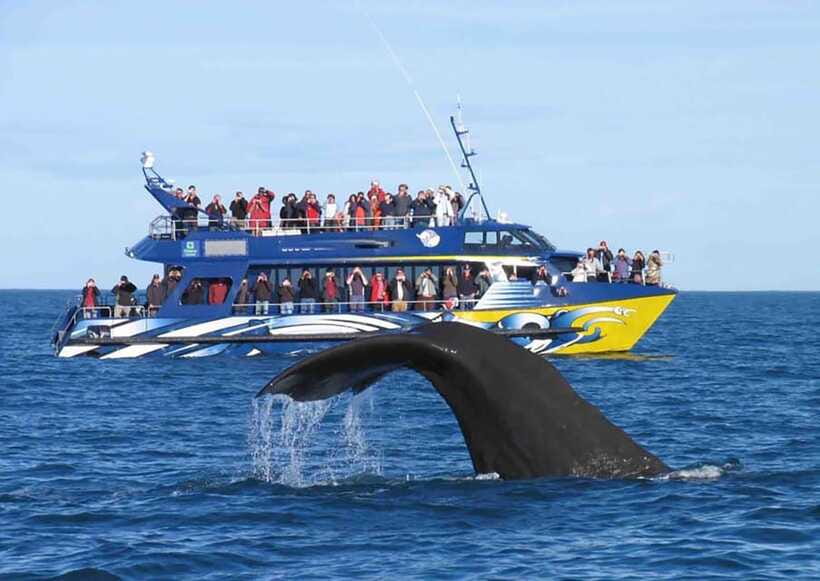
The tour description says you’ll have a live English guide. That can be a huge part of value because you’re not only chasing animals—you’re also learning what you’re looking at and why it matters.
In practice, guide quality can make a difference. One real booking experience involved a guide named Subhash who arrived on time and was pleasant, but English communication wasn’t strong, and the information on marine life felt limited. That’s the kind of mismatch that can turn whale watching from educational into mostly visual.
So here’s my practical advice: if you care about the explanations—behavior, habitats, and conservation—ask before you go how the guide handles English. If you don’t get a clear answer, go into the trip expecting more “eyes-on” time than deep explanations.
On a positive note, the boat staff have been described as very friendly, and that warmth matters at sea. A crew that handles safety well and keeps passengers calm makes whale watching more enjoyable, even if sightings are short.
Safety gear: what’s included and why it matters
The included items list includes safety equipment, which is what you want when you’re heading out on open water. While you’ll likely spend most of the trip scanning the sea instead of thinking about procedures, safety gear is the difference between “fun adventure” and “stress.”
You’ll also want to dress for the ocean. Even in warm Sri Lanka weather, sea air can cool you down, and wind can make it feel chilly when you’re stationary for long minutes at a time. If you’ve ever felt cold on a boat, you know why this matters.
Price and value: is $64 fair for 3.5 hours?
At $64 per person for a roughly 3.5-hour trip, the value depends on what you expect from the experience.
Here’s what you’re paying for, based on the included items:
- A guided whale-watching tour
- A live guide (English listed)
- Safety equipment
- A private group format is listed, though real-world group size can vary
What you’re not paying for:
- Entrance fees (if any come up)
- Transportation to and from the activity start point
- Personal expenses
In whale watching, the big variable is sightings. If the day lines up and you spot blue whales and at least one other species, the price feels like a bargain because you’re seeing Earth’s largest animals without needing a specialist trip.
If the day is quieter or sightings are brief, the price can feel steep because there’s less “time to linger” and fewer learning moments onboard. In that scenario, what saves the day is a friendly crew and clear explanations from the guide.
So my honest take: this is good value if you treat it as a nature encounter first. If you treat it as a guaranteed animal-spotting class, you may feel disappointed.
Ethics and conservation talk: what it adds to your day
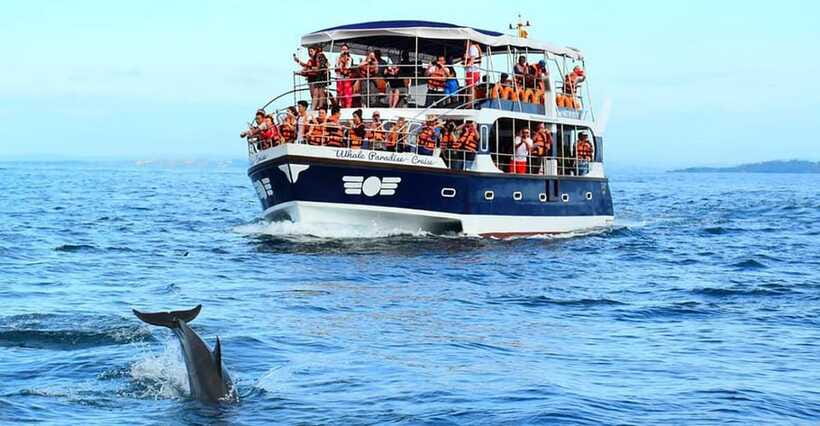
The tour highlights marine life education and the importance of ocean conservation. Even when whales surface briefly, a good guide can help you understand what you’re seeing and why it matters.
That matters more than people think. Whale watching is an interaction with wildlife, not a zoo ticket. When you learn basic behavior—how animals surface, how pods move, why minimum disturbance matters—you become a better observer and a calmer passenger.
Just keep your expectations grounded: if the guide’s English is limited, you may catch the main idea, but you might not get the full conservation story you hoped for.
How to get the most out of your sightings
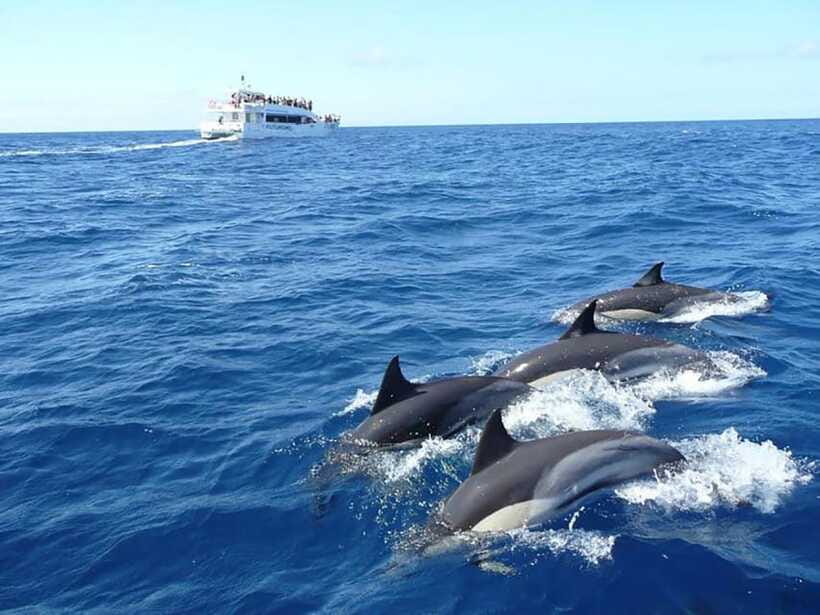
You can’t control whale movement, but you can control your viewing habits.
- Arrive ready to focus. This is a scanning game, not a sit-and-watch game.
- Bring or wear layers. Wind at sea sneaks up on you.
- Be patient with short surfacing. For large whales, “quick” doesn’t mean “nothing.”
- If dolphins appear near the boat, watch their movement patterns. They can shift fast.
- If the boat is busy, manage your viewing angles. Don’t stand in the same spot the whole time—move where you have a clear line to the water.
Also, if you’re the type who needs constant narration, this is where you should do extra checking before you book. Some experiences are more informational than others depending on the guide’s ability to communicate in English.
Who this whale watching trip suits best
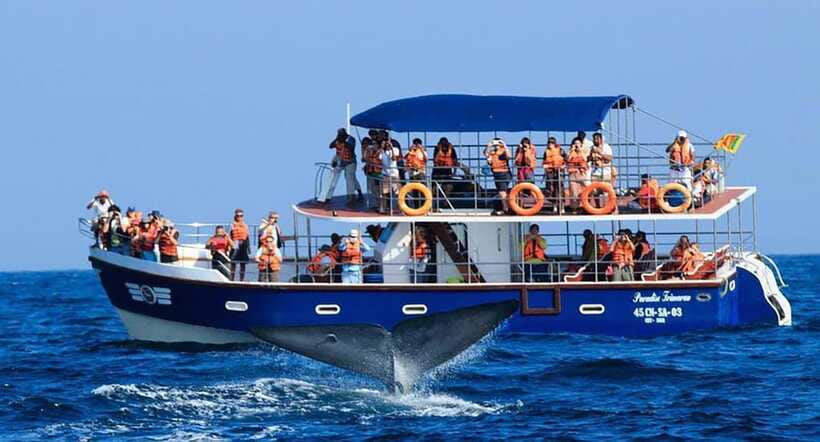
This Mirissa whale watching tour works best for:
- People who love wildlife and are comfortable with uncertainty
- First-timers who want a focused 3.5-hour outing rather than a long day
- Travelers who enjoy learning through observation, even if explanations aren’t constant
- Families or groups that want a straightforward nature trip from a popular coastal base
It may not suit you as well if:
- You expect a very personalized, quiet experience. Even with private group language, the boat can feel crowded depending on the departure.
- You need strong English narration to make the trip worthwhile. If communication is weaker, the experience can feel shorter on context.
- You’re sensitive to the possibility that sightings can be brief.
Should you book Mirissa whale watching for your Sri Lanka days?
If your main goal is a chance to see blue whales, go—this is one of the best ways to do it in Sri Lanka. The trip length is reasonable, and the mix of whales and dolphins can make the experience feel complete even if one species doesn’t stay long.
But book with the right mindset: treat it as a real-time ocean encounter, not a guaranteed performance. Double-check that you’ll have clear meeting details and confirm what language support you can expect. If those practical pieces line up, this is the kind of day that stays with you—one you’ll remember for the scale of the animals and the feeling of being out on the Indian Ocean with the whole sea holding its breath.
FAQ
How long is the Mirissa whale watching tour?
It’s listed as 3.5 hours.
Where is the tour located?
The tour is in Mirissa, in Sri Lanka’s Western Province.
What animals can you see?
The tour focuses on blue whales, sperm whales, and dolphins.
When is the best season to go?
The information given highlights November to April as the best time for whale watching in these waters.
What language is the tour guide?
The tour description lists English.
Is this a private group tour?
The tour is described as a private group.
What’s included in the price?
Included items listed are a guided whale-watching tour, a live guide, safety equipment, and items listed under included fees.
What is not included?
The not-included list includes entrance fees, transportation to/from the start point, and personal expenses.
How much does it cost?
The price is $64 per person.
What’s the cancellation policy?
It’s listed as free cancellation up to 24 hours in advance for a full refund.
Is there an option to pay later?
Yes, it’s listed as reserve now & pay later.
Should you book this Mirissa whale watching tour?
If you’re traveling during November to April and you’re excited by the chance to see blue whales (plus sperm whales and dolphins), it’s a solid choice. Just go in knowing the ocean controls the timing, and confirm you’ll have clear meeting details and strong English support if that’s important to you.