REVIEW · SRI LANKA
Udawalawe: Farm to Table Cooking & Authe: Village Experience
Book on GetYourGuide →Operated by OwinRich Hospitality · Bookable on GetYourGuide
Cinnamon tea kicks off village life in Udawalawe. I love how this plan mixes hands-on village cooking with real-to-you work like picking vegetables and learning Sri Lankan spice basics. The other big plus for me is the chance to see how people lived on the land inside a 200-year-old reconstructed village setting.
You’ll move from a walk-and-learn start to active participation in the kitchen with local women, then sit down to a meal you helped prepare. I also like the included stops that connect food to the wider village economy, including cinnamon peeling and a guided visit to an ancient precious-stone mine.
One consideration: this is a full walking experience for about 90 minutes, and it isn’t suitable for wheelchair users. If you need frequent sit-down breaks or mobility support, plan differently.
In This Review
- Key highlights you won’t want to miss
- Step Into Udawalawe’s Ceylon 1850 200-Year Village Scene
- From King Coconut and Cinnamon Tea to a Spice-First Day
- Ancient Precious-Stone Mine: A Guided Look at How It’s Done
- Cinnamon Peeling Demonstration and the Work Behind the Flavor
- Pick Vegetables, Then Cook in a Traditional Village Kitchen
- Vegetable picking from the organic garden
- Cooking class with local women
- Eating What You Cook: Local Meal and Communal Warmth
- Drinks during the meal
- Local Melas: Crafts, Music, Dance, and Local Food Culture
- Price and Value: Is $30 Worth It?
- Who This Udawalawe Village Experience Fits Best
- Practical Tips Before You Go
- Should You Book This Udawalawe Farm-to-Table Village Experience?
- FAQ
- How long is the Udawalawe village experience?
- Where is the meeting point?
- Is this tour wheelchair-friendly?
- What’s included in the experience?
- Do I eat during the tour?
- What languages are the guides?
- Is the group private or shared?
- What is the cancellation option?
Key highlights you won’t want to miss
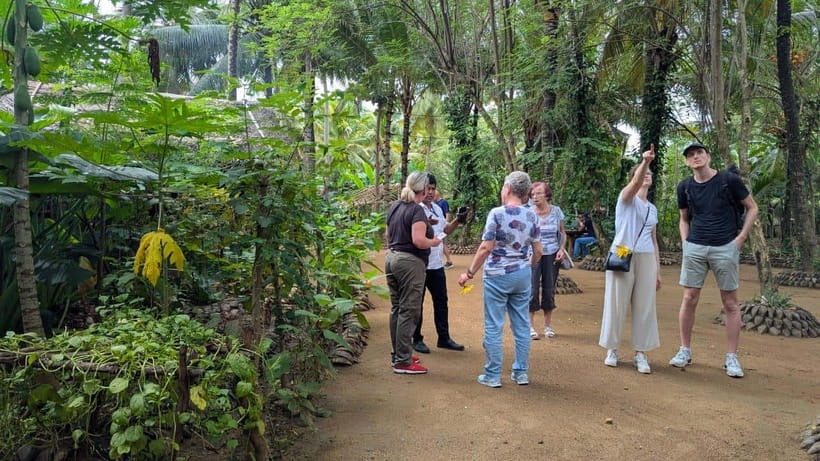
- Cinnamon tea welcome to set the tone right away
- Ancient precious-stone mine visit and a look at how mining works
- Cinnamon peeling demonstration by skilled artisans
- Organic garden picking before you cook
- Hands-on cooking class in a traditional village kitchen
- Local melas experience with crafts and local delicacies
Step Into Udawalawe’s Ceylon 1850 200-Year Village Scene
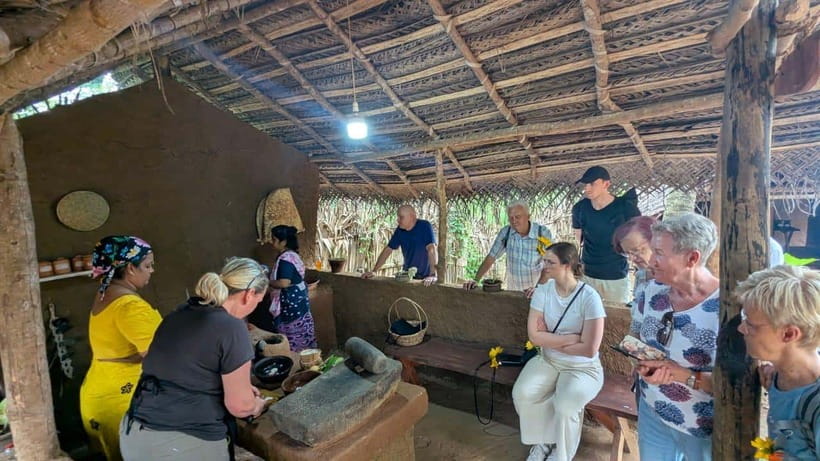
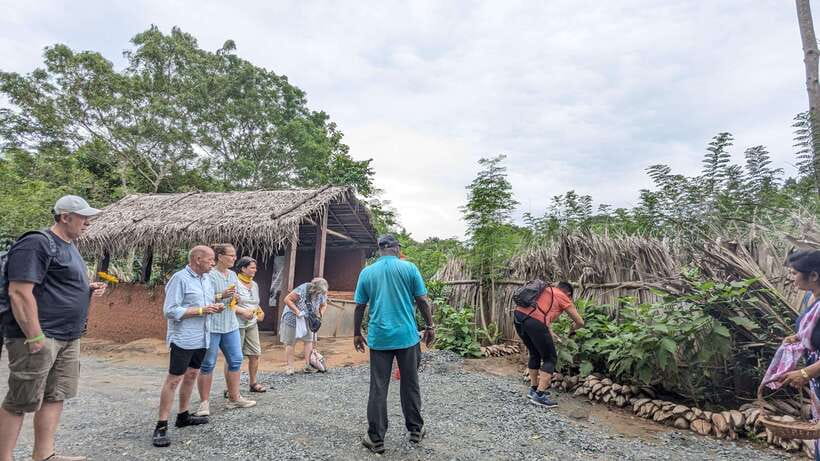
This tour is built around a simple idea: instead of only hearing about village life, you get to see it, smell it, and do a bit of it yourself. You’ll be in Sabaragamuwa Province in the Udawalawe area, inside a reconstructed traditional village called Ceylon 1850 We Reconstructed 200 Years Old Traditional Village.
The overall time is about 2 hours, but the active part is roughly 90 minutes of walking. That means you should treat it like an easy walking circuit rather than a sit-down workshop. The pace is the best kind of practical: learn a piece, do a piece, eat what you made.
Another value point: you’re not stuck in a big crowd. It’s a private group, and the guide is live (English and Singhalese). That matters because cooking questions are real questions, like how the spice paste should look or when a pot should be stirred.
You can also read our reviews of more tours and experiences in Sri Lanka.



From King Coconut and Cinnamon Tea to a Spice-First Day
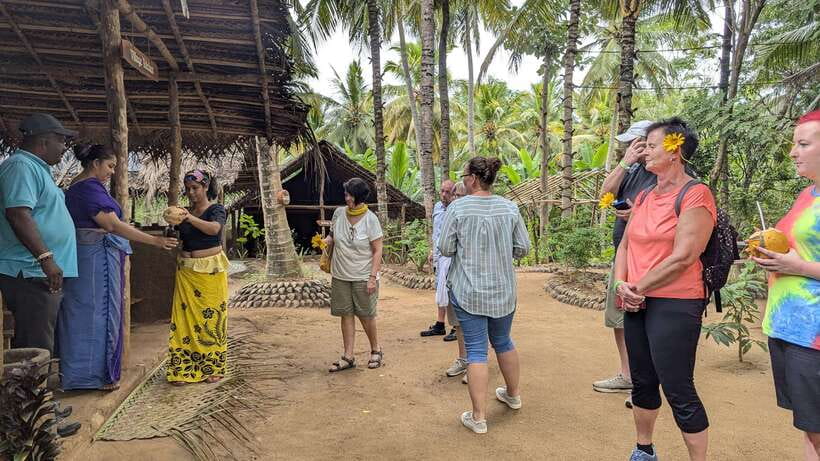
Your experience starts with a welcome drink. The highlights emphasize cinnamon tea, and the included details also list a King coconut welcome drink, so expect a welcome that’s both refreshing and tied to local flavor.
Why this matters: cinnamon is not just a sweet flavor here. In Sri Lankan daily life and trade, it’s tied to skills, labor, and tradition. Starting the day with a cinnamon-forward drink gets your senses ready for the rest of the program, especially the cinnamon peeling demonstration later on.
Before the cooking part, you get small explanations that connect the dots. You’re learning why certain tasks matter, not just memorizing steps. That makes the later kitchen time feel less like a show and more like a real village workflow.
Ancient Precious-Stone Mine: A Guided Look at How It’s Done
One of the most interesting early segments is the visit to an ancient precious-stone mine and the guided tour of the mining process. Even if you don’t know the first thing about mining, you’ll understand the logic of the work once you see it explained on site.
What I like about this stop is the way it broadens the day beyond food. The village economy isn’t only agriculture. It also connects to skills like identifying materials, using tools, and moving through a process step-by-step—skills that exist alongside farming.
What to consider: this is described as a guided tour focused on how mining happens, not a long museum-style lecture. So if you’re expecting extremely technical details or specific stone science, you might find it more of an overview than a deep technical class. Still, it’s a strong contrast to the cooking and garden segments that follow.
Cinnamon Peeling Demonstration and the Work Behind the Flavor
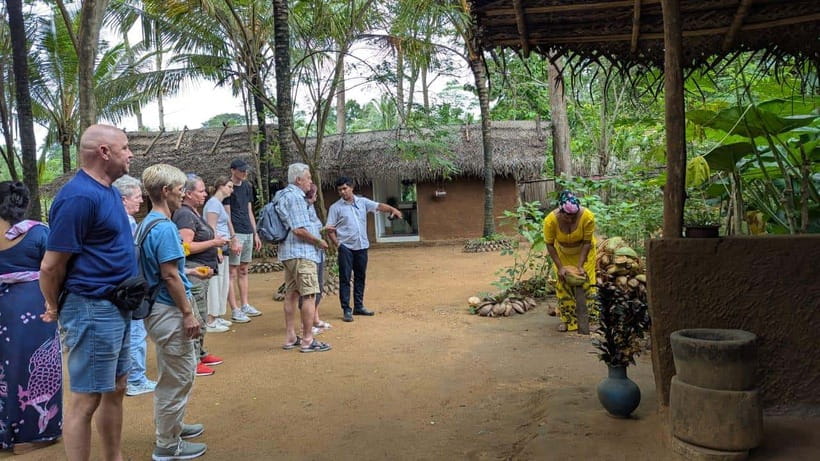
Next up is a cinnamon peeling demonstration by skilled artisans. This is one of those moments where you see why cinnamon is worth paying attention to.
Cinnamon in stick form doesn’t appear by magic. The peeling step is the skill. Watching how artisans prepare cinnamon and understand how it’s handled gives the spice a real, human context. You’re also learning the difference between cinnamon as a spice you buy and cinnamon as a product people craft.
Practical angle: if you’re the type who loves food details, this segment is a payoff. You’ll likely notice stronger aroma and better understanding when you later use spice in cooking. And if you’re more casual about cooking, it still gives you a quick cultural snapshot that doesn’t feel random.
Pick Vegetables, Then Cook in a Traditional Village Kitchen
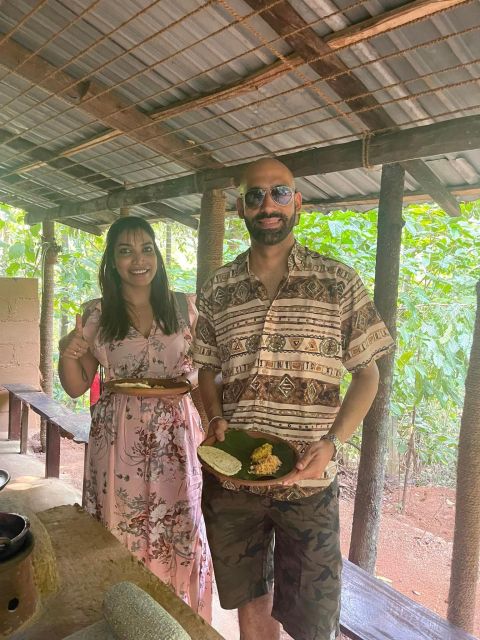
Here’s where the day becomes hands-on in a way that actually sticks with you: you pick vegetables from an organic garden, then cook in a traditional village kitchen with local women.





Vegetable picking from the organic garden
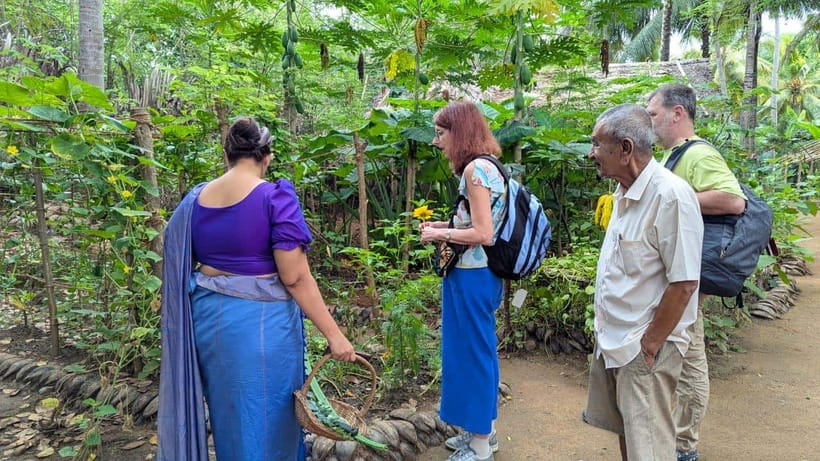
You’ll walk through the garden and choose produce for the dishes you’ll make. This is simple, but it changes your attitude. Instead of cooking ingredients that feel anonymous, you’re cooking what you personally selected. It also helps you understand which vegetables are used in local meals and how gardens supply everyday cooking.
Cooking class with local women
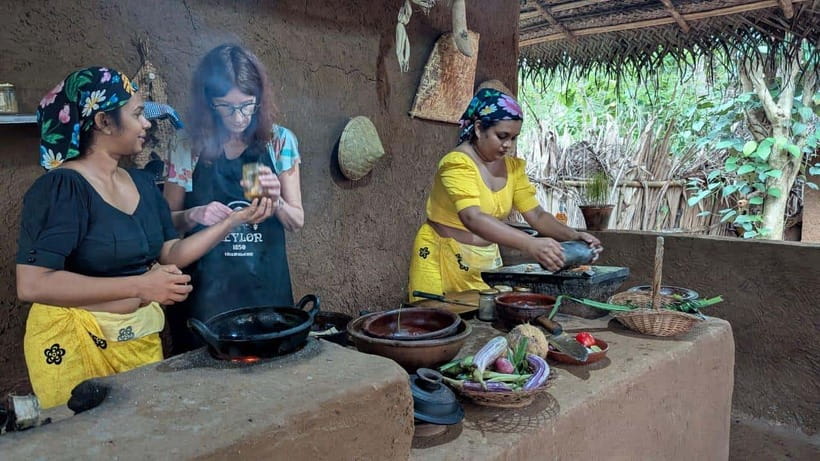
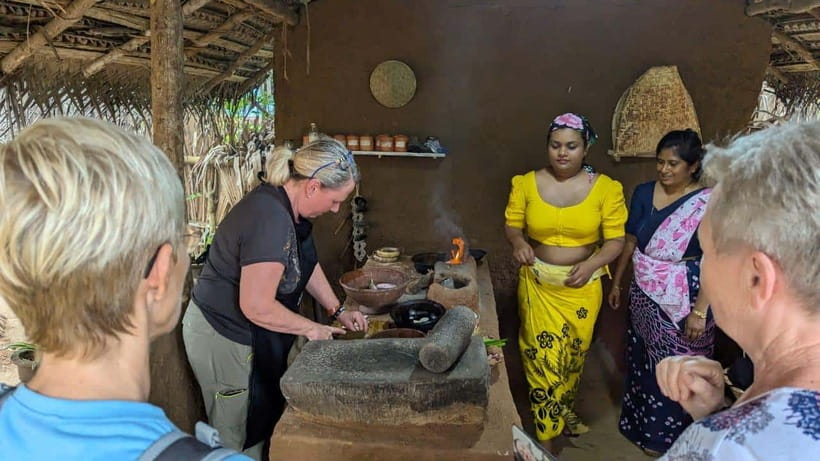
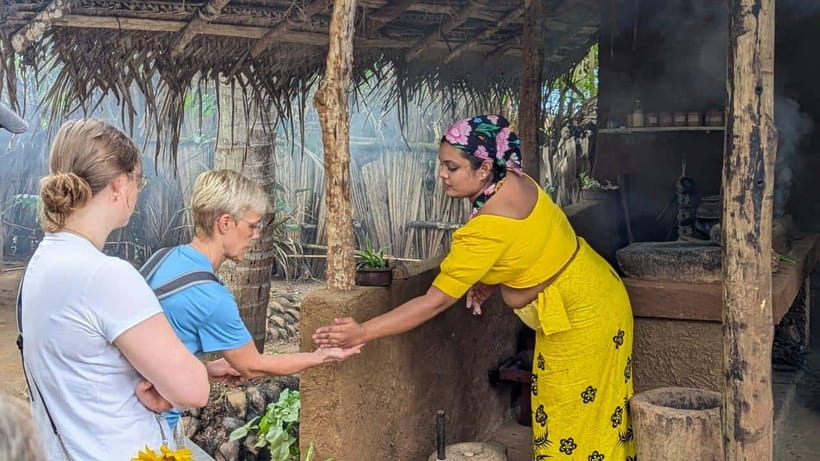
The cooking class is the heart of the experience. You’ll work in the kitchen alongside local women and follow age-old recipes and techniques. The description specifically mentions tasks like grinding spices and cooking over an open flame.
This is also where a live guide becomes important. English and Singhalese support means you can ask what something is for, what timing looks like, and how to adjust flavor as you go. For me, that’s what turns a cooking activity into learning rather than a recipe-tap-along.
What to expect from the cooking time:
- You’ll likely do parts of the prep work, not just watch.
- You’ll learn how spices are handled and combined.
- You’ll cook over a traditional setup rather than a modern stovetop.
You might not leave with a notebook full of exact measurements, but you will leave with practical understanding: the sequence, the smell cues, and the feel of local cooking.
Eating What You Cook: Local Meal and Communal Warmth
After the cooking class, you sit down for a meal featuring the dishes prepared during the session. The program is designed around a communal, village-style sit-down, which matters because it changes the mood from class-mode to food-mode.
One helpful tip: expect that the meal is about the flavors you just made. In terms of what you might taste, examples tied to the experience include coconut sambal and dahl. You shouldn’t assume every dish will match those exact items, but it gives you a realistic sense of the style—spice-forward, coconut-friendly, and comforting.
Drinks during the meal
A key consideration is drink inclusion. The experience details list a welcome drink, but it does not explicitly confirm that all beverages with your meal are included. I strongly recommend you ask up front whether drinks are part of the meal price or if you’ll be paying separately. Getting clarity early keeps the experience focused on the food.
Local Melas: Crafts, Music, Dance, and Local Food Culture
To finish, you join local melas—traditional fairs with crafts, local delicacies, and entertainment such as music and dance.
This segment is valuable because it connects what you learned earlier to a real social setting. You’ve just seen village agriculture, spice work, and cooking. At the mela, you see village life as a shared event rather than a staged lesson.
What you can do here:
- Browse crafts and take in the everyday creativity behind the scenes.
- Taste local delicacies if available as part of the mela offerings.
- Watch music and dance performances as a window into community celebration.
The trade-off: melas are lively, and the schedule can feel more flexible than a strict classroom timeline. If you prefer predictable timing, go with a calm expectation. If you love atmosphere and people-watching, this is the best payoff.
Price and Value: Is $30 Worth It?
At about $30 per person for roughly 2 hours, the value depends on what you want from a tour.
Here’s what you’re getting included:
- A guided tour and welcome drink
- Visit to an ancient precious-stone mine and explanation of the mining process
- Cinnamon peeling demonstration
- Hands-on vegetable picking from an organic garden
- Traditional cooking class in a village kitchen with local women
- Meal featuring the dishes made during the class
- Participation in local melas, including crafts and local delicacies
- A live guide in English and Singhalese
- Private group format
If you like experiences where your hands and stomach both get involved, the price makes more sense. Cooking classes at similar destinations often cost a lot more once you factor in the meal and a guide. Here, you also get the extra stops—precious-stone mine and cinnamon work—plus the mela atmosphere.
If your main goal is just a quick look at countryside, this might feel like more than you need. But if you want a grounded, practical day that connects food, work, and community, it’s a fair deal.
Who This Udawalawe Village Experience Fits Best
This is a great fit if:
- You enjoy cooking and want hands-on spice and prep learning
- You like seeing how everyday life works beyond the usual sightseeing
- You want a short, structured experience that still feels local
- You’re comfortable with a walking tour around 90 minutes
It’s not a great fit if:
- You need wheelchair-friendly access (it isn’t suitable for wheelchair users)
- You want a long indoor cooking lab with lots of sitting time
Practical Tips Before You Go
A few straightforward notes to help you have an easy day:
- Wear comfortable walking shoes. The experience is described as a full walking tour around 90 minutes.
- Plan for a sensory day. Cinnamon, spices, and open-fire cooking mean strong aromas and heat at times.
- Bring a curious mindset. The guide supports both English and Singhalese, and the program expects you to ask questions during cooking.
- Ask about drinks with the meal. The included welcome drink is clear, but beverage inclusion during the meal can be a separate charge.
If you’re also visiting the Udawalawe Elephant Orphanage, the meeting point is about 1.2 km away. That’s convenient for planning your day without complicated logistics.
Should You Book This Udawalawe Farm-to-Table Village Experience?
I’d book it if you want a short trip that feels like more than a photo stop. The hands-on cooking with local women, the organic garden vegetable picking, and the cinnamon work give you a real food connection that doesn’t feel like a souvenir session. Add in the precious-stone mine visit and the mela finale, and you get a day with multiple angles on village life.
I’d skip or rethink it if walking is an issue for you. Also, if you dislike surprise add-ons, ask early about drink pricing during the meal so you stay relaxed and enjoy the food.
Overall, for its length and what’s included, it’s a solid value pick in the Udawalawe area.
FAQ
How long is the Udawalawe village experience?
The activity is listed as 2 hours, with a full walking tour around 90 minutes.
Where is the meeting point?
The meeting point is about 1.2 km away from the Udawalawe Elephant Orphanage.
Is this tour wheelchair-friendly?
No. It is not suitable for wheelchair users.
What’s included in the experience?
It includes a welcome drink, a guided tour of an ancient precious-stone mine and the gem-mining process, a cinnamon peeling demonstration, hands-on vegetable picking, a traditional cooking class in a village kitchen with local women, the meal made during the class, and participation in local melas with crafts and local delicacies.
Do I eat during the tour?
Yes. You’ll enjoy a local meal featuring the dishes prepared during the cooking class.
What languages are the guides?
The live tour guide speaks English and Singhalese.
Is the group private or shared?
It’s a private group.
What is the cancellation option?
Free cancellation is available up to 24 hours in advance for a full refund.

![Minneriya National Park Safari [private , full package] - Choosing a Morning or Afternoon Slot: Crowds and Comfort](https://tour.ceylontravel.net/wp-content/uploads/minneriya-national-park-safari-private-full-package-400x267.jpg)