REVIEW · ANURADHAPURA
Explore & Ride the history of anuradhapura with Vogel Tours
Book on Viator →Operated by Vogel Tours Srilanka · Bookable on Viator
Temples make sense with a guide. With Vogel Tours, you get a focused run through Anuradhapura’s headline sacred spots—Jaya Sri Maha Bodhi and Ruwanweli Maha Seya among them—without spending hours figuring out where to go. I like that the tour slows down for the stories: you’ll stop at major monastic sites and ask questions about Buddhism and Sri Lankan culture. The practical catch is that the UNESCO entrance ticket is not included, and some individual stops list admissions as not included.
If you want things explained in plain terms, this is the kind of outing where a guide like Ajee Vogel matters. Pickup is offered, you get snacks plus coffee or tea, and you’ll use a mobile ticket. Plan for a bit of walking, and remember the shoe rule for secret places.
In This Review
- Key highlights to look for
- Anuradhapura, explained in the right order (and why that matters)
- Price and the UNESCO ticket math
- Pickup, transport, and how the day will feel
- The route: from sacred bo tree to Jethawanaramaya Museum
- Stop 1: Jaya Sri Maha Bodhi (Mahamewuna Garden)
- Stop 2: Lovamahapaya (Brazen Palace / Lohaprasadaya)
- Stop 3: Ruwanwelisaya (Ruwanweli Maha Seya)
- Stop 4: Twin Baths (Kuttam Pokuna)
- Stop 5: Samadhi Statue (Mahamevnāwa Park)
- Stops 6 and 7: Abhayagiri Dagaba and the Main Refectory
- Stop 8: Moonstone (Sandakada pahana)
- Stop 9: Eth Pokuna (Elephant Pond)
- Stop 10: Rathna Prasadaya & Guardstone
- Stops 11 and 12: Jethawanaramaya and its Museum
- Who this tour fits best (and who might want a different style)
- What you’ll get from the guide experience
- Practical tips to make the day smoother
- Should you book Vogel Tours in Anuradhapura?
- FAQ
- How long is the Vogel Tours Anuradhapura experience?
- Is pickup included?
- What stops are included on the tour?
- Is the entrance fee included?
- Do I need to remove my shoes?
- Is this tour private?
Key highlights to look for
- A short, focused Anuradhapura overview you can actually finish without fatigue
- Snacks and coffee or tea so your morning or afternoon doesn’t crash
- Temple and stupa stops with built-in context, not just photos
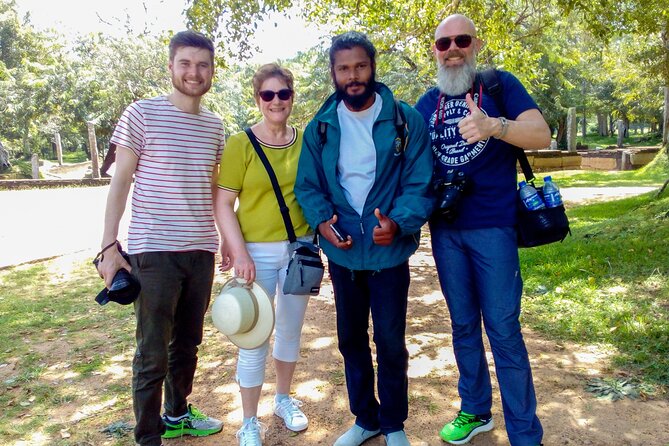
- A private guide experience where questions are welcome
- Historic architecture details like moonstone carvings and ancient bathing ponds
- Shoe removal in certain spots, so wear easy-to-handle footwear
Anuradhapura, explained in the right order (and why that matters)
Anuradhapura can feel like a puzzle when you’re on your own: ruins spread out, temple names sound similar, and Buddhism can be hard to place without someone offering a map in words. This tour gives you a guided route that groups major sacred and archaeological points so the day makes sense.
What I like most is the balance between iconic sites and the smaller-but-meaningful details. You won’t just see one stupa and move on. You’ll also pause for elements of ancient layout and ritual life—things like bathing tanks, moonstones at stairways, and monastic areas that help explain how the city functioned, not just what it looked like.
The vibe is also practical. You get a time window that can run from about 1 to 5 hours, which makes it easier to fit into a travel day. And because it’s private, the pace can work for the questions you actually want answered.
You can also read our reviews of more historical tours in Anuradhapura

Price and the UNESCO ticket math
The headline price is $40 per group (up to 3 people). That’s a solid deal if you’re traveling with friends or family, because the cost is grouped rather than per person.
But here’s the key detail: there’s a UNESCO entrance ticket of $30 per person listed as required for people entering the UNESCO area. So your real total is usually your group price plus the UNESCO fee, and then possibly any individual site admissions that are marked not included on this route.
Quick way to think about value:
- If it’s just you (no splitting the group cost), the $40 plus the $30 UNESCO ticket still lands in a reasonable range for a guided, private historical circuit with snacks.
- If you have 3 people, the $40 group cost becomes roughly $13 per person, and the UNESCO ticket dominates the budget—in that case you’re paying mostly for guided time, transport, and the “why this matters” explanations.
The tour also includes snacks and coffee or tea, which sounds small, but it’s one less expense and one less stop when you’re moving between sites. It’s a classic value add for archaeological days: hydration and a snack keep you patient while you look, read, and listen.
Pickup, transport, and how the day will feel
You can expect a pickup offered option. There’s also an add-on-style note that private transportation can be supplied for up to 3 persons if you request it, which is helpful when you’re short on time or walking isn’t your thing.
Even with transport, this is still a temple-and-ruins outing. Parts of the experience will be spent standing still to look carefully, and other parts will be spent walking between stops. The duration is flexible (about 1 to 5 hours), so you should treat this as a “structured sightseeing block” rather than a quick sprint.
One more real-world note: you’ll need to remove your shoes when you enter secret places. That’s not a small thing. Bring footwear that’s easy to take off and on without a wrestling match.
Finally, the tour is designed for good weather. If conditions are poor, it may be rescheduled or refunded, depending on what happens on the day.
The route: from sacred bo tree to Jethawanaramaya Museum
This is a stop-heavy route, but it’s the kind of stop schedule that works because each location is a different piece of the city.
Stop 1: Jaya Sri Maha Bodhi (Mahamewuna Garden)
You start at the Jaya Sri Maha Bodhi, described as a historical sacred bo tree (Ficus religiosa) in the Mahamewuna Garden. This is the kind of opening stop that sets the tone: before you hit ruins and stupas, you get the living, sacred anchor of the site.
Admission is listed as free here. Practically, this is a great first stop because it helps you understand what makes a temple area sacred—before you spend time staring at stonework.



Stop 2: Lovamahapaya (Brazen Palace / Lohaprasadaya)
Next comes Lovamahapaya, also known as the Brazen Palace or Lohaprasadaya. It’s positioned between Ruwanweliseya and Sri Mahabodiya in the ancient city.
This stop is short, but it matters because it connects structures to their setting. Even in a brief stop, it helps you picture how different buildings related to the main sacred landmarks nearby.
Stop 3: Ruwanwelisaya (Ruwanweli Maha Seya)
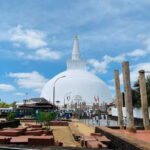
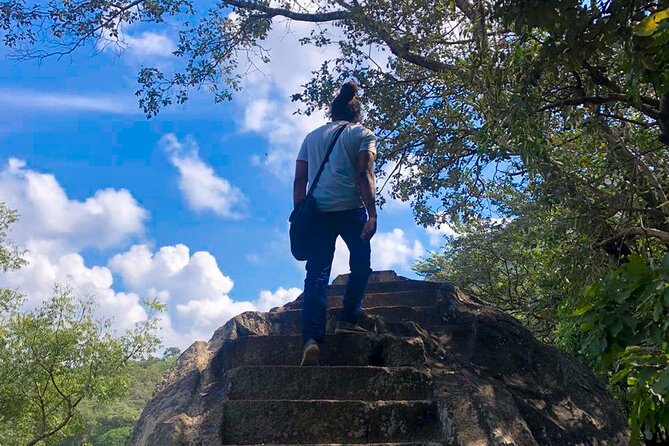
Then you hit one of the big names: Ruwanwelisaya, also called the Ruwanweli Maha Seya and noted as the Great Thupa. The description you’ll be hearing is that it’s a stupa—a hemispherical relic structure.
Admission is listed as free here, which makes this a high-impact stop. This is the point in the tour where the guide’s explanations can turn what looks like a big monument into something more. Instead of just noticing the shape, you’ll understand why stupas mattered and what you’re looking at.
Stop 4: Twin Baths (Kuttam Pokuna)
After the big religious structures, the tour moves to daily-life archaeology: Twin Baths (Kuttam Pokuna). These are described as well-preserved ancient bathing tanks or ponds.
This is a smart mid-tour shift. When you’re walking among religious ruins, it’s easy to forget there was an everyday rhythm to the city. A bathing pond like this gives you that angle—water, routine, and the physical design behind communal space.
Admission is listed as not included for this stop, so keep that in mind if you’re tracking costs.
Stop 5: Samadhi Statue (Mahamevnāwa Park)
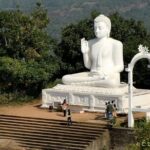
Next: the Samadhi Buddha statue at Mahamevnāwa park. The description highlights the posture of meditation associated with his first enlightenment, and notes the statue’s size (listed as 7 feet 3 inches tall).
This stop is quick, but it’s one of those “attention” moments. A statue like this can be easier to appreciate when you have the meaning of the posture explained, and when you’re not trying to figure out what you’re looking at while walking.
Stops 6 and 7: Abhayagiri Dagaba and the Main Refectory
Then the route goes into the larger monastic world with Abhayagiri Dagaba. It’s described as a major monastery site where Theravada, Mahayana, and Vajrayana Buddhism were all present. That multi-tradition note is important—it hints that the city wasn’t one-note religiously.
Right after, you’ll visit the Main Refectory of Abayagiri Monastery, described as an alms-giving place near Uttara Mula. The description calls it a square building and notes one side measurement (42.7m on one side).
These stops are valuable because they shift you from “structures as objects” to “structures as systems.” Eating and alms-giving weren’t side details; they supported the monastic community that helped Buddhism take root and spread.
Stop 8: Moonstone (Sandakada pahana)
Next is a piece of design that you might miss if you’re just taking photos: Sandakada Pahana, also called the Moonstone. It’s described as an elaborately carved semi-circular stone slab placed at the bottom of staircases and entrances.
This stop is a great reminder that Anuradhapura isn’t only big monuments. The clever stonework and architectural ornaments show craftsmanship and ritual symbolism tied to how people approached sacred spaces.
Stop 9: Eth Pokuna (Elephant Pond)
Then you get back to water: Eth Pokuna, also known as the Elephant Pond. The description lists it as a gigantic man-made pond with a rectangular shape, including dimensions such as 159 meters in length and 52.7 meters across.
Even if you only have a short time here, it helps you see the scale of ancient engineering. This is where the tour can make you look at the city like it’s built to last and built to support people, not only built to impress.
Stop 10: Rathna Prasadaya & Guardstone
The route continues with Rathna Prasadaya and a guardstone noted as being among the finest ancient guard stones of Sri Lanka.
This is another architectural “read the details” stop. Guardstones are often part of the ceremonial doorway feeling, and having it pointed out helps you notice the structure language that locals would recognize instantly.
Stops 11 and 12: Jethawanaramaya and its Museum
The final stretch focuses on Jethawanaramaya, described as a monastery complex built by King Mahasena (the note mentions 4 acres in the description). The stop is longer here, and it’s the kind of place that’s worth slowing down.
Then you wrap with Jethawanaramaya Museum, described as a 1937 British colonial building that houses treasures found at Jetavanarama. Admission is listed as free.
If you’ve been staring at ruins for hours, the museum is a nice emotional reset: you end by shifting from what’s left in place to artifacts that tell you what the site meant and how it was used.
Who this tour fits best (and who might want a different style)
This works especially well if:
- You want an organized overview without guessing which site to prioritize.
- You care about Buddhism and Sri Lankan culture, and you like asking questions.
- You’d rather pay for a guide who connects the stones to meaning than rely on maps and signage.
You might want a different tour style if:
- You prefer to move fast and only see a couple of major sites.
- You dislike shoe removal for certain places.
- You’re trying to keep your day strictly “no extra fees,” since the UNESCO ticket is required and some stop admissions aren’t included.
What you’ll get from the guide experience
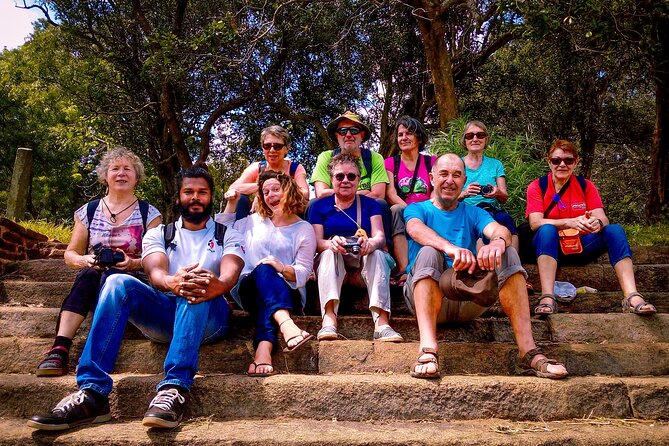
The strongest praise from this tour centers on the guide’s ability to explain what you’re looking at. Multiple write-ups emphasize that Ajee Vogel is friendly, explains a lot, and can talk about Buddhism and the city’s story in a way that makes the ruins click.
That matters because many Anuradhapura sites are visually impressive but spiritually and historically coded. Without context, you may end up feeling like you’re just walking between large monuments. With the guide’s explanations, the architecture feels purposeful: stupas aren’t just round shapes, monastic areas aren’t just piles of stone, and the design elements like moonstones start to read like part of a real ritual path.
Practical tips to make the day smoother
- Budget for the $30 UNESCO entrance ticket per person. It’s separate from the tour price.
- Wear shoes that are easy to remove and put back on, since you’ll need to take them off in secret places.
- Bring a light layer. Temple and pond areas can feel cooler in the shade, and you’ll be outside for multiple stops.
- If you’re sensitive to time, treat this as flexible (1–5 hours) but still a full “circuit.” Wear comfortable walking shoes either way.
- Use the mobile ticket on your phone so you’re not scrambling near entrances.
Should you book Vogel Tours in Anuradhapura?
Yes, if you want a private guided circuit that links the major sacred sites to everyday life details like bathing tanks and architectural ornaments. The $40 group price is a good way to buy into guidance without paying per person like a big-city walking tour, and the snacks plus coffee or tea make the pacing more comfortable.
I’d especially recommend booking if you’re the type who asks why a structure is here, what a posture in a statue means, or how Buddhism shaped daily spaces. This is the kind of day where the guide’s explanations are the main value, not just the locations.
If you’re traveling solo and trying to minimize costs, do the math with the $30 UNESCO ticket up front. Otherwise, this is a smart, efficient way to see Anuradhapura’s most important stops without feeling lost.
FAQ
How long is the Vogel Tours Anuradhapura experience?
It runs for about 1 to 5 hours (approx.), depending on the flow of the route and how your group moves.
Is pickup included?
Pickup is offered.
What stops are included on the tour?
The route includes Jaya Sri Maha Bodhi, Lovamahapaya, Ruwanwelisaya, Twin Baths (Kuttam Pokuna), the Samadhi Statue, Abhayagiri Dagaba, the Main Refectory of Abayagiri Monastery, Moonstone (Sandakada pahana), Eth Pokuna, Rathna Prasadaya & Guardstone, Jethawanaramaya, and Jethawanaramaya Museum.
Is the entrance fee included?
No. A $30 UNESCO entrance ticket per person is listed as required and not included in the tour price.
Do I need to remove my shoes?
You’ll need to remove your shoes when you enter secret places.
Is this tour private?
Yes. It’s a private tour/activity, and only your group participates. The pricing is per group up to 3, and the guide can accommodate a group of up to 10 people on a private tour.