REVIEW · ANURADHAPURA
Anuradhapura Heritage Mountain bike / bicycle Tour
Book on Viator →Operated by Rides Hub · Bookable on Viator
Pedal through 2,000 years of Sri Lanka. In just about 4½ hours and a 10 km circuit in Anuradhapura, you roll past stupas, ponds, and sacred sites with Saranga, an English-speaking guide who keeps the ride easy to follow. I love the slow, stop-and-look pacing that doesn’t feel like a race, and I love that you cover big heritage names plus quieter spots you’d likely miss on your own. The one drawback to plan for: the main UNESCO entrance ticket is not included in the $25 price.
What really makes this tour click is the mix of practical biking and real explanations. Saranga ties what you’re seeing to Buddhism and to how people once lived around monasteries and irrigation tanks. You also get bottled water, parking fees covered, and a simple vegetarian meal cooked by locals at Hela Bojun.
This is a private tour, so it’s just your group, not a big scramble with strangers. Still, you’ll want moderate physical fitness, and you’ll need a wraparound cloth for temple visits if your knees aren’t covered.
In This Review
- Key highlights you’ll feel from the start
- A 10 km UNESCO circuit that stays calm instead of chaotic
- Meet Saranga: the English-speaking guide who connects stones to meaning
- Bikes from Giant, Trek, and Louis Garneau: comfort for an on-foot world
- Temple stops that reward your slow pace
- Jetavanaramaya: the tall-stupa moment
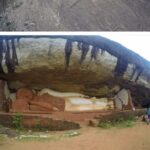
- Samadhi Buddha: meditation posture, up close
- Abayagiriya Stupa: monastery history written in ruins
- Moonstone (Sandakada pahana): a staircase detail with meaning
- Ruwanweli Maha Seya: monumental and human at once
- Sri Maha Boodhi Temple: the living link
- Ancient ponds, twin baths, and reservoirs you can actually picture
- Kuttam Pokuna (Twin Baths): bathing tanks with real character
- Eth Pokuna (Elephant Pond): long reservoir, clear scale
- Basawkkulama Tank: irrigation engineering history
- Abayagiriya’s refectory: when monastery life becomes concrete
- Food and comfort: bottled water plus a local veg meal at Hela Bojun
- Price and logistics: $25 is the bike-and-guide price, not the UNESCO ticket
- What to bring (and what to skip) for temple visits
- Where the tour starts (and how to find it without stress)
- Who should book this bike tour in Anuradhapura?
- Should you book the Anuradhapura Heritage Mountain bike tour?
- FAQ
- How long is the Anuradhapura Heritage Mountain bike / bicycle tour?
- How far is the ride?
- What does the $25 per person price include?
- What is not included in the price?
- How much is the UNESCO ticket?
- Do I need a cloth for temple visits?
- What kind of bikes are provided?
- Is this tour private?
- Where is the meeting point?
- What if the weather is bad?
Key highlights you’ll feel from the start
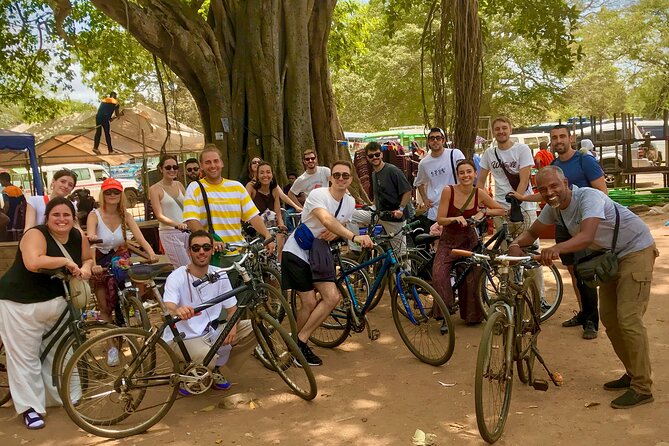
- A 10 km loop in about 4½ hours gives you a full heritage circuit without burning the whole day
- English-speaking guide Saranga adds Buddhism context that makes the sites click
- Bikes from trusted brands like Giant, Trek, and Louis Garneau
- Water, parking, and a local veg lunch at Hela Bojun are included
- Temple stops plus ancient waterworks (bathing tanks, ponds, reservoirs, irrigation history)
- UNESCO ticket is separate from the $25 tour price, so budget for it
A 10 km UNESCO circuit that stays calm instead of chaotic
This tour is built around a simple promise: you get a loop through the heritage core without feeling dragged from place to place. The distance is about 10 km, and the ride time is roughly 4½ hours, which is long enough to feel you did something, but short enough to stay comfortable in the heat.
I like that the route is described as hidden-route biking through Anuradhapura, meaning you’re not just rolling straight between the most famous gates. You’ll still hit major anchors like big stupas and the sacred fig tree, but you also get chances to slow down and notice details—carvings, pond edges, and the shape of stone steps you’d otherwise glance past.
One practical note: because the tour is focused on temples and sacred spaces, you’ll be doing short stops that can involve uneven ground and steps. If you’re the type who wants flat, stroller-friendly paths only, this probably won’t be your best fit.
You can also read our reviews of more tours and experiences in Anuradhapura.
Meet Saranga: the English-speaking guide who connects stones to meaning
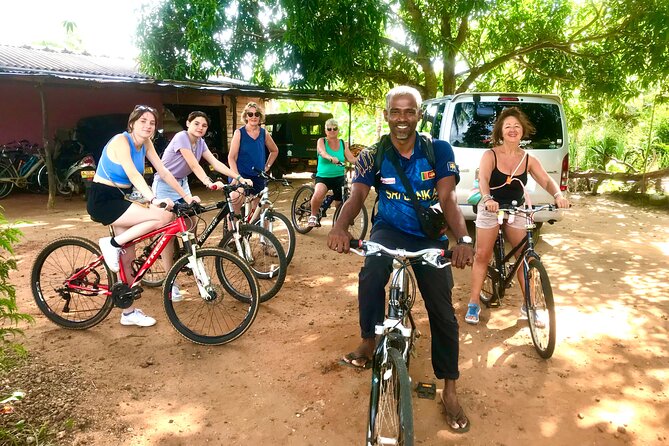
Saranga’s role is more than calling out names. He’s an English-speaking guide from the Anuradhapura area, and his explanations are aimed at making Buddhism and the sites understandable while you’re still in motion.
You’ll see that in how he frames stops like meditation postures and monumental religious architecture. At the Samadhi Buddha statue, you’re not just looking at a figure—you’re learning why the statue’s posture matters (Dhyana Mudra is tied to meditation). At the larger monastery ruins, the explanation helps you picture what these places were designed for, not only what’s left after centuries.
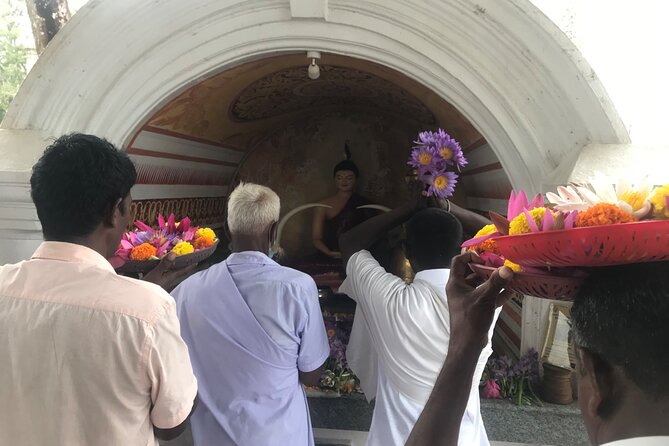
And timing matters. This experience can also include time around ceremonies, with a chance to see something special at sunset. Even if you’re not a hardcore Buddhism watcher, it adds a human layer—you see the living side of a site that’s also deeply historical.
Bikes from Giant, Trek, and Louis Garneau: comfort for an on-foot world
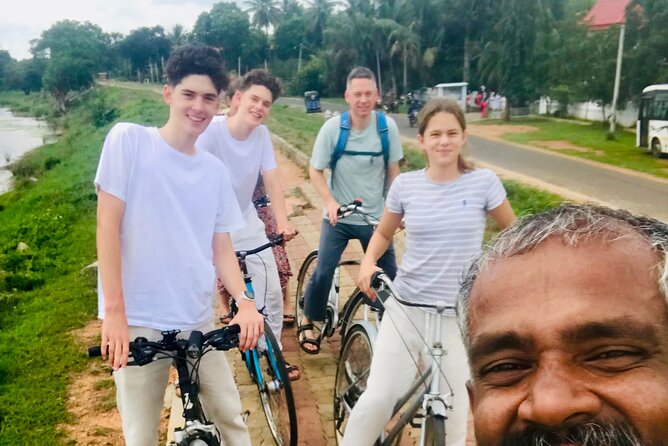
The tour includes the use of a mountain bicycle, and the operator highlights trusted brands such as Giant, Trek, and Louis Garneau. That’s a good sign for ride quality because Anuradhapura isn’t exactly a bike-lane city. You want a bike that’s stable when you’re stopping and restarting, and that can handle mixed surfaces.
What I appreciate is that the included gear removes one of the biggest travel hassles. Instead of hunting for a rental at the last minute, you’re already set up for the ride format you’re paying for. Add in bottled water and you’re covered for the small basics that usually cost time and money.
I don’t want to pretend cycling is the only physical part here. Temple stops can mean climbing a bit, standing to look, and moving along steps and edges. If you’re comfortable with that, the biking portion will feel fun rather than stressful.
Temple stops that reward your slow pace
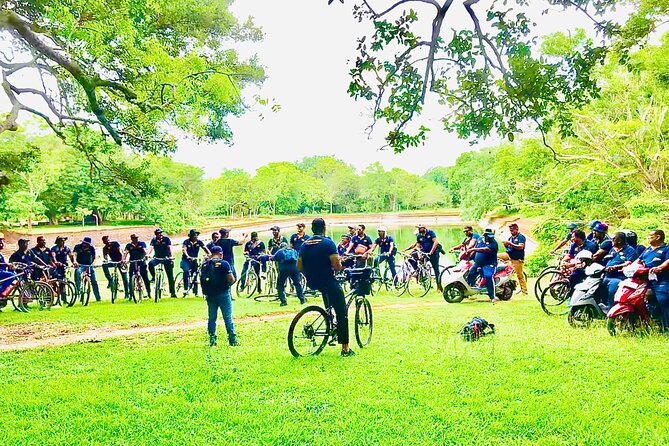
This tour is packed with the kind of sites that look impressive even from a distance—but it’s the short, guided moments that make them worth your time. I like that many stops are built into a circuit rhythm: ride a bit, pause, learn, then ride again.
Jetavanaramaya: the tall-stupa moment
You’ll start with Jetavanaramaya, a huge stupa tied to King Mahasena of Anuradhapura (273–301). At about 122 meters (400 ft), it was described as the world’s tallest stupa and the third tallest structure in the world at the time it was built. This is the kind of scale that’s hard to absorb while you’re just walking past it, so the brief stop on the bike circuit works well.
Admission at this stop is listed as free, which is nice—you get a major anchor without extra hassle during the ride.
You can also read our reviews of more historical tours in Anuradhapura
Samadhi Buddha: meditation posture, up close
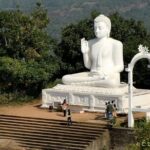
Next you’ll visit the Samadhi Statue at Mahamevnāwa Park. The statue is famous for depicting the Dhyana Mudra, the meditation posture associated with the Buddha’s early teachings. It’s a small pause compared to the big monuments, but it’s the kind of stop that makes the rest of the religious architecture easier to understand.
Abayagiriya Stupa: monastery history written in ruins
At Abayagiriya, you’re stepping into one of the most extensive ruin complexes in Anuradhapura. Abhayagiri Vihāra is described as a major monastery site linked with Mahayana, Theravada, and Vajrayana Buddhism. Even when a ruin is worn down, its scale helps you imagine the religious importance of the place.
Moonstone (Sandakada pahana): a staircase detail with meaning
Later on, you’ll pause at the Sandakada pahana, also called the Moonstone. It’s an elaborately carved semi-circular stone slab placed at the bottom of staircases and entrances. This kind of detail is easy to miss if you’re in a rush. On a bike tour where you stop intentionally, it becomes a quick lesson in how Sri Lankan architecture uses symbolism at eye level.
Ruwanweli Maha Seya: monumental and human at once
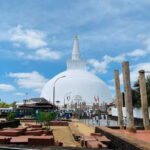
At Ruwanweli Maha Seya, you’ll learn it was built by King Dutugamunu (137 BC–119 BC) and completed by his younger brother. It’s the kind of stupa where your brain keeps trying to measure “how big is big,” even after you’ve seen photos. Stopping here gives you the chance to look from different angles and take in how the monument sits in its setting.
Sri Maha Boodhi Temple: the living link
The final spiritual anchor is the Sri Maha Boodhi Temple, with the Jaya Sri Maha Bodhi fig tree in the Mahamewna Gardens. This sacred fig tree (Ficus religiosa) is described as the closest authentic living link to Gautama Buddha. Standing near it changes the mood of the ride. It feels less like sightseeing and more like you’ve arrived somewhere people treat with real respect.
This stop typically includes admission as part of the tour inclusions.
Ancient ponds, twin baths, and reservoirs you can actually picture
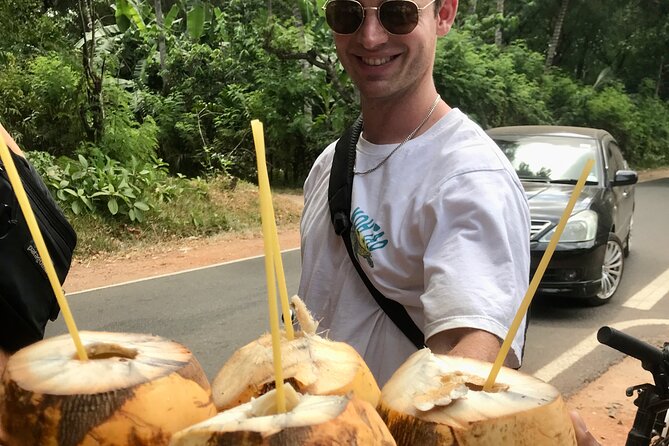
One of the best things about cycling through Anuradhapura is that you don’t just see religion. You also see water management—tanks, ponds, and irrigation thinking that shaped daily life.
Kuttam Pokuna (Twin Baths): bathing tanks with real character
The Twin Baths, also known as Kuttam Pokuna, are well preserved ancient bathing tanks. They were built by the Sinhalese in the ancient Anuradhapura Kingdom and are described as part of the Abh… (Abhayagiriya area). Even if you don’t know the names, you’ll recognize the shape: these places weren’t decorations. They were practical infrastructure that also became sacred through use and tradition.
Admission is listed as included at this stop, which means it’s less of a budget puzzle during the ride.
Eth Pokuna (Elephant Pond): long reservoir, clear scale
Next comes Eth Pokuna, the Elephant Pond, a large reservoir built during the reign of Anuradhapura’s kings. It’s listed as about 159 meters long, which helps you understand why these waterworks were such a big deal. Again, this is the kind of stop that rewards a slow look: you can take in how the reservoir would have supported communities.
Basawkkulama Tank: irrigation engineering history
You’ll also visit Basawkkulama Tank, described as part of the ancient world’s complex irrigation systems. The earliest examples of irrigation works in Sri Lanka are mentioned as dating back around 430 BCE, during the reign of King Pandukabhaya. It’s a great stop for anyone who likes infrastructure history—less flashy than a stupa, but hugely important.
Admission for Basawkkulama Tank is listed as free, which makes it a pleasant bonus.
Abayagiriya’s refectory: when monastery life becomes concrete
At Abayagiriya, you don’t only see big ruins. You can also visit the Main Refectory Of Abayagiri Monastery, tied to how the monastery fed large numbers of monks.
A Chinese traveler monk, Fa-Hien, is described as visiting in the 5th century and stating the monastery housed up to 5,000 monks at the time. That single detail helps you picture why meals and shared spaces mattered. It turns ruins into something more physical—people ate here, lived here, studied here.
This stop is listed as included for admissions.
Food and comfort: bottled water plus a local veg meal at Hela Bojun
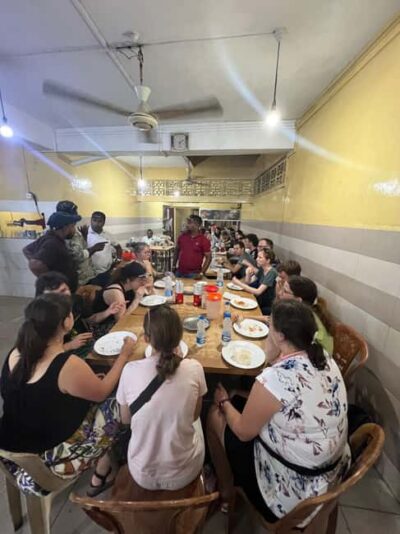
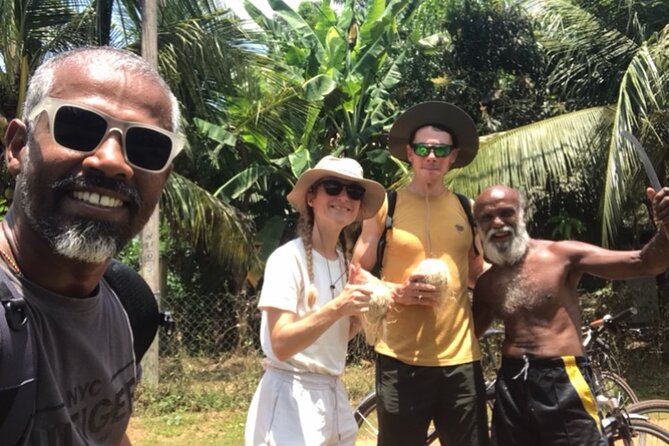
Tours can fail at the simplest moment: getting hungry at the wrong time. Here, you get bottled water and a vegetarian meal cooked by locals at Hela Bojun.
I like that it’s included, because it keeps the day from turning into a scavenger hunt for lunch. Also, it matches the general tone of the route: you’re not only outside, you’re also tied into local routine—food, rest, and then back onto the bike.
Parking fees are included too. It’s one of those details that rarely sounds exciting, but it’s a real value add when you’re trying to keep your budget and day smooth.
Price and logistics: $25 is the bike-and-guide price, not the UNESCO ticket
The tour price is $25 per person, and that amount covers a lot of daily-trip essentials: the mountain bicycle, guide, bottled water, parking fees, and the local vegetarian meal.
What it does not cover is the UNESCO entrance ticket. The data says the UNESCO ticket is $30 USD per person, and for children under 13 it’s $15 USD. That means your real total can jump once you add the UNESCO portion.
So here’s how I’d think about value:
- If you’re already planning to visit UNESCO-listed heritage sites anyway, this ride is a strong way to see them with a bike, a guide, and food included.
- If you were only loosely considering the main UNESCO ticket, you’ll want to do the math first so the final day cost doesn’t surprise you.
Also note: the experience requires good weather. If it’s canceled due to poor weather, you should expect an alternative date or a full refund. For a four-and-a-half-hour tour, weather matters more than it does for a long indoor museum day.
What to bring (and what to skip) for temple visits
You’ll want the basics that keep you comfortable and respectful at the sacred sites.
Bring a wraparound cloth if your knees aren’t covered. That’s specifically called out for temple visits. Even if you’re riding a bike, you’ll still be entering places where dress rules apply, so treat that cloth like part of your bike kit.
You should also have moderate physical fitness. The ride is 10 km and the tour is about 4½ hours, so this is not a “sit and roll” experience. You don’t need to be a cyclist athlete, but you should be comfortable pedaling and standing during short stops.
The tour includes bottled water, so you don’t need to buy water during the ride. Still, I’d keep an eye on your hydration and take advantage of the stops.
Where the tour starts (and how to find it without stress)
The meeting point is at Rides Hub, near Hubwela mada gedara, Garage waththa near the old car park: No:116/1 Watawandana Rd, Anuradhapura, Sri Lanka.
The ride ends back at the same meeting point. That’s helpful if you’re using public transportation to get there, since it reduces the “how do I get back?” problem.
Also, confirmation is received at the time of booking, and the meeting point is listed as near public transportation—useful if you’re not staying right in the heritage core.
Who should book this bike tour in Anuradhapura?
This tour makes the most sense if you:
- Want to see Anuradhapura’s UNESCO area in a way that feels active but not rushed
- Like Buddhism-focused context rather than just standing in front of stone
- Prefer a private tour experience (only your group)
- Appreciate included perks like bike use, water, and an actual lunch rather than snack math
It may be less ideal if you:
- Have very limited mobility or find uneven temple paths stressful
- Want long, sprawling museum-style time at a slower pace
- Don’t want to pay the separate UNESCO ticket on top of the $25 bike tour
Should you book the Anuradhapura Heritage Mountain bike tour?
Yes, if you want a balanced day: cycling plus serious site time, with guide Saranga’s explanations making the stops more than photo ops. The included bike, bottled water, parking, and the vegetarian lunch at Hela Bojun make the $25 price feel practical, and the 10 km loop is a good length for most people with moderate fitness.
Book it if you’re already planning to pay the UNESCO entrance anyway. If not, do the total-cost check first so the day matches your budget.
FAQ
How long is the Anuradhapura Heritage Mountain bike / bicycle tour?
It lasts about 4 hours 30 minutes (approximately).
How far is the ride?
You’ll do a 10 km loop tour.
What does the $25 per person price include?
It includes bottled water, parking fees, use of a mountain cycle, a guide tour, and a local vegetarian meal at Hela Bojun.
What is not included in the price?
The UNESCO entrance fee is not included.
How much is the UNESCO ticket?
It’s listed as $30 USD per person, and for children under 13 it’s $15 USD.
Do I need a cloth for temple visits?
Yes. Since you’ll be visiting temples, bring a wraparound cloth if your knees aren’t covered.
What kind of bikes are provided?
Top-quality mountain bikes are mentioned from trusted brands such as Giant, Trek, and Louis Garneau.
Is this tour private?
Yes. It’s a private tour/activity, and only your group will participate.
Where is the meeting point?
Start is at Rides Hubwela mada gedara, Garage waththa near old car park, No:116/1 Watawandana Rd, Anuradhapura, Sri Lanka.
What if the weather is bad?
The experience requires good weather. If it’s canceled due to poor weather, you’ll be offered a different date or a full refund.