REVIEW · ANURADHAPURA
Half day tour – in Sacred city of Anuradhapura Or sacred city of Mihintale.
Book on Viator →Operated by Travel With Lampa · Bookable on Viator
Anuradhapura’s sacred sites feel close together in time. This half-day tour strings together major monuments in a tight route, so you’re not zig-zagging across town while the light is good. I really like how the explanations connect the dots between Buddhism and the city’s royal era, and I also like the practical pace: you get meaningful stops without a long slog. The only real catch is that admission tickets aren’t included, so you’ll want a little cash or card budget for the individual sites.
A standout for me is the guide’s storytelling. With Lampa, the English is clear, and the history comes with everyday context, not just dates. The other thing I appreciate is the handling of the sacred-space details—what you’re looking at, why it matters, and where to focus so the route feels rewarding even in 3–4 hours.
One consideration: because the itinerary is packed, you’ll get the most if you’re comfortable walking short distances between stops and staying a bit flexible. If you prefer slow museum-style time at each site, you might feel slightly rushed.
In This Review
- Key moments that make this half-day route work
- Why Anuradhapura’s sacred circuit fits into 3–4 hours
- Jaya Sri Maha Bodhi: the living link people come to see
- Lovamahapaya Brazen Palace: roof legend and royal scale
- Ruwanwelisaya: the Mahathupa and why stupas weren’t built casually
- Abayagiriya stupa and Abhayagiri Dagaba: ruins that show shifting Buddhist influence
- Thuparama (Dagoba of Thuparama) and the Samadhi Buddha: a calmer pace in Mahamewna Park
- Isurumuniya Temple and Kuttam Pokuna: carvings plus ancient water life
- Wessagiriya and the Moonstone (Sandakada Pahana): ending with the details
- Price and value: what $30 covers, and what you’ll pay separately
- Getting the most out of your guide, especially if it’s Lampa
- Best fit: who this half-day tour suits best
- Should you book this half-day Anuradhapura sacred circuit?
- FAQ
- How long is the half-day tour?
- What is the tour price per person?
- Is pickup included?
- Are admission tickets included for the monuments?
- What’s included in the tour besides the guide?
- Where does the tour start?
- What if the weather is poor?
Key moments that make this half-day route work
- Jaya Sri Maha Bodhi: a living sacred Bo tree and the center of the Mahamewna Gardens feeling
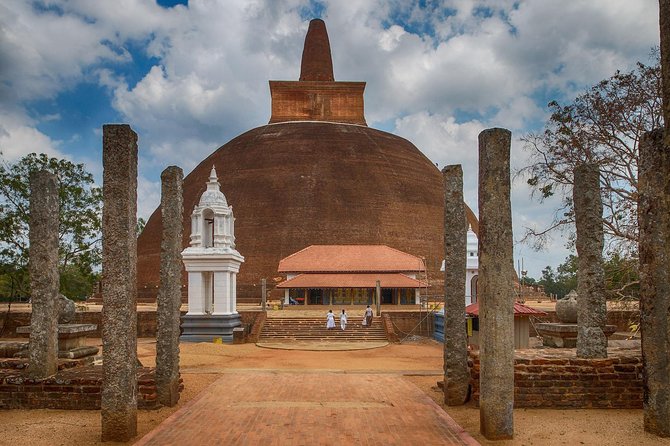
- Ruwanwelisaya + other great stupas: big relic monuments explained in plain terms
- Abhayagiri / Abayagiriya area: why this ruin complex matters across Buddhist schools
- Mahamewna Park stops: Thuparama and the Samadhi Buddha for a calmer, meditative rhythm
- Isurumuniya + Kuttam Pokuna: carvings and ancient bathing tanks that help you picture daily life
- Sandakada pahana (Moonstone): architecture details you’ll never notice as easily on your own
Why Anuradhapura’s sacred circuit fits into 3–4 hours
This tour is built for efficiency. It runs about 3 to 4 hours, starting at 8:30 am at the Jaya Sri Maha Bodhi area, and it loops back to the same meeting point at the end. That matters because in Anuradhapura you’re often dealing with multiple complexes, some inside parks and some across ruin zones. Here, the timing keeps you in the core sites instead of spending half the day traveling.
You’ll also travel with a small setup: it’s listed as a private tour/activity, meaning it’s only your group. That usually helps you ask questions, adjust pacing, and get better explanations at each stop. Pickup is offered, and you’ll receive a mobile ticket, which makes day-of entry planning less stressful.
One more practical note: the tour includes snacks and water, which is smart on a morning circuit. It’s not a full-day meal plan, though, so I’d treat this like sightseeing with a light break—not a substitute for lunch later.
You can also read our reviews of more city tours in Anuradhapura

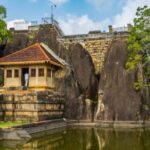
Jaya Sri Maha Bodhi: the living link people come to see
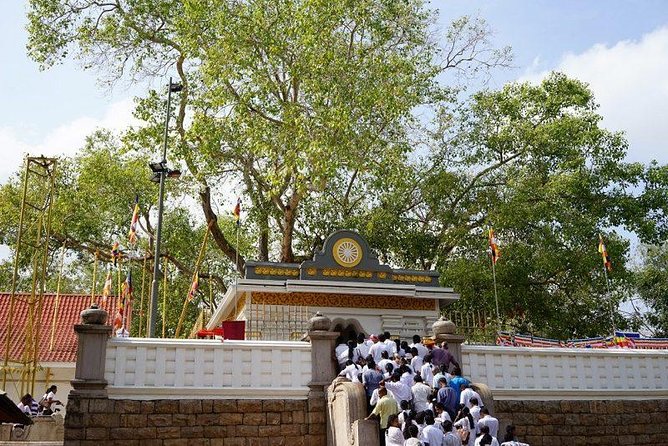
The tour starts at the Jaya Sri Maha Bodhi, a sacred Bo tree (Ficus religiosa) in the Mahamewna Gardens. This isn’t just a pretty tree in a park. It’s treated as an important living connection to Gautama Buddha’s story, which is why people come early and linger quietly.
In the time you have, you’ll want to focus on two things. First, take in how the tree sits within the gardens—this helps you understand why the area has a calm, devotional feel. Second, listen closely to the explanation about why this living tree is so symbolically powerful. In Buddhism, physical objects can carry spiritual meaning, and here the “object” is literally alive and tended.
Because admission tickets are not included at this stop, plan for the site fee separately. Also, treat it as a sacred space: keep your voice down, be mindful with photos, and don’t rush the moment. Even if you’re short on time, giving this stop a little respect makes the rest of the route land better.
Lovamahapaya Brazen Palace: roof legend and royal scale
Next you’ll visit Lovamahapaya, a building located between Ruwanweliseya and Sri Mahabodiya. It’s known as the Brazen Palace, or Lohaprasadaya, because of the roof lore connected to it.
This stop is shorter—about 15 minutes—so your goal isn’t deep archaeology. It’s to connect Lovamahapaya to the bigger picture of Anuradhapura’s monument planning. Think of it as the “royal backdrop” stop: the area around these major stupas didn’t grow in isolation. It was planned as a statement of power, devotion, and learning.
A practical tip here: because the time is brief, don’t rely only on what you can photograph. Pay attention to what the guide says about location—between major landmarks—because that spatial relationship is what helps you understand why this building mattered.
Again, admission isn’t included, so keep that in mind when budgeting.
Ruwanwelisaya: the Mahathupa and why stupas weren’t built casually
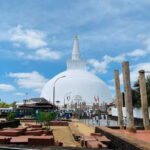
Then it’s on to Ruwanwelisaya (Ruwanweli Maha Seya), also known as the Mahathupa, the Great Thupa. This is one of Anuradhapura’s big names, and it makes sense why. Stupas are not just structures; they’re reliquary monuments—hemispherical forms associated with relics.
In your time here (about 20 minutes), you’ll likely get a clear explanation of what reliquaries mean in the Buddhist tradition—how the relic concept ties belief to place. If you’re new to Buddhism, this is often the stop that clicks. You start seeing that these monuments are both spiritual and historical anchors.
What’s useful on a short tour: you don’t need to study every detail. You need to understand the role. Once you know that, the stupa shape and setting make more sense immediately.
No ticket is included for this stop either, so add those fees to your estimate.
Abayagiriya stupa and Abhayagiri Dagaba: ruins that show shifting Buddhist influence
After Ruwanwelisaya, the route moves toward Abayagiriya Stupa (about 30 minutes) and then Abhayagiri Dagaba (about 20 minutes). This section is one of the most interesting parts of the itinerary because it shows how Anuradhapura wasn’t just one “type” of Buddhism for one era.
Abhayagiri Vihāra is described as a major monastery site linked with Mahayana, Theravada, and Vajrayana Buddhism. That’s a big deal. It helps you see Anuradhapura as a place where ideas moved and interacted, not a static set of monuments frozen in time.
In real terms, what you should do is treat this area as a “read the ruins” zone. You won’t have every intact building, but you can still learn what the complex was about by listening for the guide’s explanation: what kind of monastery it was, who used it, and how that fits into the broader city.
These stops are ticketed separately, so remember: admission tickets are not included.



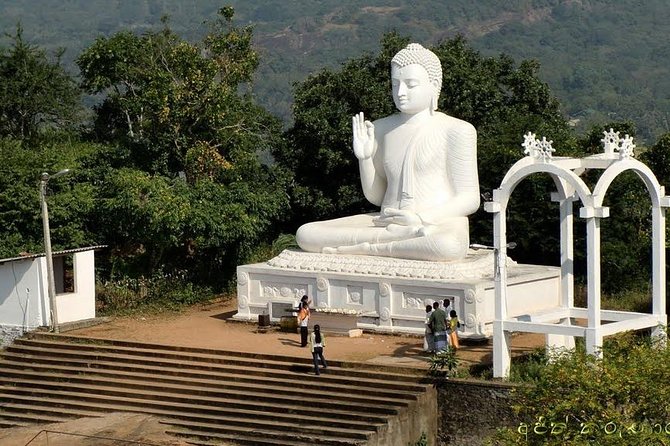
Thuparama (Dagoba of Thuparama) and the Samadhi Buddha: a calmer pace in Mahamewna Park
After the bigger stupa stops, the tour shifts to a quieter rhythm in the Mahamewna Park area.
You’ll visit the Dagoba of Thuparama (about 20 minutes). Thuparamaya is noted as the first Buddhist temple constructed after Mahinda thero (Mahindagamanaya) arrived in Sri Lanka. That gives this stop a special “origin story” feeling. When a site is tied to early arrival history, it can make your entire tour feel more grounded.
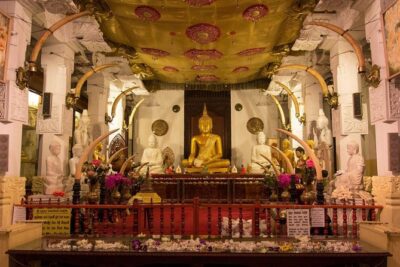
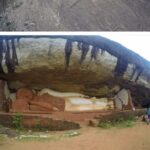
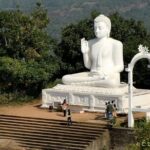
Then comes the Samadhi Statue (about 15 minutes). This is a famous Buddha depiction at Mahamevnāwa Park, shown in Dhyana Mudra—the meditation posture associated with the Buddha’s first sermon. If you’ve ever wondered why certain Buddha gestures feel so intentional, this is a great place to see it in context.
For this part of the tour, you’ll get more value if you slow down just a bit. Look around for how the park setting supports meditation and devotion, and let the guide connect the posture to meaning. Even if you’re not religious, it’s one of those moments where the monument becomes a teaching tool.
As always, admission tickets aren’t included for these stops.
Isurumuniya Temple and Kuttam Pokuna: carvings plus ancient water life
Next you’ll head to Isurumuniya Temple (about 30 minutes), also identified as the ancient Meghagiri Vihara / Meygiri Vihara built by King Devanampiya Tissa. This is a longer stop in the middle of the route, which hints at why it’s worth your time: you’re not just looking at a structure—you’re looking at a place with deeper historical layers.
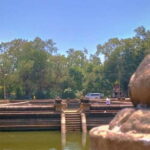
Then it’s Twin Baths (Kuttam Pokuna) (about 15 minutes). These are well-preserved bathing tanks or ponds in ancient Anuradhapura, built by the Sinhalese. They’re a useful contrast to the stupa-heavy stops. Here, you start imagining daily routines: cleanliness, water access, and how ordinary life and sacred life were both shaped by the city’s planning.
When you visit places like Kuttam Pokuna in a short tour, don’t rush the “small” details. Spend a minute noticing how the tanks relate to the surrounding complex. Ancient water architecture tells you a lot about practical priorities in the kingdom.
Tickets still aren’t included for these stops, so budget accordingly.
Wessagiriya and the Moonstone (Sandakada Pahana): ending with the details
To wrap up, the itinerary includes Wessagiriya (about 20 minutes) and the Moonstone, or Sandakada pahana (about 20 minutes).
Wessagiriya (also known as Issarasamanarama) is described as an ancient Buddhist forest monastery within the ruins of Anuradhapura. The fact that it’s called a forest monastery matters. It’s the sort of place people used for spiritual practice away from noise. Even if the current setting is partly ruin, the idea is clear: retreat and discipline.
Then you’ll see the Sandakada pahana, a semi-circular, elaborately carved stone slab used in Sinhalese architecture. It’s often placed at the bottom of stone stairways leading to sacred areas, and it’s famous enough that many people come just to find it and recognize the craftsmanship. On a half-day circuit, it’s the stop that rewards you for paying attention to architecture rather than only monuments.
If you’re the kind of visitor who likes to look “down” while others are looking up, this is your moment. The carvings and shape are exactly the kind of detail a good guide points out so you can appreciate it quickly.
Admission tickets are again not included.
Price and value: what $30 covers, and what you’ll pay separately
At $30 per person, this half-day tour is positioned as a budget-friendly way to see a lot of sacred ground with context. You’re paying for more than transport. You’re paying for a licensed-style city explanation and a route that keeps you focused.
Here’s what’s included:
- Pickup offered
- Mobile ticket
- Snacks and water
Here’s what’s not included:
- All fees and taxes, meaning site admissions
- Air-conditioned vehicle (so if AC matters to you, you’ll need to plan accordingly)
That means the real “all-in” cost depends on the entry fees for each site along the route. Because every stop lists admission tickets as not included, I recommend setting aside extra cash or checking card acceptance before you go. Even if the total extra cost isn’t huge, forgetting about it is what turns a good morning into a rushed one.
The value angle I like: the tour runs only 3–4 hours, so you’re not paying half a day for time-consuming transit. For first-time visitors, that’s often the best type of deal in Anuradhapura—short and meaningful.
Getting the most out of your guide, especially if it’s Lampa
One of the strongest signals behind this tour is the way the guide explains monuments and Buddhist ideas in plain English. With Lampa, the feedback you can use to guide your expectations is consistent: good English, clear stories, and a solid ability to connect the city’s monuments with Buddhism and Sri Lankan history.
So how do you make that work for you on the ground?
- Ask one question early, like how to read a stupa compared to a temple. When your first explanation makes sense, the later stops feel easier.
- Pay attention to story details, not only dates. The stupa and Bo tree stops become more memorable when the guide connects them to the spiritual logic of the place.
- If you’re curious about how different Buddhist schools were represented in Anuradhapura, this route gives you that opening around the Abhayagiri area.
Also, if you ever do a longer version later, the same guide strength matters. The experience notes you’ll see around Lampa often include options beyond half-day circuits, including plans that go toward Mihintale on longer days. That tells you he’s comfortable adjusting the scope.
Best fit: who this half-day tour suits best
This tour is ideal if you want:
- A guided way to cover many major monuments quickly
- Explanations focused on Buddhism and history
- A start-in-the-morning plan that keeps the day open afterward
It also suits couples, friends, or solo visitors who want a private-group experience without the stress of coordinating multiple tickets alone.
If you’re traveling with someone who wants lots of time for photography at one single site, you might feel a little time pressure. But if your style is “see the main things, understand them, then move on,” this route is a smart fit.
And because it’s described as something most travelers can participate in, it’s a good baseline option even if you’re not a hardcore history buff.
Should you book this half-day Anuradhapura sacred circuit?
If you want a clean introduction to Anuradhapura’s sacred landscape with clear explanations, this is a solid choice. The itinerary hits the big symbols—Bo tree, major stupas, and meditation-related sculpture—and it includes quieter “life and detail” stops like Kuttam Pokuna and Sandakada pahana so the day doesn’t become only monument-after-monument.
Book it if you:
- Want the most meaning in 3–4 hours
- Prefer a guide who connects Buddhism with real place names
- Don’t mind paying site admissions separately
Skip or adjust expectations if you:
- Need a fully unhurried pace at every stop
- Strongly dislike budgeting for multiple small entrance fees
If you’re ready to see Anuradhapura in a focused morning and leave with a clearer mental map of what you just saw, this tour is the kind of plan that makes the city click fast.
FAQ
How long is the half-day tour?
It lasts about 3 to 4 hours.
What is the tour price per person?
The price is $30.00 per person.
Is pickup included?
Pickup is offered.
Are admission tickets included for the monuments?
No. Admission tickets and all fees and taxes are not included.
What’s included in the tour besides the guide?
You get snacks and water.
Where does the tour start?
It starts at the Jaya Sri Maha Bodhi meeting point in Anuradhapura, with the tour ending back at the meeting point.
What if the weather is poor?
The experience requires good weather. If it’s canceled due to poor weather, you’ll be offered a different date or a full refund.