REVIEW · ANURADHAPURA
Anuradhapura ancient city tour with Travandgo tours
Book on Viator →Operated by Ashan Sri Lanka Tours · Bookable on Viator
Ancient Anuradhapura, handled with care. This private tour strings together the big dagobas and monastic sites in about 4–6 hours, with pickup and an air-conditioned vehicle so you are not cooking in the car. I especially like how the guide can swap in different stops if you’ve already seen some temples, and I like the added explanations that make each site easier to place. One thing to consider: several attractions require separate admission, so you’ll want a little extra budget ready.
You’ll start at 8:00 am and the day moves at a comfortable pace for most visitors with moderate fitness. It’s a private experience, so only your group participates, and you’ll receive a mobile ticket to keep the logistics simple.
In This Review
- Key takeaways before you go
- Anuradhapura highlights for $25: why this tour is a good deal
- 8:00 am pickup and timing: how to plan your morning
- Isurumuniya Temple and Vessagiriya Ruins: a scenic start near Tissa Wewa
- Jaya Sri Maha Bodhi: when a “tree stop” becomes a major story
- Mirisaveti Stupa and Thuparama Dagoba: early dagoba landmarks in context
- Ruwanwelisaya: the Mahathupa and what “relics” mean on-site
- Abayagiriya Stupa, Samadhi Statue, and the stone details you might miss
- Kuttam Pokuna Twin Baths: hydrologic engineering you can still walk around
- Driver flexibility and the small service touches that improve your day
- Tickets, lunch, and your best budget approach
- Who this private Anuradhapura tour fits best
- Final verdict: should you book Travandgo’s Anuradhapura ancient city tour?
- FAQ
- How much does the Anuradhapura ancient city tour cost?
- How long is the tour?
- Where does the tour take place?
- Is pickup included?
- Do I need a mobile ticket?
- Is lunch included?
- Are entrance tickets included for all stops?
- What’s included in the tour besides the guide?
- When do I start the tour?
- Is it a private tour?
- What if the weather is bad?
Key takeaways before you go
- Driver flexibility if you’ve seen some sites already: the route can adjust to your needs without feeling rushed
- A strong highlights loop around major Buddhist landmarks in Anuradhapura
- Paid and free entries mixed together: not everything is covered, so plan for admissions
- AC vehicle plus parking fees included to keep the trip smooth from stop to stop
- Mobile ticket convenience for easy check-in
Anuradhapura highlights for $25: why this tour is a good deal
At $25 for a private half-day, this tour makes a lot of sense if you want structure without locking yourself into a strict script. Anuradhapura has so many important Buddhist sites that doing it solo can feel like a scavenger hunt. Here, you get a focused route and a driver who knows how to move you between areas efficiently.
The value isn’t just the low price. It’s the combination of pickup, air-conditioned transport, and a guide who can add context as you go. That matters because many of these places are more than just photo stops. You’re looking at dagobas, old monastery areas, and sacred architecture that connects across centuries—so it helps to have someone explain what you’re standing in front of.
The main trade-off is admissions. Some stops have entry tickets that are not included, so your final spending depends on how many paid sites you visit that day.
You can also read our reviews of more city tours in Anuradhapura

8:00 am pickup and timing: how to plan your morning
The tour starts at 8:00 am, which is a smart time in Sri Lanka. You’re less likely to deal with harsh midday heat, and you’re more likely to have a calmer, more pleasant experience at outdoor sites.
You’ll be picked up (pickup is offered) and travel by air-conditioned vehicle, which is a big quality-of-life upgrade in this region. Parking fees are included too, so you are not paying small add-ons along the way.
This is listed for 4 to 6 hours. That range gives room for how long you want to linger at each place, and for the guide to adapt if you want extra photos or prefer a slower pace.
One practical tip: wear clothes that work for religious sites (covered shoulders and respectful bottoms help). Also bring water and sun protection. Even with AC transport, the stops themselves are outdoors and involve some walking.
Isurumuniya Temple and Vessagiriya Ruins: a scenic start near Tissa Wewa
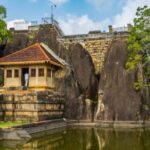
Your first stop is Isurumuniya Temple, also linked to Meghagiri Vihara / Isurumuniya Vihara. It’s described as lying near Tissa Wewa in Anuradhapura, with a note that the original Isurumuni Vihara is located a few hundred meters away and is now called Vessagiri Vihara.
That naming detail may sound small, but it helps you understand why this area feels layered. You’re not just visiting one “temple.” You’re seeing part of a broader religious landscape that evolved over time.
Next comes Vessagiriya Ruins, located a few hundred meters left to Isurumuniya on the old Anuradhapura–Kurunegala road. The attraction here is the temple complex spread around three boulder formations, which makes the scenery part of the experience. Instead of one flat ruin, you get a more interesting setting where rocks shape the view.
Admission note: Isurumuniya is shown as admission not included, while Vessagiriya Ruins are listed as admission free. That’s a nice early way to manage your budget.
Jaya Sri Maha Bodhi: when a “tree stop” becomes a major story
After the ruins, the tour moves to Jaya Sri Maha Bodhi. This is one of the key names tied to Buddhism in Sri Lanka, and the history here is the main point.
The background given is that Buddhism came to Sri Lanka in 250 BC under Emperor Asoka of India, when his daughter Theri Sanghamitta arrived with a branch of the Sacred Bodhi. That story turns a simple visit into something more meaningful. You’re not just looking at a tree-related landmark—you’re seeing a living link in the Buddhist tradition described in the site context.
Admission note: Jaya Sri Maha Bodhi is listed as admission not included. Plan for that so it doesn’t surprise you later.
How long to linger? Around 20 minutes is scheduled. That’s usually enough time to see the main features, take a few calm photos, and stand back to absorb the setting without rushing.
Mirisaveti Stupa and Thuparama Dagoba: early dagoba landmarks in context
Mirisaveti Stupa (also spelled Mirisawetiya Dagaba in the description) is next. It’s built by King Dutugamunu and is associated with the Mahavihara Complex, with the added context that Dutugamunu is described as defeating Tamil invaders who ruled for 30 years and bringing stability to the kingdom.
Even if you only catch part of the background while you’re there, this kind of story helps you understand why dagobas weren’t built as random monuments. They were tied to political power, religious legitimacy, and the rebuilding of Buddhist life.
Admission note: Mirisaveti Stupa is listed as admission free, which is great for keeping costs down.
Then you visit Dagoba of Thuparama, described as the first stupa built in the country after Buddhism’s introduction to Sri Lanka. The time reference is King Devamnampiyatissa (250BC – 210BC). It’s also described as an Aramic complex (monastery), so it’s not just a stupa sitting alone—it’s part of a broader religious site.
Admission note: Thuparama is listed as admission not included.
This pairing—Mirisaveti and Thuparama—gives you a clear sense of how early Buddhist sites in Anuradhapura were designed as religious centers, not just religious symbols.


Ruwanwelisaya: the Mahathupa and what “relics” mean on-site
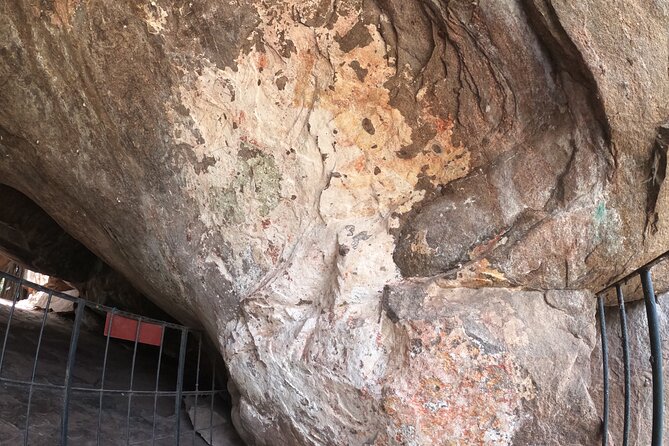
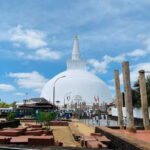
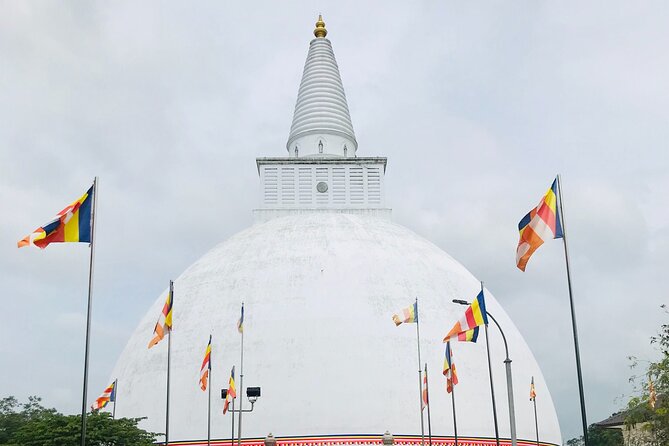
Next is Ruwanwelisaya (also called Ruwanweli Maha Seya / Mahathupa). The description focuses on what makes it special: it’s a stupa with a hemispherical structure, and it enshrines relics. Specifically, it mentions two quarts or one Dona of the Buddha’s relics.
That’s the key takeaway. When you stand in front of a major stupa like this, the “why” is built into the structure. You’re looking at an architectural form designed to hold something considered sacred.
Admission note: Ruwanwelisaya is listed as admission not included. Keep that in mind if you want to stick close to the tour’s advertised price.
The scheduled time is short—about 15 minutes—but with a guide, that brief window can still feel complete. You get the main orientation: what it is, why it mattered, and what you’re seeing when you look up at the structure.
Abayagiriya Stupa, Samadhi Statue, and the stone details you might miss
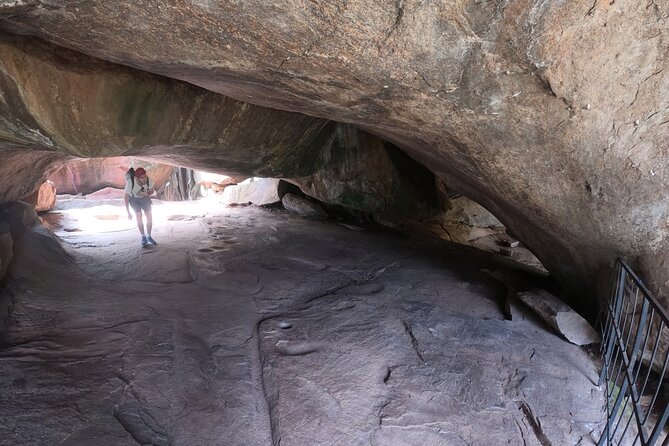
Abayagiriya appears more than once in the route, but each stop gives a different angle.
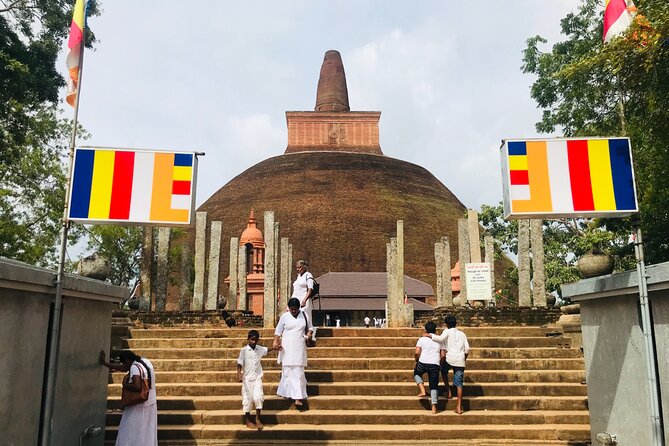
First, you visit Abayagiriya Stupa, described as belonging to the Abhayagiriya Viharaya aramic complex, constructed in the reign of King Vattagamini Abaya (also known as King Valagamba) in the 1st Century BC. The important part of that description is the link between rulers and the building of monastery complexes.
You then move to Moonstone (Sandakada pahana). The description here is more about architectural chronology and the way Buddhist architecture developed in Sri Lanka. It notes that no monument has been clearly discovered that belongs to the period before Arahath Mahinda’s visit in the 3rd century BC, but it says chronicles record that the earliest form of Buddhist Architecture in Sri Lanka was the Mahiyang… (text is cut, but the point remains: you are looking at a feature tied to the storytelling of how styles developed).
After that is the Samadhi Statue, described as lying between the gigantic Abhayagiriya Stupa and the Kuttam Pokuna (Twin Ponds). It’s called one of the greatest works of early sculptural art in Anuradhapura.
Then you come back to the Abayagiriya complex with a second Abayagiriya Stupa stop, which shifts the story from construction to religious disagreement. The description says there was a disagreement between monks of Maha Vihara Monastery and Abhayagiriya Monastery regarding a Vetulya doctrine, and that King Gothabhaya sided with Maha Vihara.
Why does this matter for your visit? Because you start to see how Anuradhapura isn’t just “temples.” It’s a living map of religious debate and royal influence. With a guide explaining the timeline as you walk, it makes the site less confusing.
Admission note: all of these later stops (Moonstone, Samadhi Statue, and the Abayagiriya stupa segments) are shown as admission not included.
Kuttam Pokuna Twin Baths: hydrologic engineering you can still walk around
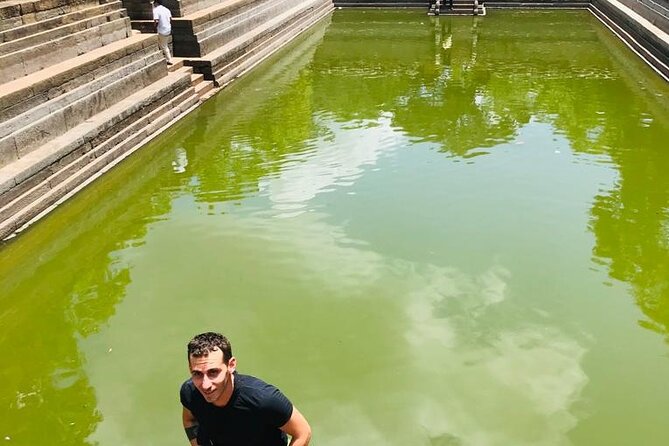
One of my favorite parts of a temple circuit is when the site isn’t only spiritual but also practical. Kuttam Pokuna (Twin Baths) fits that perfectly.
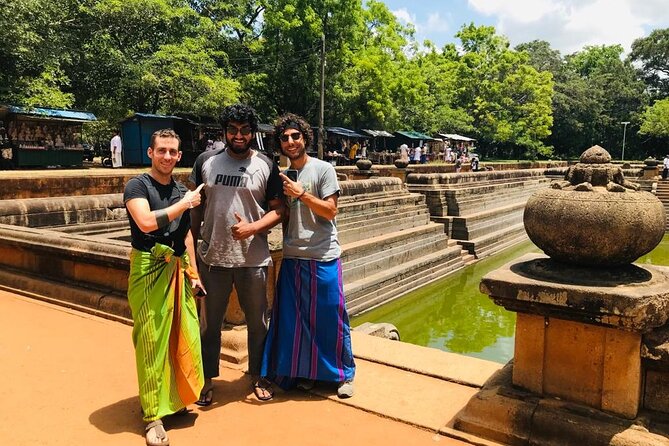
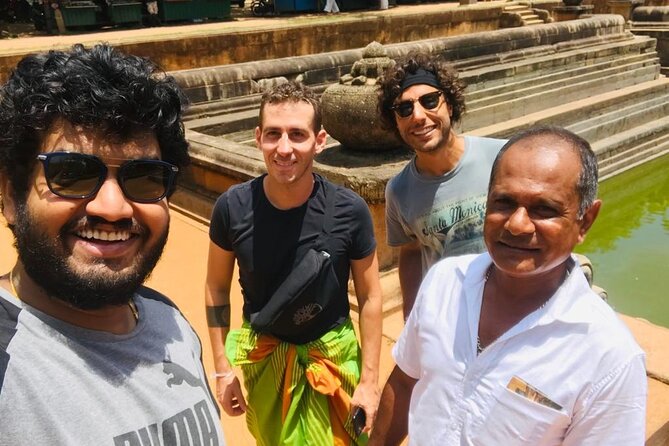
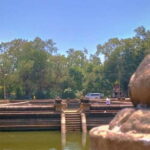
The description calls it a hydrologic engineering marvel of ancient Sri Lanka, made as two ponds that likely served monks for bathing. That’s a detail worth holding onto. You’re not just looking at a decorative ruin. You’re looking at water management built for daily life in a monastery setting.
The stop is short—about 10 minutes—but it’s enough time to see how the ponds sit in the complex and to appreciate the purpose behind the design.
Admission note: Twin Baths are listed as admission not included.
If you’re the kind of person who likes noticing how people used space before modern plumbing, this is one of the stops that can feel surprisingly relevant.
Driver flexibility and the small service touches that improve your day
Here’s where this tour earns its strong rating. The best thing you can hope for from a private guide is flexibility, and that’s exactly what the experience is set up to deliver.
If you’ve already visited several temples on your own the day before, this kind of tour still works. The driver can substitute lesser-known sites rather than forcing you to repeat places you’ve already seen. That saves time and keeps the day from feeling like a checklist.
I also like that the guide is described as adding interesting details to what you already know. That’s a good sign. It means the guide isn’t stuck reading a script. They respond to your interests and improve the explanations while you’re standing there.
One other practical touch mentioned: the driver offers to take photos at the last site and send them. That’s not a life-changing feature, but it is genuinely useful when you want a photo that includes you too.
The tour includes an air-conditioned vehicle, parking fees, and a private setup. Put those together and you get a smooth flow from stop to stop, not a stressful scramble.
Tickets, lunch, and your best budget approach
Let’s talk money in a grounded way. The tour costs $25, but not all entries are included. The tour lists certain stops as admission not included, while at least two stops are listed as admission free.
Based on the stop details:
- Admission free: Vessagiriya Ruins and Mirisaveti Stupa
- Admission not included: Isurumuniya Temple, Jaya Sri Maha Bodhi, Ruwanwelisaya, Dagoba of Thuparama, Abayagiriya Stupa (both appearances), Moonstone / Sandakada pahana, Samadhi Statue, and Kuttam Pokuna (Twin Ponds)
Lunch is not included. That’s normal for many half-day tours, but it matters: you’ll want a plan for where to eat after the tour ends.
Practical approach: carry some cash for site admissions and keep a little buffer in your day. That way you aren’t scrambling at the gate.
Who this private Anuradhapura tour fits best
This tour is ideal if you:
- Want a guided circuit of major Anuradhapura Buddhist sites in 4–6 hours
- Prefer comfort thanks to the AC vehicle
- Value a guide who can adjust stops based on what you already saw
- Like history that connects across places rather than random, disconnected photo moments
It may feel less ideal if you:
- Want every admission fully included in the one price (here, some are not)
- Plan to move extremely slowly and spend long periods at each site, since the schedule is designed for a full circuit across multiple landmarks
The listing also suggests a moderate physical fitness level. That’s consistent with a route that includes multiple stops and some walking on uneven ground at ancient sites.
Final verdict: should you book Travandgo’s Anuradhapura ancient city tour?
If you want an organized, comfortable way to experience Anuradhapura’s key religious sites, I think this tour is an easy yes—especially at $25. The best reason is the combination of private comfort, a route that hits important landmarks, and a guide who can adapt if you’ve already covered some temples elsewhere.
I’d only hesitate if admission costs being outside the package price would stress your budget. Otherwise, this is a practical way to get a coherent view of Anuradhapura without wasting time trying to figure out the logic of where to go next.
Book it when you want a smart morning plan, a driver who handles the details, and an experience that feels more like a guided story walk than a rushed temple hop.
FAQ
How much does the Anuradhapura ancient city tour cost?
The tour price is listed as $25.
How long is the tour?
It runs for 4 to 6 hours (approx.).
Where does the tour take place?
The tour is in Anuradhapura, Sri Lanka.
Is pickup included?
Yes, pickup is offered.
Do I need a mobile ticket?
Yes. The tour includes a mobile ticket.
Is lunch included?
No. Lunch is not included.
Are entrance tickets included for all stops?
Not all of them. Some stops are listed as admission not included, while Vessagiriya Ruins and Mirisaveti Stupa are listed as admission free.
What’s included in the tour besides the guide?
The included items are an air-conditioned vehicle and parking fees.
When do I start the tour?
The start time is listed as 8:00 am.
Is it a private tour?
Yes. It’s a private tour/activity, meaning only your group participates.
What if the weather is bad?
The experience requires good weather. If it’s canceled due to poor weather, you’ll be offered a different date or a full refund.