REVIEW · GALLE
Galle Fort Walk with Glamorous Stories
Book on Viator →Operated by Dilip · Bookable on Viator
Galle Fort feels personal when someone explains the stones. This Galle Fort walking tour turns UNESCO history into a clear route of Portuguese and Dutch power, and it makes the 2004 tsunami story click. I also like how we hit specific stops like the Flag Rock Bastion and the fort’s walls with real context, not generic facts. One drawback: you’ll be on your feet for about 1.5 to 2 hours, and no bottled water or umbrellas are included.
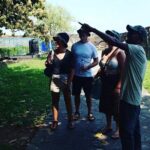
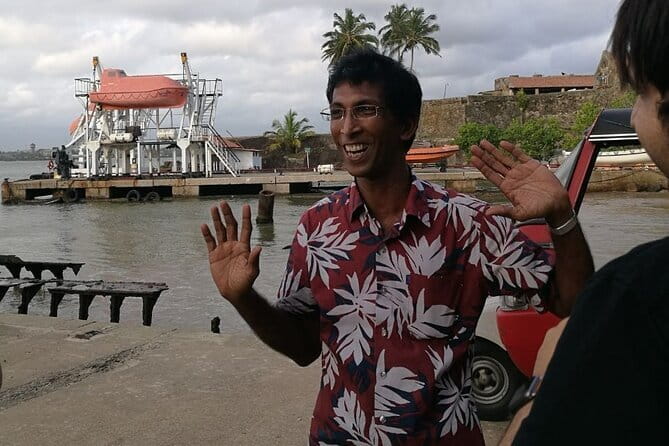
The guide, Dilip, is a big part of why this works. He keeps the pacing calm, answers questions in English, and connects buildings, names, and past events as you walk. With a maximum group size of 6, it’s not crowded in the way big walking tours can be.
At $35 per person for the time on the ground, it’s a strong value if you want an easy way to understand Galle Fort without hiring a driver or making yourself a homework project. Tours run daily from 8:30 AM to 6:00 PM, so you can usually pick a time that fits your day.
In This Review
- Key moments that make this walk worth your time
- Flag Rock Bastion: The fort walk starts (and ends) with orientation
- Portuguese to Dutch: How the walls explain Galle’s power shift
- Clock Tower, bastions, and the church tied to a vow
- The 2004 tsunami story: seeing why these walls mattered
- Siege tales, survival tricks, and the weird details that stick
- VOC trade, coral cooling walls, and ballast bricks
- Dutch Hospital, everyday streets, and finishing at sunset
- Price, pace, and what to bring (plus who this tour fits best)
- Should you book this Galle Fort walk?
- FAQ
- How long does the Galle Fort walking tour last?
- What is the price per person?
- Where do I meet and where does the tour end?
- Is this tour private?
- What language is the guide?
- Is bottled water or an umbrella provided?
Key moments that make this walk worth your time
- Flag Rock Bastion is the start, finish, and your orientation point as the fort opens up in front of you
- Portuguese vs Dutch power shifts are explained through walls, treaties, and trade, not just dates
- 2004 tsunami survival turns into something you can picture once you see the defensive layout
- Siege stories get weird on purpose, including survival tactics involving cats and dogs
- VOC-era details like hidden tunnels, coral cooling walls, and ballast bricks make architecture feel practical
- Sunset vibes and flag lowering help you end the tour with the fort still doing its thing
Flag Rock Bastion: The fort walk starts (and ends) with orientation
You meet at Flag Rock Bastion (the location is listed as 26F8+FXH, Galle 80000). That matters, because it keeps the tour grounded: you’re starting at the edge of the fort’s defensive world, then working inward to see how everything connects.
This is a true walking tour with a logical loop. You’re not just drifting through pretty streets. You’re learning how the front wall, bastions, and key gates/street sections were arranged to protect the settlement and control movement. As you go, you’ll also get a sense of where you are in relation to the larger Galle Fort complex, so the place stops feeling like a maze.
Because the tour ends back at Flag Rock Bastion, plan your transport accordingly. If you’re taking a tuk-tuk or rideshare, you can simply head out from the same point you started. That’s convenient after a couple of hours of stairs, uneven stones, and the kind of walking that adds up in Sri Lanka sun or rain.
Also, bring the basics for the weather. Umbrellas and hats are not provided. If it’s sunny, you’ll want head protection. If it’s raining, you’ll want rain cover that you can manage while walking.
You can also read our reviews of more walking tours in Galle

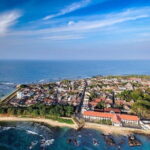
Portuguese to Dutch: How the walls explain Galle’s power shift
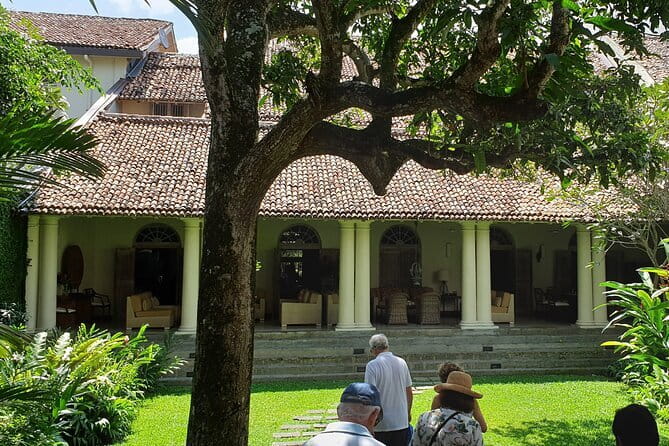
What I like most about this tour is that it treats the fort like evidence. You see the structures, then the guide links them to who built them and why. You start with the broader trading world around the old harbour, where Chinese, Arab, and European traders anchored. That sets up the real reason forts like this existed: control of routes and profit.
From there, the story moves to the Portuguese. You’ll hear how they established their presence, including Portuguese clay forts in the early period. Then the tour shifts into the Dutch era, when you see the stronger stone defenses take over. The Dutch-built layout is explained through bastions like Moon and Star and the way the defenses were designed to take hits and keep functioning.
You’ll also get a few unusual origin and legend-style details that help the names stick. The tour includes stories about the origin of the local name Galla, and it weaves in tales that explain how European rivals maneuvered around local authority.
And yes, you’ll hear the treaty games. One story involves the Dutch replacing Portuguese forces, and cheating the local king with two copies of treaties. Another involves the Portuguese building the Colombo Fort by cheating the local king with a piece of leather. These aren’t just gossip. They’re presented as the human side of imperial strategy: paperwork, tricks, and power plays.
Even if you already know the big colonial timeline, the value here is the way the guide ties it to what you’re standing on. Dates become architecture. Architecture becomes motive.
Clock Tower, bastions, and the church tied to a vow

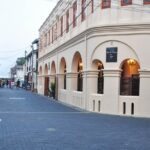
As you walk the streets inside Galle Fort, you’ll pass or learn about major landmarks that give the place its rhythm. The route includes the Clock Tower and a front wall with three bastions, so you can picture how the defensive line worked.
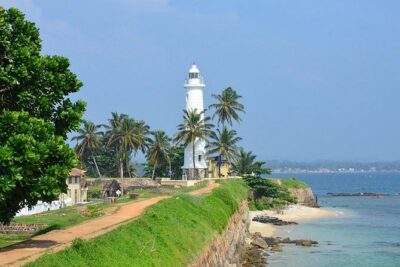
A highlight is the attention to bastions and vantage points, especially Flag Rock Bastion and other named defensive positions such as Moon and Star. These stops help you understand that the fort wasn’t built only for show. It was built for surveillance, artillery placement, and controlling lines of movement.
The tour also brings in religious architecture in a memorable way. You’ll learn about the Dutch Reformed Church (1755), built as a vow connected to a child’s birth. That detail makes the building feel less like a historical prop and more like a real moment in someone’s life. It also reinforces how Dutch presence wasn’t only military and trade-based; it was also community-based.
You’ll also hear about Flag-Rock lighthouse ruins. Even when something looks ruined or broken, the guide frames it as part of the fort’s working coastline—an edge meant to be seen, navigated, and defended.
Expect the walk to keep moving at a steady pace, with stops designed to build understanding step by step rather than just ticking landmarks off a list.
The 2004 tsunami story: seeing why these walls mattered
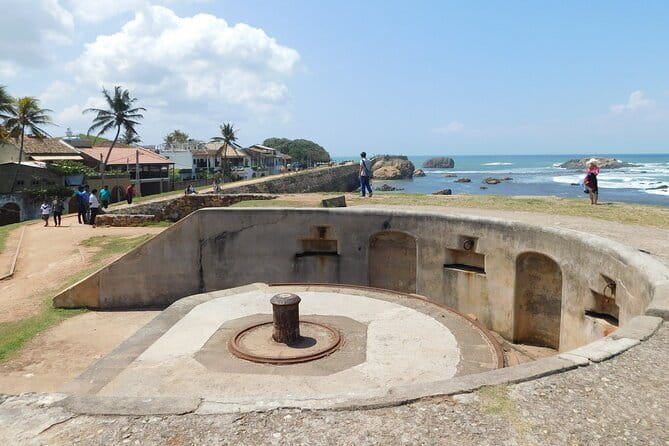
The most emotional part of the tour centers on the 2004 tsunami. You’ll hear how the fort’s walls withstood the waves while Galle City suffered devastating damage. The point isn’t to treat the disaster like a spectacle. It’s to explain why this place held while the surrounding area didn’t.
Standing inside the fort helps you visualize the mechanism. The guide connects the defenses to the physical reality of the coastline and the built environment. Once you see where walls sit, how they run, and how water would meet those edges, the story becomes easier to grasp than hearing it secondhand.
This is also where you get an extra layer of meaning. The fort isn’t only a colonial artifact. It’s also a structure that has handled the kind of forces nobody could design for. The tour uses that resilience to tie together the fort’s purpose across centuries: trade, defense, and survival.
If you’re the type who likes stories with a moral center, this section lands well. It turns UNESCO from a label into a lesson in real-world endurance.
Siege tales, survival tricks, and the weird details that stick

History often sounds tidy until you hear the ugly parts. This walk includes Portuguese siege stories where soldiers survived using cats and dogs. It’s one of those details that makes you pause, because it’s so human and so grim at the same time.
You’ll also hear siege and conflict stories that show how European powers pressured each other and pressured local authority. The cheating stories—the leather trick for the Colombo Fort and the double treaty copying in the Dutch replacement period—help explain why fort-building and control weren’t only about cannon fire.
These tales matter for your experience because they give the stonework emotional weight. When you’re standing near an ammunition store with a tunnel, for example, it’s easier to imagine the fort’s daily military logic. When you learn there are hidden tunnels, your brain starts connecting “This passage exists” to “Someone used this under pressure.”
The guide also covers the Portuguese-to-Dutch transition in a way that feels practical: who took over, how they consolidated power, and what changed physically inside the fort.
You’ll leave this section with a stronger mental map. You won’t just remember what the fort looks like. You’ll remember how it was meant to function during conflict.





VOC trade, coral cooling walls, and ballast bricks

One of the most interesting angles in this tour is the blend of defense and commerce. You’ll hear about VOC trade and how the Dutch connected wealth to the fort’s architecture.
The guide points out (or helps you understand) defensive and functional features like hidden tunnels and coral cooling walls. Coral cooling walls are one of those phrases you might hear once and forget. Here, they’re tied to the practical question: how did people manage heat and storage needs with the materials they had?
You’ll also learn about ballast bricks from Dutch ships. That’s a small detail, but it’s a big mindset shift. It means the fort’s buildings are not isolated. They were built from global movement—cargo, ships, materials brought in from elsewhere.
And because you’re walking, these details connect to real visual cues. The fort becomes less about distant empires and more about an active port economy that left physical traces you can still see.
If you love architecture that has a job—rather than architecture that just looks dramatic—this section is for you.
Dutch Hospital, everyday streets, and finishing at sunset

You’ll pass through areas that show how the fort has stayed alive. One key stop is the Dutch Hospital, now turned into a cuisine hub. Even if you don’t stop for a meal, it helps you understand the bigger truth: Galle Fort is not frozen in time. It’s a working place with businesses and daily life inside historic walls.
The tour also includes the fort’s streets in a way that helps you connect the defensive layout to how people actually move. Instead of treating streets as background, you learn why certain routes made sense, where people could gather, and how the built environment guided movement.
At the end, you’ll finish with the lowering of the fort flag and sunset. That’s a satisfying way to close. You get the last visual impression of the fort functioning the way it still does, not just as a museum site.
If you’re taking photos, aim to pause near the end. The sunset light makes walls and bastions look more dimensional. You’ll feel like you’re seeing the fort in motion, even though it’s mostly still stone.
Price, pace, and what to bring (plus who this tour fits best)

This tour costs $35 per person for about 1 hour 30 minutes to 2 hours. For a guided walk that links Portuguese, Dutch, and post-colonial stories plus the tsunami survival angle, it feels like good value—especially since there’s no need for private transport. You also get a mobile ticket, which keeps things simple.
The pace is built for moderate walking. The tour requires moderate physical fitness and involves a lot of walking on uneven, old surfaces. If you have mobility issues, you might find it tiring. If you can handle a steady walk, you’ll probably enjoy it a lot.
Because it’s not private when other tourists book the same time block, you should expect a group dynamic. The good news is the cap: up to 6 travelers. That’s small enough for Q&A and conversation without feeling like a herd.
Practical tips from the details you’re given:
- Bring water since bottled water isn’t included
- Bring rain protection if weather looks iffy; umbrellas aren’t included
- Bring a hat for sunny days; hats aren’t provided
- Plan transport back from Flag Rock Bastion, since that’s where you finish
This tour is a great fit for first-timers to Galle Fort who want a fast way to understand the place. It also works well for repeat visitors who like deeper context and want the architecture explained in human terms.
Should you book this Galle Fort walk?
If you want Galle Fort with story-and-structure—Portuguese tricks, Dutch treaties, VOC trade details, and the tsunami survival angle—this is an easy booking decision. The biggest reason is the guide’s ability to answer questions and make specific parts of the fort feel connected, not random.
Skip it only if you’re determined to do everything on your own with minimal walking, or if your priority is a relaxed photo stroll without any historical linking. For most people, especially those who like history that feels real, this $35 guided walk gives you a lot of payoff in a short time.
FAQ
How long does the Galle Fort walking tour last?
It lasts about 1 hour 30 minutes to 2 hours.
What is the price per person?
The price is $35.00 per person.
Where do I meet and where does the tour end?
You meet at Flag Rock Bastion in Galle and the tour ends at the same place (Flag Rock Bastion).
Is this tour private?
It’s not private if many tourists are booked in the same time block. The tour has a maximum of 6 travelers.
What language is the guide?
The in-person guide speaks English.
Is bottled water or an umbrella provided?
No. Bottled water is not included, and umbrellas on rainy days are also not included.