REVIEW · GALLE
Galle Fortt Guided Walking Tour with a Local
Book on GetYourGuide →Operated by Galle Experience · Bookable on GetYourGuide
Galle Fort feels different with a guide. This 1.5-hour walk led by Madawa (a local, licensed national tour guide with a tourism master’s degree) turns the Dutch fortress into a story you can actually picture, with clear English and even a good sense of humor. The pace is steady and you’ll cover a lot of ground without feeling rushed, but it’s a walking tour with stairs and narrow lanes, so it’s not for wheelchair users.
I like how this tour mixes big landmarks with the smaller details that explain why places in Galle look the way they do. You’ll also get a quick sense of Sri Lanka beyond the fort, because the guide connects what you see to broader history, plus he’s happy to answer questions on topics people usually only guess at. Do expect a hands-on experience: you’ll be listening, walking, and looking up at walls, not just taking photos.
In This Review
- Key things I’d plan around
- Starting at the Galle Fort Clock Tower: the best way to get your bearings
- Views from the ramparts: how Dutch defense shapes what you see today
- Inside the old town: Dutch influence you can actually point to
- Dutch Reformed Church: where the story gets specific
- Bastions and Flag Rock: the fort’s coastal logic
- The lighthouse remnants and the “edge” experience
- Court Square and the Dutch hospital: buildings that served real life
- King coconut and the steady pace that makes history feel doable
- Narrow streets to a colonial finish at Pedlar’s Inn
- Price and value: why $15 makes sense here
- Who should book this guided Galle Fort walk
- Should you book Galle Fort Guided Walking Tour with a Local?
- FAQ
- Where is the meeting point for the tour?
- How long is the guided walking tour?
- What does it cost?
- What language is the tour guide?
- Is king coconut included?
- What places will we visit during the walk?
- Who guides the tour?
- Is the tour suitable for wheelchair users?
- Is it suitable for babies under 1 year?
- Is free cancellation available?
Key things I’d plan around
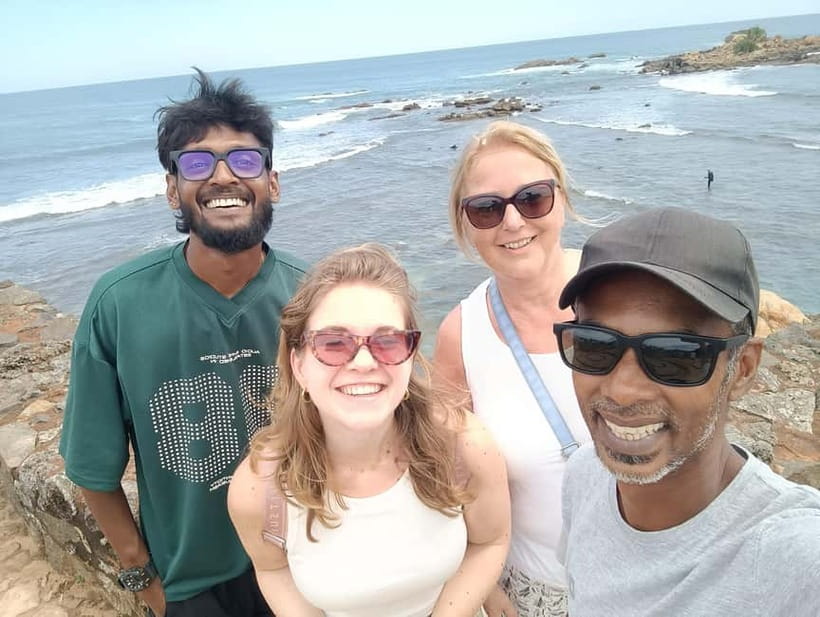
- Meet at the Galle Fort Clock Tower basement so you start on time and avoid wandering in the wrong lane
- Ramparts viewpoints early for fast context before you go deeper into the fort
- Dutch-era stops with practical explanations like how buildings were used then and how they’re used now
- Bastions, Flag Rock, and old lighthouse remnants for the fort’s coastal defense story
- A calm finish at Pedlar’s Inn in a colonial-era house for an easy end to the walk
- King coconut if available as a simple local refreshment during the route
Starting at the Galle Fort Clock Tower: the best way to get your bearings

Most people show up at Galle Fort and immediately feel the scale. High walls, layered neighborhoods, and corners that all look similar at first. What makes this tour work is the start point: you meet at the basement of the Galle Fort Clock Tower, right where it’s easy to orient yourself.
From there, you don’t jump straight into random streets. You get an orientation that helps the fort “click” in your head. That early context matters because the fort’s layout is built to control movement—by sea, by land, and by design—so if you understand the logic early, everything later feels less confusing.
Also, the guide’s English is a real part of the value. When you’re hearing explanations clearly, you spend less time trying to decode details yourself and more time noticing what’s in front of you. That’s how a short walk turns into a meaningful one.
You can also read our reviews of more walking tours in Galle


Views from the ramparts: how Dutch defense shapes what you see today

The heart of Galle Fort is its defensive ring, and you’ll walk along the ramparts and vantage points before you sink into the town. Expect a leisurely rhythm, not a sprint. You’ll get chances to look out over the coast and understand why the Dutch built the fort the way they did.
This section is especially useful if you’re the type who likes to connect the “view” to the “why.” From the walls, you can start spotting the fort’s edges, the turn of streets below, and the relationship between the interior buildings and the outside coastline. Without a guide, you can still enjoy the views—but you might miss how the ramparts were meant to protect ships, people, and goods, and how later changes shaped what’s there now.
I also like that this part sets you up for the names and functions you’ll hear next. When you later pass specific structures—church, court area, hospitals—the explanations land faster because you already understand where they sit in the bigger defensive system.
Inside the old town: Dutch influence you can actually point to
After the viewpoints, the tour moves into the fort’s streets and key structures. You’ll learn what to watch for: the mix of Dutch design cues, colonial-era adaptations, and the way everyday life continues around older walls. The guide’s job isn’t just to name buildings. It’s to connect design to use.
A big reason this is worth doing with a local guide is that you’ll hear how parts of the fort functioned historically and what they’ve become today. That “then and now” angle is what turns architecture into context. You’re not just walking past a building; you’re understanding why it was placed there, what role it served, and how the neighborhood carries that legacy.
And since the guide is happy to answer questions as you go, you can steer the conversation. If you care about Sri Lanka in general, ask. If you want to focus on how European presence influenced the coast, ask. The route is built so you don’t feel stuck waiting for a lecture at the end.
Dutch Reformed Church: where the story gets specific
One of the clear highlights is a visit to the Dutch Reformed Church. Churches in forts aren’t only about worship; they also signal authority and community structure in the era that built them. With a guide, you’re more likely to notice the details that show up when you know what you’re looking for.
This stop also tends to work well for people who want a deeper cultural layer, not just military history. You’ll get explanations that help you understand how the fort’s European chapter blended with local life, and why that shows up in buildings you see still standing today.
If you’re walking at a relaxed pace, you can take your time here. The guide’s English makes it easier to slow down mentally too—you can actually follow the reasoning behind the facts instead of just absorbing dates.
Bastions and Flag Rock: the fort’s coastal logic
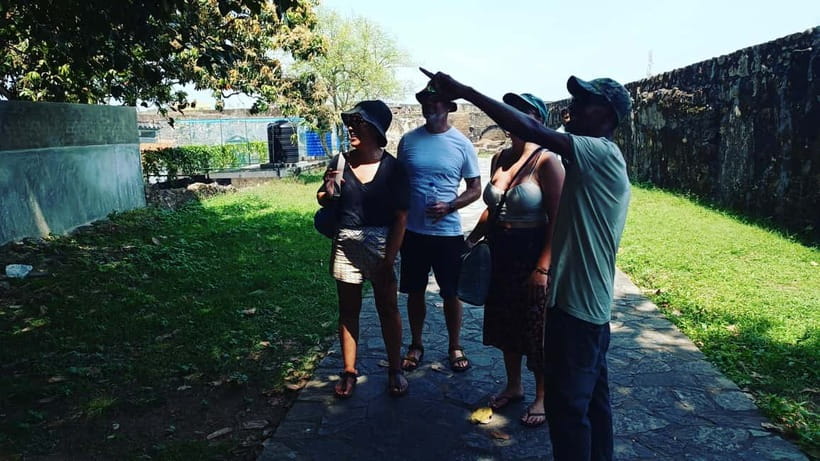
As the walk continues, you’ll spend time with the fort’s bastion zone, including Flag Rock and remaining parts connected to the old lighthouse area. This is where the tour shifts from “fort as a place” to “fort as a system.”
Bastions are all about control—angles for defense, lines of sight, and making it hard for an attacker to move freely. The guide’s explanations help you see that logic, even if you’re not a history buff. You’ll hear how coastal defense shaped where structures sit and what the walls were designed to do.
Flag Rock is a small-sounding stop that often ends up being one of the most memorable parts because it adds a maritime feeling to the fort. It helps connect the fort to the sea lanes and the everyday reality of ships coming and going. If you like photography, this is also a good stretch for photos, but the real win is understanding what you’re photographing.
You can also read our reviews of more guided tours in Galle





The lighthouse remnants and the “edge” experience
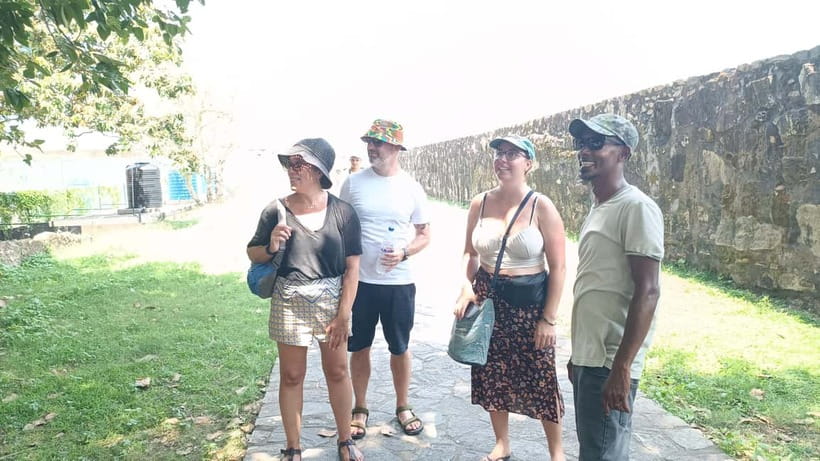
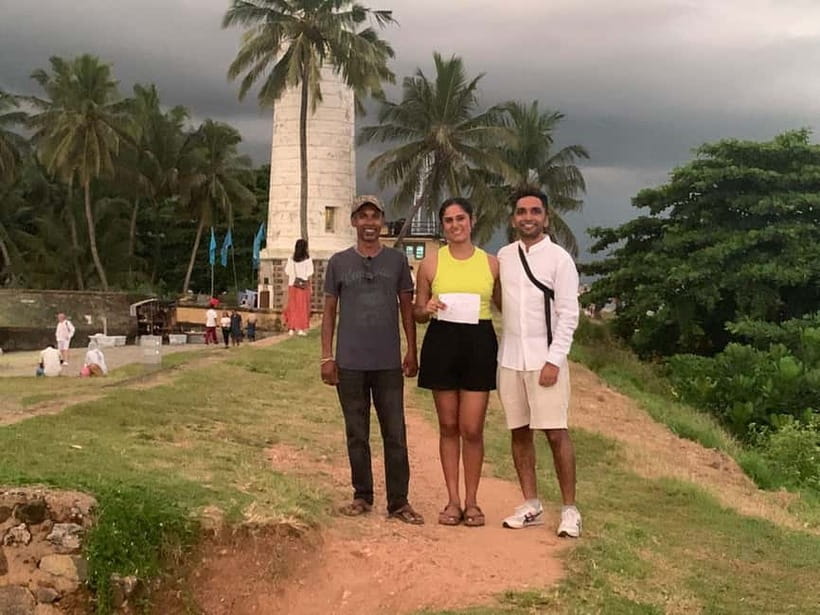
You’ll also visit the area of the lighthouse and see remaining parts of the old lighthouse. This part gives you a tangible sense of maritime navigation and coastal risk. You’re looking at a place where visibility mattered, not just aesthetics.
Even if the lighthouse isn’t fully intact like you might imagine, the guide helps you interpret what you’re seeing. The explanation turns partial ruins into a working story: why the lighthouse mattered, why the fort and coast were connected, and how people would have used the space.
This is a strong stop if you want Galle Fort to feel like more than a set of walls. It shifts the tone toward “how the coastline worked,” and it ties together the ramparts, bastions, and the coastal edge of the fort.
Court Square and the Dutch hospital: buildings that served real life
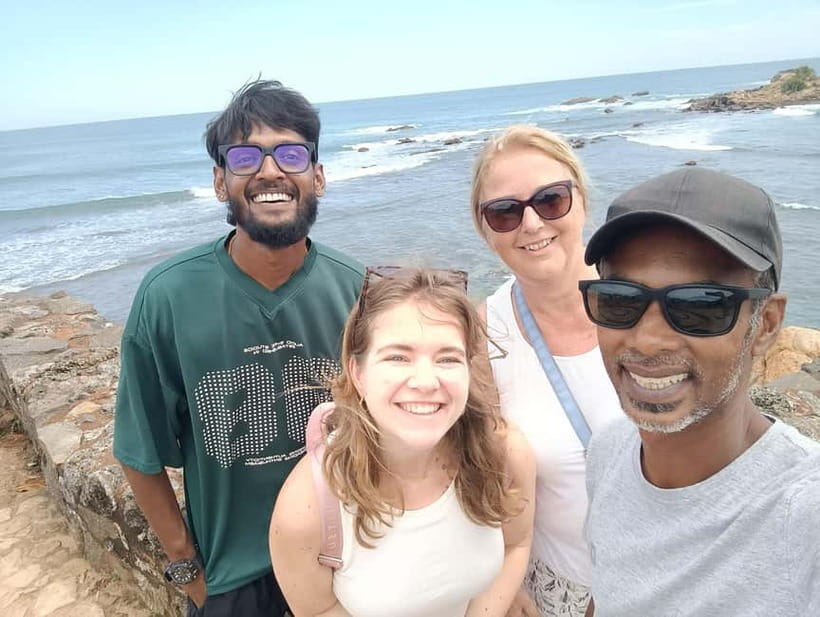
The tour includes Court Square and then the Dutch hospital area. This is the portion that many self-guided walks miss, because it requires someone who knows what the building was for.
Court Square helps you understand governance and public space. It’s easy to treat it like another open area, but with guidance you’ll grasp how the fort’s social and administrative life likely played out around these shared spaces.
Then you move to the Dutch hospital and learn how it was set up and what made it function in its historical context. Hospitals are one of those topics that can sound dull until you realize they reflect the level of organization a fort had. You’ll also connect it to how the fort era managed illness, safety, and the needs of the people stationed there.
Even on a short 1.5-hour route, these stops give you variety. You’re not stuck in one theme—military only, or religious only, or architecture only. You get practical life woven in.
King coconut and the steady pace that makes history feel doable
About midway through, you’ll have a refreshing break with king coconut on availability. It’s simple, but it helps keep the walk enjoyable, especially in warmer weather. More importantly, it gives you a natural pause so the information doesn’t just keep coming nonstop.
The pacing also matters. The walk is described as steady and leisurely, and it feels designed for comprehension rather than exhaustion. You get enough time at each stop to absorb the key points, and you’re not just moving from one photo spot to the next with no time to think.
There’s also a nice sense that the tour is more than a strict sightseeing loop. People have described it like a mini food element, likely because the coconut and local stops create that lived-in feeling. Either way, you finish the tour feeling like you did something practical, not just decorative.
Narrow streets to a colonial finish at Pedlar’s Inn
The walk winds through narrow streets and ends at Pedlar’s Inn Cafe and Restaurant, in a colonial house said to be more than 250 years old. That finish is more than a convenient location. It’s a good emotional capstone.
After walking ramparts and moving through fort spaces with layered history, you want a calmer moment. Sitting down at the end lets you process what you heard. It’s also a helpful point for planning your next steps in Galle Fort, because you’re no longer standing in a maze of lanes wondering what’s next.
If you’re hungry or want a drink after the walk, this is a built-in opportunity. And if you’re not, it still works as a comfortable end point where you can ask a last question or two before you continue on your own.
Price and value: why $15 makes sense here
At $15 per person for about 1.5 hours, this tour is priced like something you’d do casually. That’s the trap: people sometimes assume it’s short and basic. In practice, it’s a lot of guided value for a low cost.
Here’s why it adds up:
- You get a licensed national guide with strong English, so the time is efficient.
- You cover key fort structures—church, bastions, courthouse area, hospital zone, and lighthouse remnants—in one route.
- The guide links Sri Lanka context to the fort, so you leave with more than just local landmark names.
If you try to DIY this, you can absolutely enjoy Galle Fort. But you’ll likely miss the “why” behind the layout and how different buildings fit into the fort’s daily function. Paying for a good guide here is basically paying to save your own time and guessing.
Who should book this guided Galle Fort walk
This is a great fit if you:
- Want to see major Dutch-era and coastal-defense features in a short time
- Enjoy asking questions and getting straight answers in English
- Like historical interpretation that connects architecture to everyday use
- Appreciate a local guide who can talk about Sri Lanka beyond the fort walls
It’s less ideal if you:
- Need wheelchair access, because it’s not suitable for wheelchairs
- Are traveling with very young babies (it’s not suitable for babies under 1 year)
- Prefer strictly self-paced wandering without structured stops
Should you book Galle Fort Guided Walking Tour with a Local?
Book it if you want Galle Fort to feel understandable, not just photogenic. This tour hits the key places that explain the fort’s Dutch foundation and its role along the coast, and the guide’s English plus willingness to answer questions makes the experience feel efficient and human.
Skip it if you’re looking for zero effort and zero listening. This walk rewards curiosity. If you’re ready to look closely and hear the story behind what you’re standing next to, you’ll get your money’s worth fast.
FAQ
Where is the meeting point for the tour?
You meet at the basement of the Galle Fort Clock Tower.
How long is the guided walking tour?
The duration is 1.5 hours.
What does it cost?
The price is $15 per person.
What language is the tour guide?
The tour is in English.
Is king coconut included?
Refreshing king coconut is included on availability.
What places will we visit during the walk?
You’ll visit key areas including the ramparts and streets of Galle Fort, the Dutch Reformed Church, Court Square, the Dutch hospital, the lighthouse area and Flag Rock, and the tour ends at Pedlar’s Inn Cafe and Restaurant.
Who guides the tour?
The tour is guided by a licensed national tour guide who is a local resident and holds a tourism master’s degree.
Is the tour suitable for wheelchair users?
No, it is not suitable for wheelchair users.
Is it suitable for babies under 1 year?
No, it is not suitable for babies under 1 year.
Is free cancellation available?
Yes. You can cancel up to 24 hours in advance for a full refund.