REVIEW · GALLE
Galle Fort Walking tour
Book on GetYourGuide →Operated by Madawa Galagedara · Bookable on GetYourGuide
A 90-minute walk inside Galle Fort makes history feel close. With your guide Madawa Galagedara, you move section by section across ramparts and streets, and the fortress story comes with local context you can actually use in conversation.
I love the mix of big-fort highlights (bastions, lighthouse views, and the thick rampart walls) with small, practical details you’ll notice only when someone points them out. I also like that this tour isn’t only about architecture; you can ask questions about Galle and Sri Lanka and get straight answers with humor.
The main drawback is heat and sun exposure on the walls. Bring water and cover up, because a lot of the walk sits out in the open.
In This Review
- Key Highlights You’ll Really Notice
- Why This Galle Fort Walking Tour Works Better Than Solo Wandering
- Finding the Clock Tower Start Point in Galle Fort (No Guesswork)
- From Clock Tower to Moon Bastion: Getting the Fort’s Layout in Your Head
- Ramparts and Key Dutch Landmarks: Amanhgalla, Church, and Cinnamon Stores
- Court Square and the Dutch Hospital: The Fort as a Community
- Lighthouse and Flag Rock Bastion: Sea Views With a Story Attached
- Lighthouse Street, the Ian Drainage System, and Pedlar’s Corner Finish
- Timing Advice: Early Cool vs Sunset Colors on the Ramparts
- Price and Value: What $15 Gets You in Real Terms
- Who Should Book This Walk (And Who Might Skip It)
- Should You Book This Galle Fort Walking Tour?
- FAQ
- How long is the Galle Fort walking tour?
- What does the tour include?
- What is the price per person?
- Where do I meet the guide?
- Where does the tour end?
- What language is the tour in?
- What should I bring with me?
- Are refreshments included?
- Is the tour refundable if plans change?
- Is there a reserve and pay later option?
- Is this tour suitable for very elderly visitors?
Key Highlights You’ll Really Notice
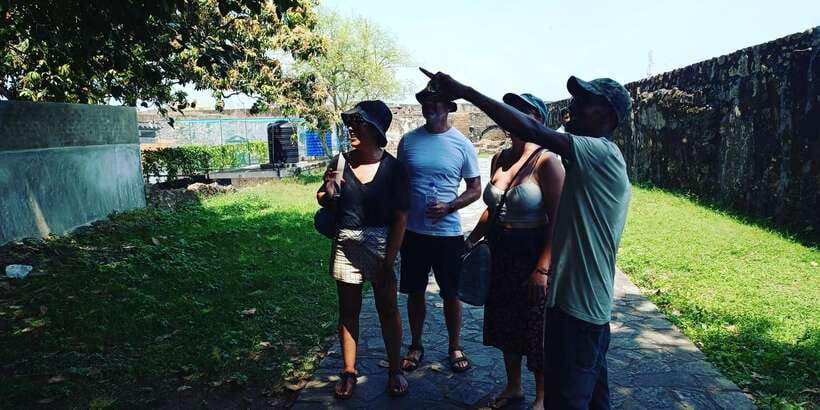
- Moon Bastion to lighthouse viewpoints: you get the fort’s structure laid out in a clear walking route
- Dutch landmarks you can name: Dutch Reformed Church, court area, hospital, and the cinnamon storage building
- Bastions explained like a system, not random rocks and walls
- Stories that link colonial changes to modern Sri Lanka, including social and political context
- A relaxed pace with room for questions, in English with a guide who will engage the group
Why This Galle Fort Walking Tour Works Better Than Solo Wandering
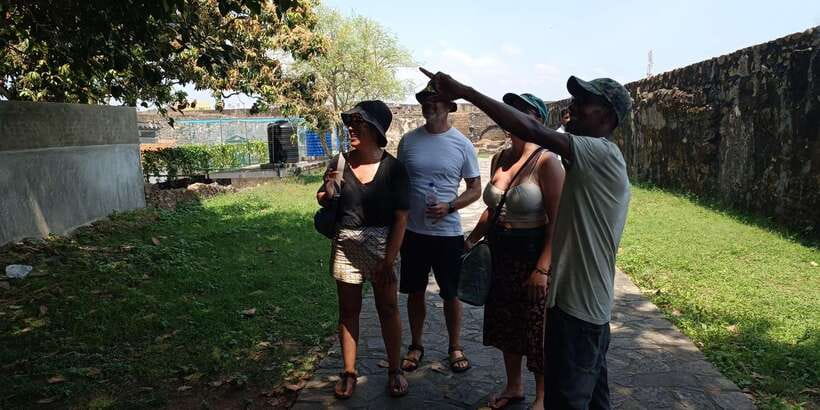
Galle Fort can be read two ways: as postcard scenery, or as a living, layered town shaped by centuries of trade and power. This walking tour aims for the second version. You’re guided along the ramparts and through the streets so the fort stops feeling like a maze and starts feeling like a plan.
For $15 per person and about 1.5 hours, it’s also a good fit for real trip days. You’re not signing up for a half-day commitment, and you’re not stuck moving fast just to “check off” sights. You’ll still see the major anchors: bastions, landmark buildings, and the coastal reach near the lighthouse.
You’ll also get something that’s hard to replicate alone: interpretation. The walls and buildings look similar on the outside until someone explains why they’re where they are, how they relate to each other, and what changed over time. Madawa brings that connection, and he’s set up to answer questions, including broader context about Sri Lanka.
One more practical note: the tour uses entrance-free stops, so you’re not juggling ticket lines for lots of separate attractions. That makes the experience smoother and better value for a short visit.
You can also read our reviews of more walking tours in Galle


Finding the Clock Tower Start Point in Galle Fort (No Guesswork)
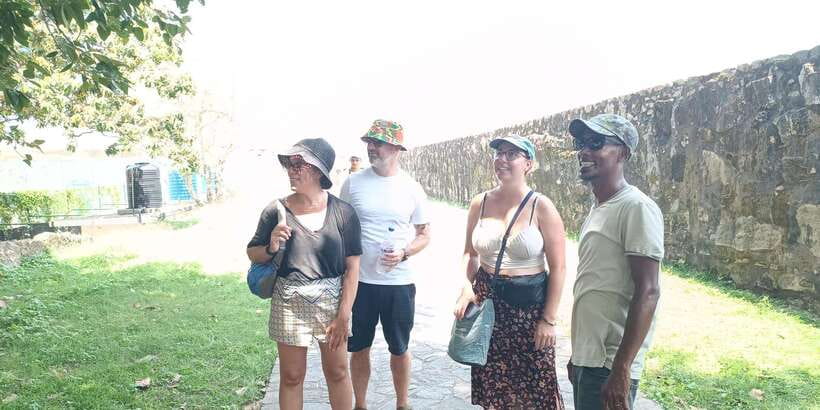
You’ll meet under the Galle Fort clock tower. The easiest clue: when you enter the fort from the new entrance, look to the right side to spot the clock tower.
That detail matters more than you might think. Galle Fort has tight lanes, and it’s easy to lose momentum when you’re searching for your group. Having a clear landmark start helps you get settled fast, so you can start listening instead of wandering.
This tour is also described as a live English-guided walk, so once you find the group you can relax into the flow. You’ll want to arrive with time to orient yourself, especially if you’re pairing the fort visit with another stop in Galle.
From Clock Tower to Moon Bastion: Getting the Fort’s Layout in Your Head
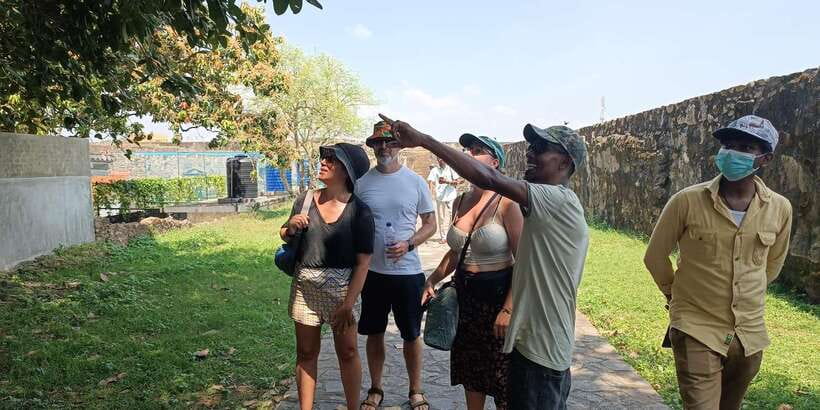
The walk begins with a brief introduction near the clock tower, then you head up to the high section at Moon Bastion. This early part is about orientation: once you understand where you are on the fort’s perimeter, the rest of the route clicks.
At Moon Bastion, your guide sets the historical frame and gives you a sense of how the fortress functioned. You’re not just viewing a wall—you’re hearing the logic behind fortifications. That’s a big reason this tour is worth doing even if you’ve walked around Galle Fort before.
You’ll also visit the fort’s other named defensive points along the route, including references to the Star Bastion and Sun Bastion. Even if you’re not a military-history person, those labels help you track the perimeter and remember what you saw later. When you leave, you’ll be able to say what’s where, not just that you walked “around the fort.”
Because you’re on higher ground here, this is a good time to hydrate and slow down for photos. The views can be great, and the effort level is worth it because the route gets easier to follow once the layout is established.
Ramparts and Key Dutch Landmarks: Amanhgalla, Church, and Cinnamon Stores
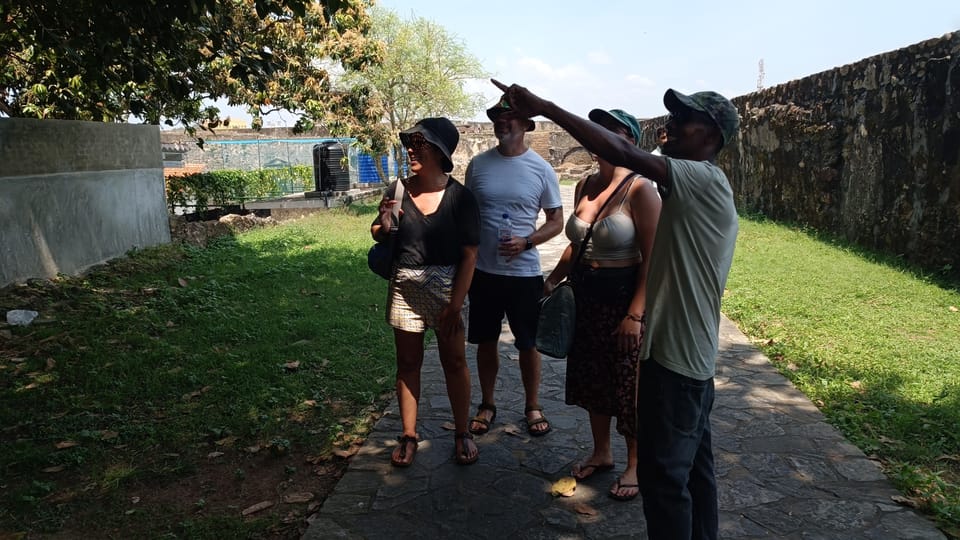
After the bastion area, the walk shifts into the main ramparts and landmark sequence. This is where you get the iconic Galle Fort vibe—thick walls, ocean air, and colonial-era architecture that still shapes the streets today.
Along the way, your guide takes you past standout sights, including:
- Amanhgalla hotel (as a landmark reference point along the fort’s historic fabric)
- Dutch Reformed Church
- The Dutch cinnamon storage building
These stops aren’t treated as random photo spots. You’ll hear how they connect to the fort’s economic life and social story. Cinnamon storage, for example, isn’t just an old building—it’s a clue about what the region’s trade depended on, and why European powers were so invested in controlling key ports.
The Dutch Reformed Church is another anchor. Even if you don’t know church architecture, you’ll get enough explanation to recognize what makes it distinct and how it fits into a Dutch-run colonial settlement.
Then comes the part that makes a guided walk pay off: interpretation. Without guidance, you might admire the buildings and move on. With guidance, you start connecting dots—how the perimeter, community buildings, and trade infrastructure fit together.
Court Square and the Dutch Hospital: The Fort as a Community
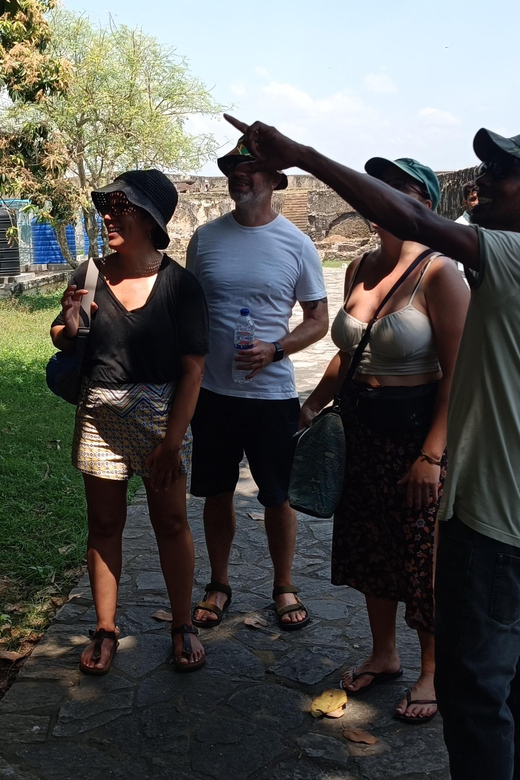
Once you’ve covered the rampart route and the major architecture, you move toward the court square area and the Dutch hospital. This is a useful change of pace because it reminds you that forts weren’t built only for defense.
A court square signals law, governance, and local administration. A hospital signals something even more human: health care needs in a settlement where ships, workers, and residents all lived in close quarters.
In this segment, your guide’s Sri Lanka focus shows up. The tour isn’t only about Dutch or only about old history. You get context that helps you understand modern Sri Lankan society and how colonial influences echo into today. Several people highlighted how Madawa can explain broader topics in a way that makes sense, even when the questions get more complex.
This is also a good time to ask your own questions. If you’re the type who wonders how daily life worked here—before and after major turning points—this walk gives you space to talk.





Lighthouse and Flag Rock Bastion: Sea Views With a Story Attached
The route continues toward the lighthouse and then to Flag Rock Bastion. This part of the tour is especially practical for two reasons.
First, it’s one of the best places to appreciate the fort’s coastal position. When you stand near the lighthouse, you understand why this perimeter mattered: it’s not an isolated wall. It’s a line between shipping lanes and the town, between sea and settlement.
Second, your guide uses this viewpoint to connect the defensive design to what the coastline demanded. Bastions at the edge of the fort aren’t decorative; they’re positioned around visibility, movement, and maritime risk.
If you’re trying to plan photos and timing, this segment is where you’ll feel the payoff. Even if you don’t care about every historic detail, you’ll get the sense of why people built and maintained this place where it meets the sea.
Lighthouse Street, the Ian Drainage System, and Pedlar’s Corner Finish
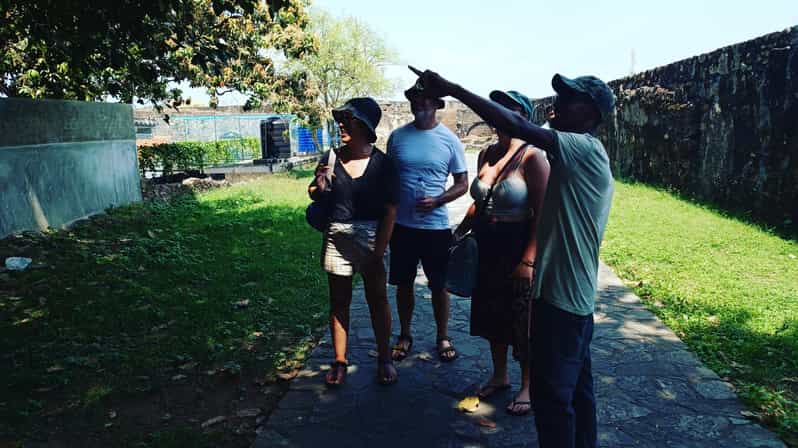
After the lighthouse area, the tour moves along lighthouse street and highlights an Ian drainage system. This is a subtle but smart inclusion. Old towns don’t survive on walls alone. They survive on infrastructure—water management, drainage, and keeping streets usable.
That’s why this stop is valuable: it teaches you how to look at everyday details as part of the big story. You’ll start noticing that “small” features—channels, design choices, hidden engineering—often explain how places worked day to day.
The walk then continues toward Pedlar’s street, ending near Pedlar’s Corner Cafe. If you want an easy transition from history to a real break, this finish point makes sense. You can grab a drink or snack and sit with what you learned instead of rushing straight back out.
By the time you finish, you should feel oriented. You won’t just have seen the fort—you’ll have traced its perimeter, learned what the key landmarks are, and gained a story you can repeat to friends.
Timing Advice: Early Cool vs Sunset Colors on the Ramparts
Heat can sneak up on you in Galle Fort because a lot of the perimeter walk sits under direct sun. A smart strategy is to pick a time with better comfort.
Many people find this tour best in the early morning (cooler temperatures) or in the evening, when the light turns warmer and the ramparts can feel like a slow moving stage for sea views. Evening also has a practical advantage: it’s easier to keep energy up for the full walk when the air is less harsh.
Whatever start time you choose, treat the tour as an outdoor walk. Bring your hat, sunscreen, and water—those aren’t optional extras here.
Price and Value: What $15 Gets You in Real Terms
The listed price is $15 per person for about 1.5 hours, with a professional local guide and all entrances free. For most people, the best value isn’t the buildings themselves—it’s the explanation.
Here’s the math that matters in your day-to-day planning: if you’re doing Galle Fort on your own, you might spend the same amount of time walking around, but you’ll likely miss the structure behind what you see. With this tour, you get a guided route that helps you name the highlights and understand their roles.
You also get Q and A time. Several people described Madawa as funny, friendly, and patient with questions—especially the kind that go beyond buildings into Sri Lankan culture and history. That kind of context can turn a short fort visit into something you remember longer after you leave the ramparts.
Add in the fact that the guide can answer questions about Galle and Sri Lanka, and you’ve got a real “knowledge per minute” bargain. It’s the kind of spending that makes the rest of your time in Sri Lanka easier, because you start understanding what you’re seeing.
Who Should Book This Walk (And Who Might Skip It)
This is a great choice if you want:
- A short, guided way to cover the most important Galle Fort perimeter sights
- A guide who can connect fort history to wider Sri Lanka context
- A relaxed pace with room to ask questions
- English-language storytelling that keeps the information clear
It may not be the best fit if:
- You struggle with outdoor walking in the sun (the tour recommends a hat, sunscreen, and water, and some parts are exposed)
- You need a fully accessible route with minimal steps or uneven terrain (the fort streets and ramparts can be tricky)
- You’re in the very advanced age group noted as not suitable (the tour states it’s not suitable for people over 95 years)
Should You Book This Galle Fort Walking Tour?
If you have about a day in Galle Fort and you want your visit to feel coherent, I’d book it. This walk is built for people who like to understand what they’re seeing, not just capture photos. The route hits the fort’s major anchors—the bastions, Dutch landmarks, court and hospital area, lighthouse, and the named finish on Pedlar’s street—while your guide adds context about Galle and Sri Lanka.
The only real caution is heat. Choose your start time thoughtfully, pack what you need, and you’ll get a lot out of your 90-minute window.
FAQ
How long is the Galle Fort walking tour?
The tour lasts about 1.5 hours.
What does the tour include?
You get a professional tour guide, and all entrance fees are free.
What is the price per person?
The price is $15 per person.
Where do I meet the guide?
Meet under the Galle Fort clock tower. When you enter Galle Fort from the new entrance, the clock tower is on the right side.
Where does the tour end?
The tour ends at the end of Pedlar’s street, at Pedlar’s Corner Cafe.
What language is the tour in?
The tour is guided in English.
What should I bring with me?
Bring a hat, sunscreen, and water.
Are refreshments included?
No, refreshments are not included.
Is the tour refundable if plans change?
Yes. You can cancel up to 24 hours in advance for a full refund.
Is there a reserve and pay later option?
Yes. You can reserve now and pay later.
Is this tour suitable for very elderly visitors?
The tour states it’s not suitable for people over 95 years old.