REVIEW · GALLE
PRIVATE Surf lesson for Beginners Couple
Book on Viator →Operated by Ama Surf School · Bookable on Viator
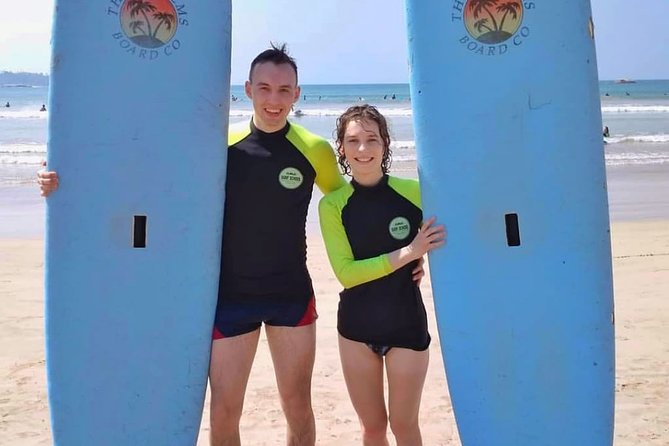
Early-morning surf lessons can be surprisingly grounding. This private beginner couple session in Weligama mixes land-based safety, footwork, and balance before you head into the water for paddling and wave riding. It’s built for pairs who want to learn together at a similar pace, or even if one person is starting from scratch while the other already has some experience.
I especially liked the way the teaching starts on land. You work on surf safety, jump-up mechanics, stance, and core balance first, then practice the skills that actually matter for getting into waves. In the school’s instructor lineup, names like Rati (super patient), Sammy (careful, with a theoretical warm-up), Santa (patient and safety-focused), Seneth (professional with kids), and Sippu (great for first-timers) keep showing up in how the experience is described.
One consideration: this is only about 1 hour 15 minutes, so it’s more about getting your first real wins than becoming a confident surfer by the end. And because the activity depends on good weather, you may need to be flexible if conditions aren’t right.
In This Review
- Quick hits: what makes this private surf lesson work
- Weligama at 6:30 am: why this start time matters
- Ama Surf School and the private couple setup
- What you do on land: safety, stance, and the jump-up moment
- Foam boards first, fiberglass later: how the board choice affects learning
- Paddling out and efficient paddling: the unglamorous skill that wins waves
- Finally catching waves: the lesson payoff in unbroken rides
- How much can you really learn in 1 hour 15?
- Who this private beginner couple lesson is best for
- Price and value: what $34 buys you in Weligama
- Should you book this private couple surf lesson?
- FAQ
- Where does the lesson start and end?
- What time does the session begin?
- How long is the private surf lesson?
- Is this lesson private or shared with other people?
- What surfboards are used for beginners?
- What skills are taught during the session?
- Do you get a ticket on your phone?
- Is confirmation provided after booking?
- What happens if weather is poor?
Quick hits: what makes this private surf lesson work
- Land-first surf safety so you understand what to do before you’re in the water
- Footwork, stance, and core balance practice that targets the jump-up moment
- Paddling out, efficient paddling, and turns broken into learnable steps
- Foam boards first, with a possible move toward fiberglass for later stages
- Wave time at the end, focused on catching and riding unbroken waves
- Private for your group only, which makes it easier for couples to learn together at their pace
Weligama at 6:30 am: why this start time matters
This lesson starts at 6:30 am and is based at Ama Surf School in Weligama. That early timing isn’t random. Surf sessions tend to run smoother when you’re not rushing at the last minute, and you’re less likely to feel behind right when you step onto the board.
Also, Weligama is set up for learning. The meeting point is convenient (near public transportation), and the activity ends back at the same location. For a couple, this kind of simple “go, learn, return” structure helps you keep the day feeling easy instead of logistically stressful.
One more practical note: the lesson requires good weather. If the sea or wind isn’t cooperating, you’ll be offered a different date or a full refund. So if you’re the type who hates schedule uncertainty, build in a little breathing room on your Weligama days.
You can also read our reviews of more private tours in Galle


Ama Surf School and the private couple setup
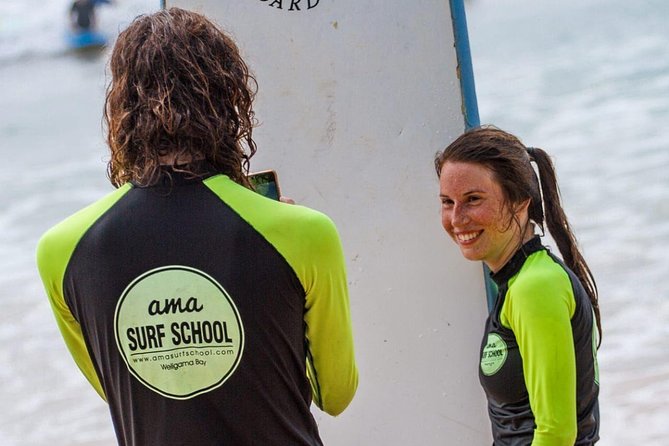
The big advantage here is that it’s private. It’s not a big class where you’re waiting around for a turn. It’s only your group, which is ideal for beginners who are nervous and want calm, personal coaching.
It also helps when you and your partner aren’t at the same level. The lesson description makes a point of this: even if one person needs more basics while the other wants to progress, the session can still work. That matters because surfing is one of those sports where “together” doesn’t always mean doing the exact same thing at the exact same time.
The school’s instructor quality comes through in the names associated with past lessons: Rati being especially patient for beginners, Sammy bringing a careful theoretical warm-up plus practice for pop-off, Santa balancing encouragement with solid technique, Seneth being professional and patient, and Sippu being a go-to for first-timers. You don’t need to choose an instructor in advance from the info you have here, but the recurring pattern is clear: the teaching style is meant to be steady, not chaotic.
And you get a mobile ticket, so you’re not digging for paper in a hot bag.
What you do on land: safety, stance, and the jump-up moment
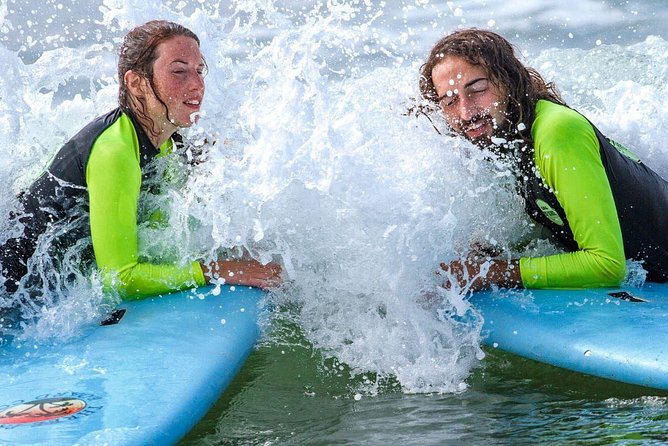
Before you even think about paddling, the lesson teaches surf safety on land. For first-time surfers, this is huge. Most people don’t struggle because they can’t physically stand on a board. They struggle because they don’t understand what to do, where to be, and how to stay safe while trying something hard.
On land, you’ll work through core basics that translate directly to wave time:
- Jump up techniques (the crucial “from prone to standing” move)
- Footwork and stance
- Core balance techniques
- Turning the board
- A step-by-step build toward paddling and catching waves
If you’ve seen beginners try to surf without these foundations, it often looks like frantic flailing. Land instruction reduces that. It also gives you something clear to focus on once you’re in the water, because you’ve already practiced the right body positions.
One teaching detail that comes through in the school’s style: there’s sometimes a theoretical component and practice drills before entering the sea. That can sound formal, but it usually pays off. When you’re not mentally guessing what to do next, you conserve energy and start taking better attempts instead of repeating the same mistake over and over.
Foam boards first, fiberglass later: how the board choice affects learning
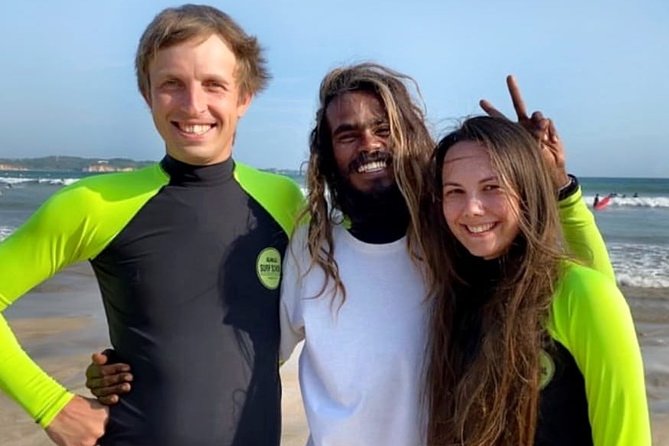
This lesson uses soft surf boards for total beginners at first. Then, depending on progress, you move later to fibreglass boards.
Here’s why that progression makes sense in a beginner lesson:
- Foam boards are more forgiving. They help you stay afloat as you learn to pop up and balance.
- Once you can stand more reliably, moving toward fiberglass can feel more responsive and stable for riding unbroken waves.
In plain terms, the board progression is about lowering fear and increasing time on your feet. For you as a beginner couple, that matters because your confidence grows faster when you’re not constantly fighting the board.
Also, this approach lets the lesson adapt. If one of you progresses faster on the day, you might find the later-stage board switch helps keep both people learning without one person getting stuck waiting.
Paddling out and efficient paddling: the unglamorous skill that wins waves
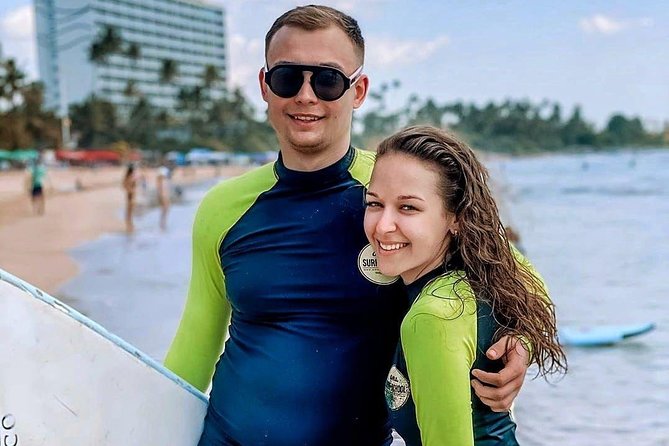
Surf is often sold as standing and riding. But the part that determines whether you actually catch waves is what happens before you’re on them: paddling.
In your session, you’ll practice:
- Paddling techniques
- Paddling out
- Efficient paddling
- Turns (so you can adjust your direction and positioning)
This is also where beginner couples sometimes differ. One person may love the board instantly but struggle with paddling stamina. The other might find paddling exhausting but pick up standing quickly. A good private coach helps both of you in the way that’s hardest for you individually.
What to pay attention to: don’t just “paddle harder.” Focus on technique and rhythm. Efficient paddling means you spend less energy getting nowhere and more energy in the zone where waves actually become rideable.
You can also read our reviews of more tours and experiences in Galle


Finally catching waves: the lesson payoff in unbroken rides
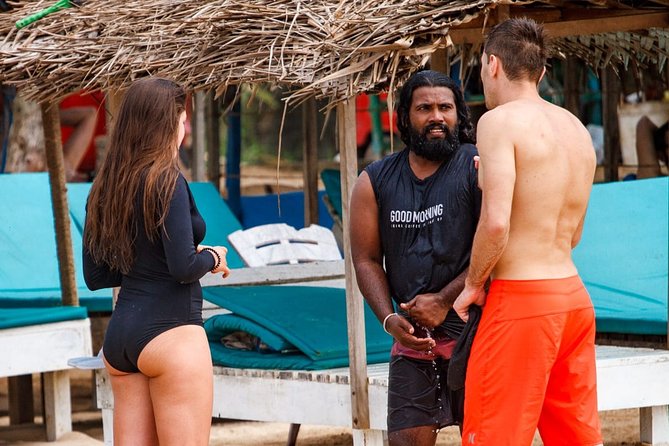
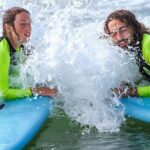
After you’ve covered safety, footwork, balance, and paddling, you reach the fun part: catching waves and riding them. The lesson aims for catching and riding unbroken waves, which is a thoughtful goal for beginners.
Unbroken rides matter because they’re more likely to happen when you can:
- Balance through the basic takeoff
- Keep your stance stable enough to avoid falling immediately
- Time your position so the wave doesn’t break fully out from under you
The session structure is built to land you at that stage by the end. It’s not just “try once and hope.” The school’s teaching style also focuses on giving you enough guidance to attempt waves more independently within the same lesson, so you’re not only watching while the coach does everything.
For a couple, the payoff tends to be emotional, not just technical. When you both catch a wave in the same hour, you feel like the lesson worked. You’ll also likely have a clearer idea of what you should practice next time, because you’ll remember the exact moment you got stuck.
How much can you really learn in 1 hour 15?
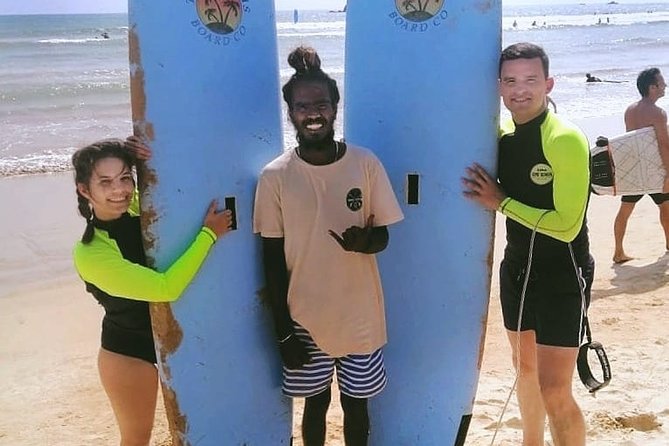
Let’s keep expectations grounded. 1 hour 15 minutes is not enough time to turn a beginner into a confident surfer in every condition. But it’s enough time to create a baseline.
What you can realistically walk away with:
- A safer, more informed approach to what to do in the water
- A first version of your stance and jump-up mechanics
- An understanding of what good paddling feels like
- A few wave attempts you can build on
And that’s usually what beginners need. The best lessons don’t make you perfect. They give you the first “I get it” moment and then show you what to work on immediately next.
Who this private beginner couple lesson is best for
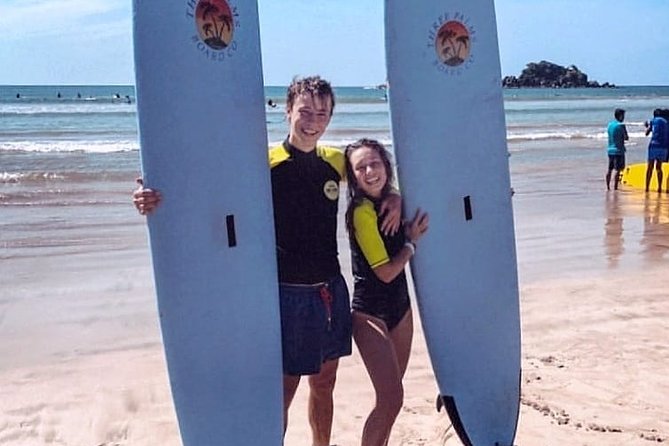
This lesson fits you best if:
- You and your partner want shared progress and personal coaching rather than a crowded group format
- You’re truly new to surfing and need safety and technique built from the ground up
- You and your partner are at different levels and still want a session that accommodates both
- You’d rather get quality instruction and coached wave time than spend days watching from shore
If you already have strong surf skills, you might feel the session is more “foundations and basics” than “hard progression.” But if your goal is to sharpen fundamentals or return to surfing after a break, it can still be a smart reset.
Price and value: what $34 buys you in Weligama
At $34 for a private session of about 1 hour 15 minutes, the value is mostly about attention. You’re paying for guided time, not just board rental. The lesson emphasizes:
- Technique (footwork, stance, core balance)
- Paddling efficiency (paddling out, efficient paddling, turns)
- Safety and structured progression (land drills first, foam board use at the start)
- A goal-focused finish (catching and riding unbroken waves)
Private instruction costs more than group lessons in most places, so the “budget” part here is appealing. But the better way to judge it is by your goals: if you want the fastest path from nervous beginner to first real ride attempts, private coaching gives you feedback while you’re still actively learning.
Also, the activity is tied to weather and runs early, which means the time you book can be used well when conditions are favorable. If conditions aren’t good, you get rebooking or a full refund, which reduces risk.
Should you book this private couple surf lesson?
If you’re heading to Weligama as a couple and you want more than a casual try, I’d book it. The structure is beginner-friendly: safety first, then stance and balance, then paddling, then waves. And because it’s private, you’re not stuck waiting for someone else’s turn while your confidence drains.
I’d hesitate only if you’re the kind of person who needs a long session to feel comfortable, because 1 hour 15 minutes goes fast. Still, even with that limitation, a well-taught first lesson often saves you from weeks of random practice.
In short: if your goal is your first honest progress and a fun morning on the water, this is a solid bet.
FAQ
Where does the lesson start and end?
It starts at Ama Surf School, Weligama By Pass Rd, Weligama 81700, Sri Lanka. The activity ends back at the meeting point.
What time does the session begin?
The start time is 6:30 am.
How long is the private surf lesson?
The duration is about 1 hour 15 minutes.
Is this lesson private or shared with other people?
It’s private. Only your group participates.
What surfboards are used for beginners?
The lesson uses soft surf boards for beginners first, and then you may move later to fibreglass boards.
What skills are taught during the session?
You’ll learn surf safety, jump up techniques, footwork and stance, core balance, turning the board, paddling out and efficient paddling, paddling technique, and catching and riding unbroken waves.
Do you get a ticket on your phone?
Yes, the experience includes a mobile ticket.
Is confirmation provided after booking?
Confirmation is received at the time of booking.
What happens if weather is poor?
The experience requires good weather. If it’s canceled due to poor weather, you’ll be offered a different date or a full refund.