REVIEW · GALLE
Surf Lessons in Sri lanka Semi – Private or Group Options
Book on Viator →Operated by Surf and stay sri lanka · Bookable on Viator
A first wave starts with a sand drill. This 90-minute surf lesson in Sri Lanka is built for beginner confidence with organized coaching in the Weligama/Arugam Bay surf zone, and it includes surfboard and safety gear in the price. The one thing to keep in mind is the lesson is short, so you leave with momentum, not total mastery.
Here’s the good part: you get a proper land warm-up, then close coaching in the water. Expect a 15–20 minute safety and technique chat, pop-up practice on sand, and guided wave timing right where the instructor can help you stand. If you want a relaxed intro (not a chaotic beach free-for-all), this style fits well, and it’s also a decent choice if your fitness is moderate.
In This Review
- Key things I think you’ll care about most
- Where the lesson fits: Weligama Bay, beginners, and real coaching time
- A quick reality check
- The “meet and brief” phase: what happens before you go in
- Choosing your surf spot: why waist-deep beginnings are smart
- Weligama vs Arugam Bay: how to think about it
- In the water: paddling, timing, and getting your feet under you
- Paddling and balance
- Catching waves (the gentle push part)
- The pop-up to the first ride
- A note on teaching style and patience
- Gear and safety: what’s included and why it matters
- Semi-private vs private: what changes in your experience
- Price and value: is $18 actually fair for a 90-minute lesson?
- Timing, meeting point, and how to show up ready
- What to wear and how to think about it
- Who this surf lesson is best for (and who should plan differently)
- If you want the next step: packages for faster progress
- Quick decision guide: should you book this surf lesson?
- FAQ
- FAQ
- Where is the surf lesson meeting point?
- How long is the surf lesson?
- What’s included in the lesson price?
- Can I choose a group option or a private lesson?
- What happens before you get in the water?
- What kind of physical fitness do I need?
- What is the cancellation policy?
- Is a mobile ticket used?
Key things I think you’ll care about most
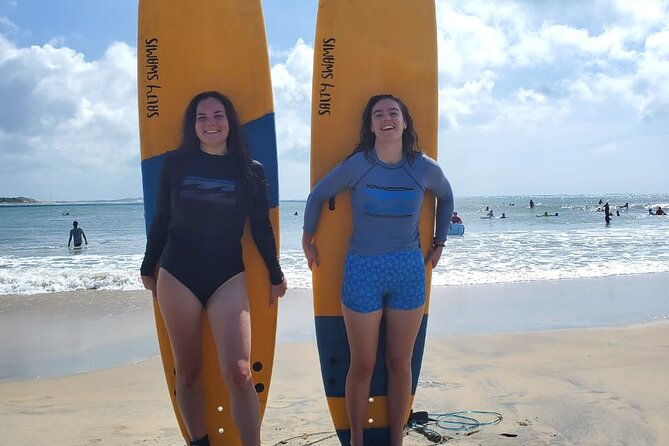
- Sand pop-up practice first so your first attempts don’t feel random
- Safety briefing + surf etiquette before you hit the lineup
- Tailored spot selection so beginners start in calmer, waist-deep water
- Instructor in the water coaching you on paddling and timing
- Semi-private or private upgrade if you want more attention
- Equipment included (board + safety gear), so you’re not hunting extras
Where the lesson fits: Weligama Bay, beginners, and real coaching time

This surf lesson takes place around the Weligama area, with coaching geared toward both first-timers and people who’ve surfed before. The point is simple: you’ll learn in a safe, organized setup, with guidance that helps you make progress fast without feeling like you’re just getting tossed into the ocean and hoping for the best.
I like that the plan starts with technique you can practice on land. The pop-up is taught as a motion, not a mystery. Then you transfer it to the water with an instructor beside you, which is where many beginner lessons fall apart. Here, the coaching is close enough that you can actually adjust your body position and timing while you’re on the board.
You can also read our reviews of more private tours in Galle


A quick reality check
You’re booking a 1 hour 30 minutes session. That’s long enough to learn, try, and catch a few waves, but it’s not long enough to become a confident surfer who can read currents effortlessly. If you want the full progression route, the program also points you to longer packages (3-day, 5-day, or seven-day options).
The “meet and brief” phase: what happens before you go in
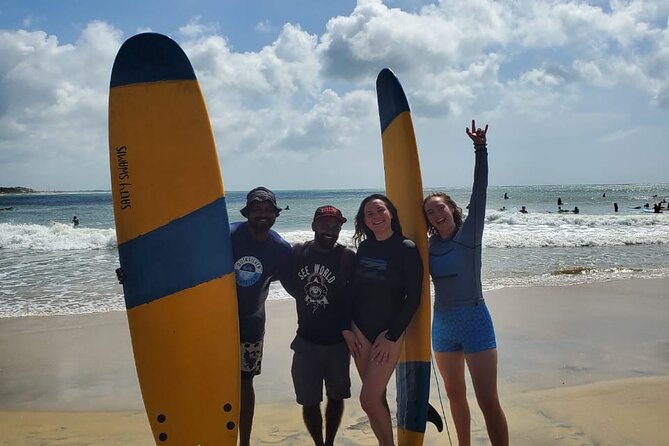
The start is straightforward: you meet at a beachfront camp area at Surf and stay hostel (the meeting point shown is Surf and stay hostel, AH 43, Weligama, Sri Lanka). You’ll also meet your instructor and the rest of your group if you’re doing the semi-private option.
Then you get a land briefing in the shade for about 15–20 minutes. This part matters more than people think, because it sets your expectations and your safety habits before you’re in waves. You’re taught:
- The pop-up motion on sand until it starts to feel automatic
- Surf etiquette, basically the rules of the road for sharing the lineup
- How the team chooses where you’ll surf based on conditions and your level
I appreciate that the instruction is practical. Instead of vague “be safe” advice, you get the specific basics you need to avoid the usual beginner mistakes, like standing up too early, paddling inefficiently, or accidentally getting in the wrong place.
Choosing your surf spot: why waist-deep beginnings are smart
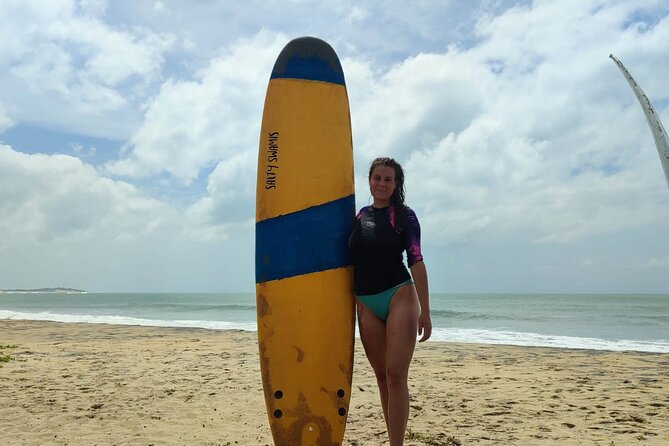
One of the clearest signs of a well-run beginner lesson is where they put you first. Here, beginners are guided toward calm water—described as waist-deep—so you can focus on the mechanics of paddling and standing.
That approach gives you a safer learning loop:
- Try technique
- Get feedback immediately
- Repeat with less fear
If you start too deep too fast, you spend most of the session dealing with balance, fatigue, or panic. A good instructor reduces that by matching the water to your skill level.
Weligama vs Arugam Bay: how to think about it
The lesson is presented as coaching for both Weligama and Arugam Bay. Even if you’re based in Weligama for your booking, it’s helpful to know the school’s broader focus. Typically, surfers talk about these places as different experiences along the Sri Lanka coast, so it’s smart to plan your learning around the conditions you’ll get on the day. In practice, you should expect the instructor to steer you to the most suitable section of water for your ability.
You can also read our reviews of more tours and experiences in Galle



In the water: paddling, timing, and getting your feet under you
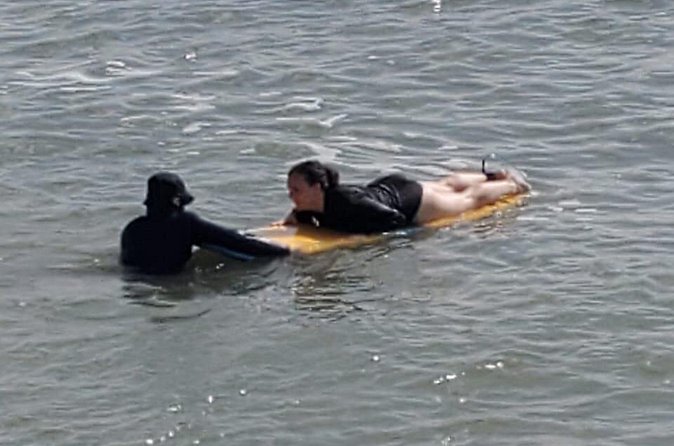
This is the heart of the lesson, and it’s also where you can tell whether a surf school is truly beginner-friendly. The instructor stays right beside you in the water, coaching each stage:
Paddling and balance
You’ll get help finding balance on the board. That usually means working on how you sit or lie, how you paddle with control, and how you position your body so the board doesn’t feel like a drifting door.
Catching waves (the gentle push part)
You’re not expected to guess the perfect moment alone. The instructor times your takeoff and gives a gentle push at the right moment, so your job shifts to the most important step: standing up cleanly.
The pop-up to the first ride
The first successful ride is the payoff. You’ll feel the wave, then—guided—pop up to your feet. That rush is real, and the coaching style makes it more likely you’ll actually experience it rather than spending the session tumbling off and losing confidence.
A note on teaching style and patience
One of the most praised aspects of this surf school is the instructor’s patience and clarity. In one case, a student even had food poisoning on the booking day, and the instructor helped them reschedule. That kind of flexibility and calm teaching attitude is a big deal when you’re learning something physical and slightly intimidating.
Gear and safety: what’s included and why it matters
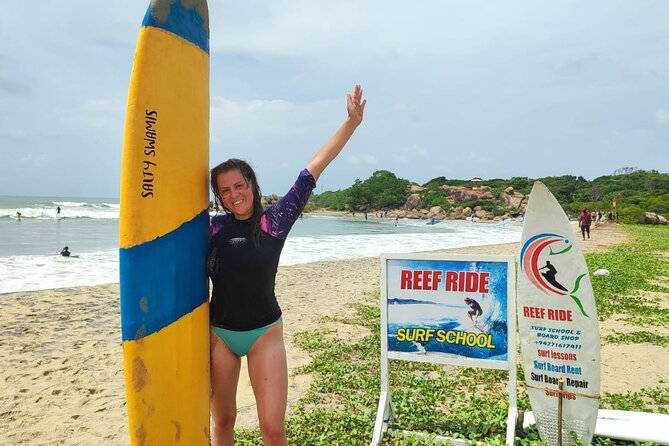
The price includes surfboard rental and safety equipment. That’s not just a convenience; it affects how well your session goes.
If you’re paying separately for gear, you can end up:
- arriving late, because you’re tracking down rentals
- using the wrong board size/shape for your level
- skipping safety gear because it feels like extra cost
Here, you avoid that. You show up, you get the right kit for the lesson, and you spend the time learning instead of negotiating equipment logistics with a dozen other tasks.
Also, surf safety etiquette is part of the lesson, not an afterthought. That matters because even when waves feel friendly, the ocean doesn’t care about beginners’ nerves. Knowing how to share space in the lineup reduces risk for everyone.
Semi-private vs private: what changes in your experience
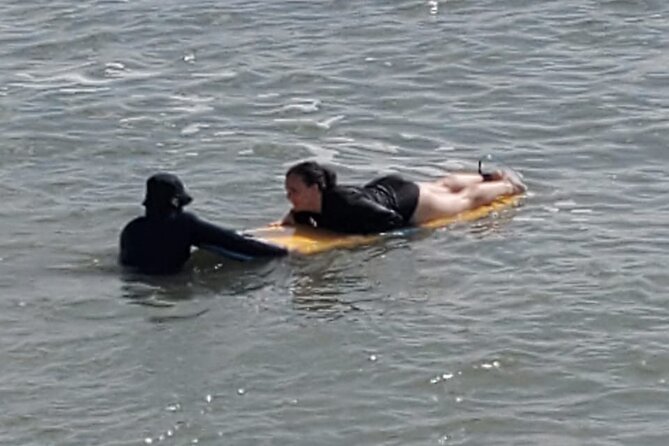
You can choose between a small-group lesson or a private lesson for an extra fee. Here’s how to think about it in plain terms:
- Small-group: you’ll learn alongside a small number of people, which can be motivating. You still get coaching, but your instructor may split attention across the group.
- Private: you get more direct, personalized coaching time. If you’re nervous, easily frustrated, or trying to work on specific surf habits, private often pays off.
If you’re a total beginner and you want confidence building with fewer distractions, the private option can be worth it. If you’re comfortable sharing focus and learning together, the small-group setup is a solid value.
Price and value: is $18 actually fair for a 90-minute lesson?
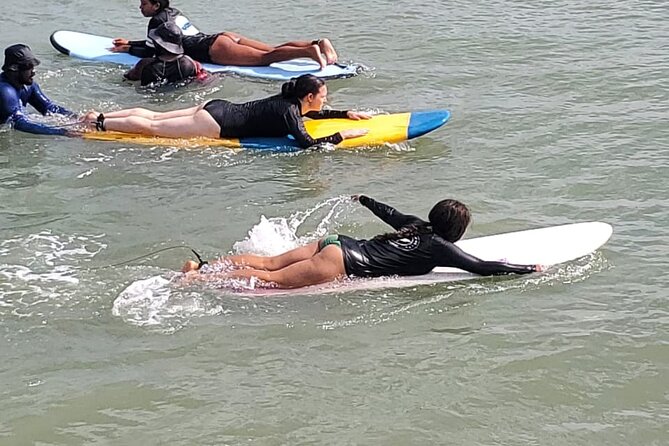
At $18 per person, this lesson sits in the “good deal” category, especially because equipment is included and the session includes both a land briefing and in-water coaching.
The value comes from three places:
- You’re paying for structured instruction, not just board time
- You’re getting close coaching at the exact moment you need it (when you’re paddling and popping up)
- You’re not paying extra for rentals
A lot of low-cost surf experiences cut corners on safety, coaching depth, or gear quality. Here, the structure is clear: briefing, etiquette, pop-up practice, then guided wave attempts. That makes the $18 price feel like it’s attached to learning, not just access.
Timing, meeting point, and how to show up ready
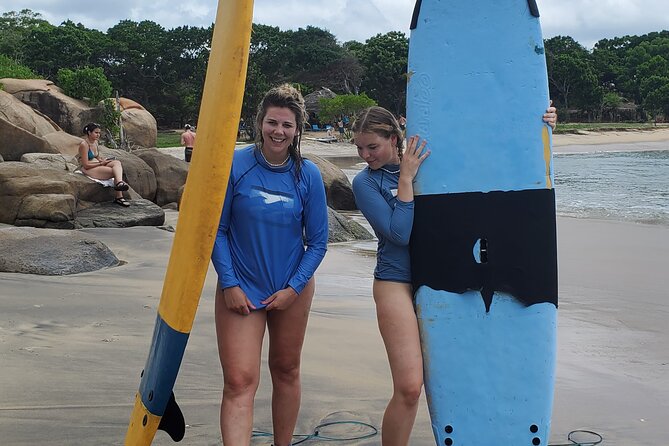
The lesson starts and ends back at the meeting point shown for the activity. You’ll want to arrive early enough to get settled and get briefed without rushing.
Bring yourself in “moderate physical fitness” condition. You don’t need to be athletic, but you should be ready for:
- paddling work
- getting on and off the board repeatedly
- short bursts of effort with time spent in the water
Also, the lesson uses a mobile ticket. That’s one less thing to manage in a new country: have your confirmation handy on your phone.
What to wear and how to think about it
The data doesn’t list a strict dress code, but surf lessons everywhere expect swimwear and simple layers you don’t mind getting sandy or wet. Plan on feeling damp afterward.
Who this surf lesson is best for (and who should plan differently)
This is aimed at people who want to learn in a safe, organized way. It works well for:
- First-timers who want coaching for pop-up basics and wave timing
- People who’ve surfed a little and want clearer technique guidance
- Travelers who prefer a structured lesson over random beach practice
It’s less ideal if you’re expecting an all-day excursion with lots of waiting, sightseeing, and downtime. This is focused: land briefing, then in-water reps.
And if you’re worried about physical demands, be honest with yourself. The lesson asks for moderate fitness. That means you should be comfortable with some paddling effort, not just standing near the shore.
If you want the next step: packages for faster progress
If 90 minutes sounds like a taste, the school invites you to ask about longer packages, including 3-day, 5-day, and seven-day options.
That matters because surfing learning is cumulative. You improve faster when you repeat the same basics over multiple days. A longer package also gives you more chances to catch waves under different conditions, and it helps you iron out errors in paddling and pop-up timing.
Quick decision guide: should you book this surf lesson?
Book it if you want:
- a beginner-friendly, safety-first setup
- instruction that stays close in the water
- included board and safety gear
- the option to go small-group or private
Pass or plan differently if you’re:
- only interested in a long surf day with big transfers and plenty of beach downtime
- expecting total mastery in 90 minutes
- looking for coaching details beyond what a short intro class can cover
FAQ
FAQ
Where is the surf lesson meeting point?
The meeting point listed is Surf and stay hostel, AH 43, Weligama, Sri Lanka.
How long is the surf lesson?
The duration is approximately 1 hour 30 minutes.
What’s included in the lesson price?
Surfboard and safety equipment rental are included in the cost.
Can I choose a group option or a private lesson?
Yes. You can choose a small-group lesson or upgrade to a private lesson for an extra fee.
What happens before you get in the water?
You’ll have a welcome and gear-up, then a 15–20 minute on-land safety and theory briefing. You’ll practice the pop-up on sand and go over surf etiquette.
What kind of physical fitness do I need?
The lesson is intended for travelers with moderate physical fitness level.
What is the cancellation policy?
You can cancel for a full refund if you cancel at least 24 hours in advance. If you cancel less than 24 hours before the experience starts, the amount paid is not refunded.
Is a mobile ticket used?
Yes, the experience uses a mobile ticket.